Why study this course
AI meets business transformation – learn how organisations can use AI to improve performance, productivity, innovation and growth.
Business-first, not computer science – focus on applying AI to organisational challenges rather than primarily developing algorithms or software.
Human intelligence at the heart of AI – develop the judgement, creativity, leadership and critical thinking required to work effectively with AI.
Designed for the future of work – develop transferable capabilities relevant across sectors and organisational environments.
Course summary
The BSc (Hons) AI Applications in Business prepares you to understand, apply and contribute to AI-enabled transformation across organisations. Artificial intelligence is changing how businesses make decisions, serve customers, manage operations, develop products and compete, creating demand for graduates who can connect technology with commercial and organisational needs.
This is a business degree for the AI era. Rather than concentrating on software engineering or advanced algorithm development, you will explore how AI and generative AI can be applied to real business problems.
You will develop the ability to identify opportunities for AI, design practical applications, evaluate potential benefits and risks, and support implementation. You will also develop the human capabilities required to use AI effectively, including critical thinking, communication, creativity, leadership and ethical judgement.
The course combines business knowledge with AI application, digital transformation, automation, innovation and analytics. You will graduate with a portfolio of practical experience demonstrating your ability to consider how AI can create meaningful organisational value.
Please note, this course is currently going through validation.
Key facts
|
Award |
BSc (Hons) |
|---|---|
|
UCAS code |
N7AF |
|
Duration |
3 years |
|
Mode of study |
Full time |
|
Start date |
September 2027 |
|
Award |
Lincoln Bishop University |
|
Institution code |
B38 |
Apply for this course
When you're ready to apply, the route you take will depend on your personal circumstances and preferred method of study. Click the relevant button below to start your application journey.
About this course
AI is moving from being a specialist technology to becoming an increasingly important part of everyday business. Organisations across sectors are exploring how AI can improve productivity, personalise customer experiences, automate processes, generate insights and create new products and services.
However, the most valuable AI capability is not necessarily the ability to build an algorithm. Organisations also need people who can understand their business, identify appropriate applications, manage implementation and ensure technology is used responsibly.
This degree develops that capability.
You will move from understanding AI and generative AI to exploring automation, workflow design, AI-enabled decision-making, innovation and organisational transformation. You will examine both the opportunities and limitations of AI, considering issues including governance, ethics, human oversight, organisational culture and responsible adoption.
The course also recognises that AI does not remove the need for human capability. Critical thinking, creativity, communication, leadership and judgement remain essential.
AI creates significant opportunities, but responsible implementation is essential. Throughout the degree, you will explore the ethical, social and organisational implications of AI, including governance, human oversight, responsible adoption, fairness and the impact of technology on people and work.
You will also consider the potential contribution of AI to sustainability and the United Nations Sustainable Development Goals (SDGs), while critically evaluating the environmental and social consequences of increasingly technology-dependent organisations.
You will explore AI-enabled business transformation across local, national and international contexts. This includes considering how different organisations and sectors identify opportunities for AI and how technology can support competitiveness within increasingly global markets.
Lincolnshire provides a distinctive environment in which to consider these issues, with sectors such as agriculture and food, manufacturing, tourism, retail and professional services offering diverse examples of how technology can support innovation, productivity and growth.
The result is a degree designed to position you between business and technology: understanding enough about AI to identify what is possible while understanding enough about business to determine what is valuable.
Scheduled Teaching Hours
The Foundation Year is the first year of a four-year undergraduate degree and provides a pathway to undergraduate study for students who do not have the typical qualifications required for direct entry to Level 4. As an integrated Foundation Year it does not carry credits, as the purpose of the year is to facilitate students’ progression to Level 4 of their chosen undergraduate degree programme [see Undergraduate].
The delivery of the scheduled hours for the programme includes taught and independent study and is designed to support the needs of learners on Foundation Year programmes as they transition to the requirements of Higher Education study. Material is delivered in both face-to-face and asynchronous formats, totalling 176 hours of taught input, and includes both core academic skills training and additional input from subject specialists. Contact hours in taught sessions are complemented by an extensive support curriculum that operates through the year, typically comprising, but not limited to, additional tutorials, catch-up sessions, study groups, and personal support.
Entry requirements
Application for this course is via UCAS, although there is no formal requirement for UCAS points to access the course (normally GCSE English or equivalent is desirable). As part of your application you will have the opportunity to speak with a member of Lincoln Bishop Admissions staff to resolve any questions or queries you may have.
Further information
Click here for key information for all undergraduate students.
Click here for all programme specifications.
The Foundation Year syllabus does not include any specific element of upskilling in English language and you are not entitled to apply for Accredited Prior Learning, AP(C)L into a Foundation Year.
How you will be taught
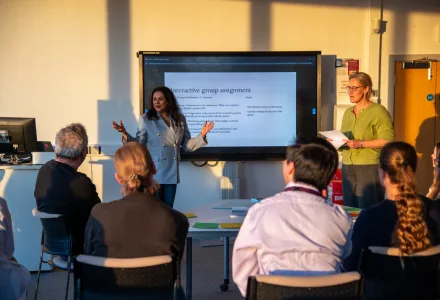
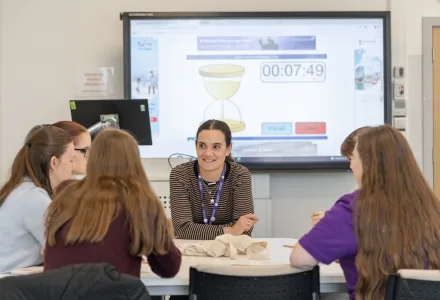
You will learn through interactive lectures, practical workshops, AI laboratories, prompt engineering activities, business simulations and consultancy projects.
Practical learning is central to the degree. You will explore AI tools and applications and consider how they can be used to address genuine business problems. Employer-informed challenges and innovation projects will provide opportunities to apply your knowledge to realistic scenarios.
You will also develop experience of working collaboratively and communicating technology-related ideas to different audiences. This is important because successful AI adoption involves people across an organisation, not just technology specialists.
Digital collaboration tools will support learning and project work, while applied activities will encourage you to experiment, evaluate and refine your ideas.
Real-world application is central to the BSc (Hons) AI Applications in Business. You may have the opportunity to undertake a one-week work placement, giving you experience of how organisations are approaching AI, digital transformation and innovation.
You will also undertake employer-informed challenges, consultancy-style projects, innovation activities and practical AI work. These experiences will help you develop evidence of what you can do and understand how AI can be applied across different organisational environments.
Throughout the course, you will be encouraged to take a critical approach to AI. You will consider not only what a technology can do, but whether it is appropriate, how it should be implemented and how organisations can manage associated risks.
Assessment
Assessment focuses strongly on application. Rather than relying primarily on traditional examinations, you will demonstrate your learning through realistic business challenges and professional-style outputs.
You may develop AI implementation plans, automation design projects, business consultancy reports, transformation proposals and AI portfolios. Presentations and reflective journals will help you demonstrate your ability to communicate complex ideas and evaluate your own development.
Assessment activities are designed to develop the capabilities employers need when introducing AI into organisations: identifying problems, evaluating solutions, managing implementation, communicating recommendations and considering risk.
You will therefore graduate with evidence of what you can do, not simply what you know.
Careers & Further study
The degree can prepare you for emerging and evolving careers across business and technology. Potential roles include AI business consultant, business analyst, AI transformation manager, innovation manager, digital strategy consultant, AI project manager, digital product manager, operations manager and business development manager.
You may also pursue roles in organisations where AI is becoming part of established business functions, including marketing, finance, HR, operations, customer experience and strategy.
Because AI is developing rapidly, the degree focuses on transferable capabilities rather than training you for a single job title. You will develop the ability to understand technology, identify business opportunities, evaluate solutions and support organisational change.
Further study could include an MBA, MSc in business analytics, digital transformation, management or AI-related subjects, as well as other postgraduate qualifications.
What Our Students Say
Discover what life is like at Lincoln Bishop University from our students.
Fees & Funding
A lot of student finance information is available from numerous sources, but it is sometimes confusing and contradictory. That’s why at Lincoln Bishop we try to give you all the information and support we can to help to throughout the process. Our Student Advice team are experts in helping you sort out the funding arrangements for your studies, offering a range of services to guide you through all aspects of student finance step by step.
Undergraduate course applicants should apply via UCAS using the relevant UCAS code. For 2026 entry, the application fee is £28.95, and you can make a maximum of 5 choices.
For 2027/28 entry the UCAS fee is £34.50.
For all applicants, there are full instructions at UCAS to make it as easy as possible for you to fill in your online application, plus help text where appropriate. Full details of all tuition fees can be found here.
31 Related courses

PGCE Secondary
PGCE
PGCE Secondary
Executive Master of Business Administration

Psychology and Business
BA (Hons)
Psychology and Business
Psychology and Business with Foundation Year
Foundation Year
Psychology and Business with Foundation Year
Executive Master of Business Administration (Top Up)

Master of Business Administration
Business and Finance
BSc (Hons)
Business and Finance
Business and Finance with Foundation Year
BSc (Hons)
Business and Finance with Foundation Year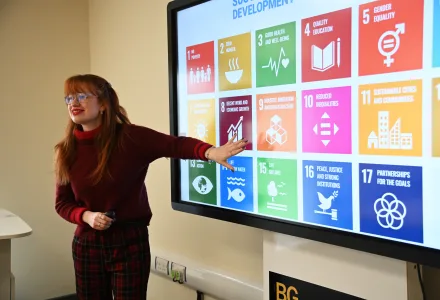
Business and Marketing
BSc (Hons)
Business and Marketing
Business and Marketing with Foundation Year
BSc (Hons)
Business and Marketing with Foundation Year
Accounting and Finance
BSc (Hons)
Accounting and Finance
Accounting and Finance with Foundation Year
BSc (Hons)
Accounting and Finance with Foundation Year
Business Management
BSc (Hons)
Business Management
Business Management with Foundation Year
BSc (Hons)
Business Management with Foundation Year
AI Applications in Business
BSc (Hons)
AI Applications in Business
BA (Hons) Business, Leadership, and Management (Top-Up)

Business of Football
BSc (Hons)
Business of Football
Business of Football with Foundation Year
BSc (Hons)
Business of Football with Foundation Year
Digital Marketing
BSc (Hons)
Digital Marketing
Digital Marketing with Foundation Year
BSc (Hons)
Digital Marketing with Foundation Year
Psychology and Business Management
BSc (Hons)
Psychology and Business Management
Psychology and Business Management with Foundation Year
Accounting and Finance
Business Management
CertHE
Business Management
Accounting and Finance
CertHE
Accounting and Finance
AI Applications
CertHE
AI Applications
Business and Finance
CertHE
Business and Finance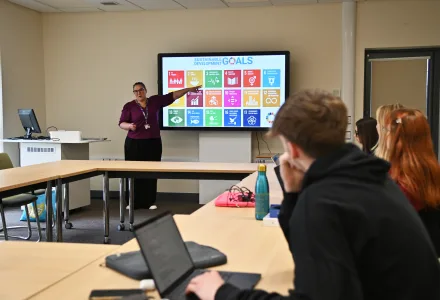
Business and Marketing
CertHE
Business and Marketing
Business of Football
CertHE
Business of Football
Digital Marketing
CertHE
Digital Marketing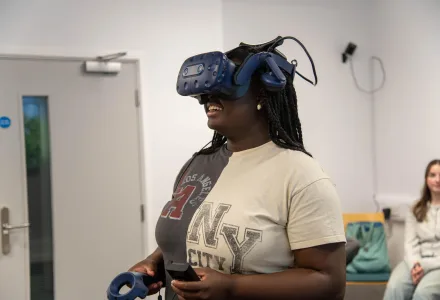
Psychology and Business Management