
Why study this course
Build your finance foundations – develop the accounting, finance and business knowledge you need to understand how organisations manage money, measure performance and make decisions.
Prepare for the finance profession of tomorrow – explore digital finance, AI, data analytics and sustainability alongside core accounting and finance principles.
Learn through business application – use practical activities, financial scenarios and realistic business challenges to connect theory to the decisions finance professionals make.
A clear route to a degree – successfully completing the CertHE can provide a structured progression route into the BSc (Hons) Accounting and Finance and a future career towards being a professionally qualified accountant.
Course summary
The CertHE Accounting and Finance provides an accessible and practical introduction to the world of accounting, finance and business decision-making. Whether you already have a clear ambition to work in accountancy or finance, or you are looking to develop a broader understanding of how organisations manage and use financial information, the course gives you a strong foundation from which to build.
You will develop an understanding of core accounting and finance concepts while also exploring how financial information supports planning, performance measurement, investment and organisational decision-making. Alongside technical knowledge, you will develop transferable skills in analysis, communication, problem-solving and professional practice.
The course also looks towards the future of the profession. Digital technologies, artificial intelligence, automation, data analytics and sustainability are changing the responsibilities of finance professionals, creating new opportunities for people who can combine financial understanding with digital and commercial awareness.
The CertHE can support progression into the BSc (Hons) Accounting and Finance or provide a foundation for entry-level roles in accounting, finance and wider business environments.
Please note, this course is currently going through validation.
Key facts
|
Award |
CertHE |
|---|---|
|
UCAS code |
N15C |
|
Typical offer |
|
|
Duration |
1 year |
|
Mode of study |
Full time |
|
Start date |
September 2027 |
|
Award |
Lincoln Bishop University |
|
Institution code |
B38 |
Apply for this course
When you're ready to apply, the route you take will depend on your personal circumstances and preferred method of study. Click the relevant button below to start your application journey.
About this course
Accounting and finance sit at the centre of almost every organisation. Businesses need people who can understand financial information, assess performance, identify risks and use evidence to support better decisions. The role of the finance professional is also evolving, with technology increasingly automating routine activities and creating greater demand for analytical, advisory and strategic capabilities.
This course introduces you to the fundamentals of accounting and finance while placing them within a wider business context. You will develop your understanding of financial statements, financial decision-making, business performance and the role of finance within organisations. You will also begin to explore the ways in which technology and data are changing finance.
The course takes a future-facing approach, considering areas such as digital finance, AI, analytics and sustainability. This reflects the changing expectations of the profession, where finance professionals increasingly need to combine technical knowledge with judgement, communication and commercial understanding.
Accounting and finance increasingly play an important role in responsible and sustainable business. Throughout the course, you will consider the ethical responsibilities of finance professionals and how financial decisions can affect organisations, people, communities and the environment.
You will explore sustainability and responsible business alongside financial performance, with opportunities to consider themes connected to the United Nations Sustainable Development Goals (SDGs). You will also consider how organisations respond to sustainability challenges in both local and international markets.
You will explore accounting and finance from both local and international perspectives. While Lincolnshire provides a valuable setting for understanding the financial needs of businesses and organisations in the region, modern finance operates across national borders.
You will consider how organisations in sectors such as agriculture and food production, manufacturing, tourism, retail and professional services respond to changing markets, regulation, technology and economic conditions.
You will also develop academic and professional skills that can support progression to degree-level study. The course is therefore suitable for students seeking an accessible entry into higher education as well as those who want to establish a foundation for a future career in accounting and finance.
Scheduled Teaching Hours
Undergraduate programmes consist of 360 HE credits, with each credit equating to 10 hours of learning.
Depending upon the mode of delivery (i.e. face-to-face/in-person, online or a blend of these) and whether your course is full-time or part-time, the delivery of the scheduled hours for the programme will involve taught input, independent study, and where applicable, work-based or placement hours.
Entry requirements
| Typical offer | |
|---|---|
| UCAS points | 64 |
You will normally need 64 UCAS tariff points.
We welcome a range of qualifications that meet this requirement, including A/AS Levels, BTEC qualifications, T Levels, Access to Higher Education Diplomas, International Baccalaureate (IB), Cambridge Pre-U and the Extended Project Qualification.
We recognise that students arrive at higher education through different routes. Our admissions approach is designed to consider a broad range of qualifications and educational experiences, helping students with the potential to succeed in higher education access an appropriate programme of study.
If you do not hold the typical qualifications or tariff points listed above, you may still be considered through our wider admissions process. Relevant qualifications, professional experience or other evidence of your preparedness for higher education may be taken into account where appropriate.
For applicants whose previous education has been completed outside the UK, equivalent qualifications may be considered. International applicants should check the University's country-specific entry requirements and English language requirements where applicable.
Further information
Click here for key information for all undergraduate students.
Click here for all programme specifications.
In accordance with University conditions, students are entitled to apply for Recognition of Prior Learning, RP(C)L, based on relevant credit at another HE institution or credit Awarded for Experiential Learning, (RP(E)L).
How you will be taught
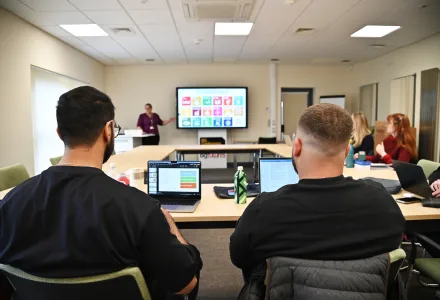
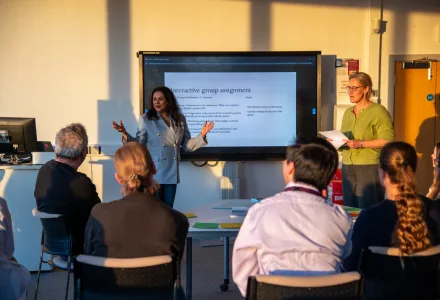
You will learn through a combination of interactive lectures, workshops, practical activities, financial scenarios, simulations and applied business challenges. Rather than simply learning accounting and finance concepts in isolation, you will be encouraged to consider how financial information is used by managers and organisations to make decisions.
Practical workshops will give you opportunities to work with financial information, analyse business situations and develop your confidence in communicating financial ideas. Digital learning activities will support your independent study and help you develop the confidence to work with contemporary business technologies.
You may also work on consultancy-style activities and employer-informed challenges, giving you the opportunity to apply your learning to situations that reflect the types of problems encountered in business.
Throughout the course, emphasis will be placed on developing your academic confidence alongside professional capabilities. You will be encouraged to ask questions, work collaboratively, interpret information and explain your conclusions clearly.
You will also have opportunities to engage with employer-informed challenges, realistic financial scenarios and consultancy-style activities. These experiences can help you understand how accounting and finance operate within different organisations and develop your confidence in professional settings.
The learning experience is designed to help you move progressively from understanding core concepts towards applying them in realistic business contexts.
Assessment
Assessment is designed to help you demonstrate not only what you know, but how effectively you can use your knowledge to solve problems and communicate financial information. The course is designed to have a balance of exams and coursework which allow for alignment against professional body exam exemptions and to showcase your understanding in different contexts.
You may complete applied coursework, business reports, presentations, financial analysis activities, modelling exercises, dashboards, portfolios and reflective work. These different forms of assessment allow you to demonstrate a range of academic, analytical and professional capabilities.
Where appropriate, assessment activities will reflect the types of tasks undertaken by finance professionals, such as analysing financial information, interpreting performance, making recommendations and presenting findings to different audiences.
You will also receive opportunities to develop your confidence through formative activities and feedback before completing larger assessments. This is intended to help you understand how to improve your work and progressively develop your academic and professional skills.
The overall approach is designed to give you experience of communicating financial information clearly, making evidence-based judgements and applying accounting and finance knowledge to realistic organisational situations.
Careers & Further study
The CertHE Accounting and Finance can provide a foundation for a range of entry-level careers across accounting, finance and business. Potential roles include accounts assistant, finance administrator, accounts payable or receivable assistant, payroll assistant, junior finance analyst and business support roles.
The qualification can also provide a strong foundation for further study. Successful students may progress to the second year of the BSc (Hons) Accounting and Finance, developing their technical knowledge and professional capability to a higher level.
Further study could also lead towards postgraduate qualifications, professional accounting qualifications and specialist areas such as financial analysis, management accounting, audit, taxation, financial management or financial technology.
The finance profession is evolving rapidly as organisations adopt AI, automation, data analytics and digital finance. This creates opportunities for graduates who can combine financial understanding with analytical, technological and interpersonal skills.
What Our Students Say
Discover what life is like at Lincoln Bishop University from our students.
Support
Studying at Lincoln Bishop is a student-centred experience. Staff and students work together in a friendly and supportive atmosphere as part of an intimate campus community. You will know every member of staff personally and feel confident approaching them for help and advice, and staff members will recognise you, not just by sight, but as an individual with unique talents and interests.
We will be there to support you, personally and academically, from induction to graduation.
Fees & Funding
A CertHE is a one-year undergraduate qualification, so you will pay one year of undergraduate tuition fees.
There are a range of funding options available to help with the cost of your studies, including student finance support. Our Student Advice team can help you understand your options and guide you through the funding process.
Undergraduate fees for 2027 entry will be confirmed following a UK Government announcement by the Department for Education (DfE), expected in late 2026.
31 Related courses

PGCE Secondary
PGCE
PGCE Secondary
Executive Master of Business Administration

Psychology and Business
BA (Hons)
Psychology and Business
Psychology and Business with Foundation Year
Foundation Year
Psychology and Business with Foundation Year
Executive Master of Business Administration (Top Up)

Master of Business Administration
Business and Finance
BSc (Hons)
Business and Finance
Business and Finance with Foundation Year
BSc (Hons)
Business and Finance with Foundation Year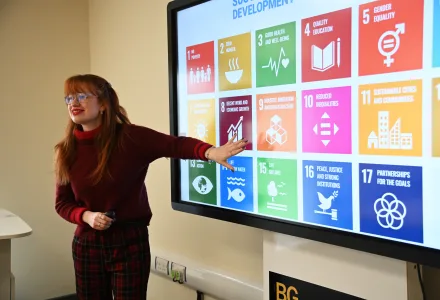
Business and Marketing
BSc (Hons)
Business and Marketing
Business and Marketing with Foundation Year
BSc (Hons)
Business and Marketing with Foundation Year
Accounting and Finance
BSc (Hons)
Accounting and Finance
Accounting and Finance with Foundation Year
BSc (Hons)
Accounting and Finance with Foundation Year
Business Management
BSc (Hons)
Business Management
Business Management with Foundation Year
BSc (Hons)
Business Management with Foundation Year
AI Applications in Business
BSc (Hons)
AI Applications in Business
AI Applications in Business with Foundation Year

BA (Hons) Business, Leadership, and Management (Top-Up)

Business of Football
BSc (Hons)
Business of Football
Business of Football with Foundation Year
BSc (Hons)
Business of Football with Foundation Year
Digital Marketing
BSc (Hons)
Digital Marketing
Digital Marketing with Foundation Year
BSc (Hons)
Digital Marketing with Foundation Year
Psychology and Business Management
BSc (Hons)
Psychology and Business Management
Psychology and Business Management with Foundation Year
Accounting and Finance

Business Management
CertHE
Business Management
AI Applications
CertHE
AI Applications
Business and Finance
CertHE
Business and Finance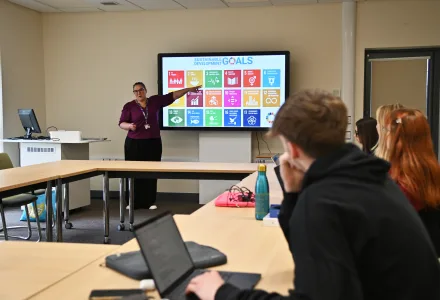
Business and Marketing
CertHE
Business and Marketing
Business of Football
CertHE
Business of Football
Digital Marketing
CertHE
Digital Marketing
Psychology and Business Management