
✨ Apply now through Clearing - call our dedicated hotline on 01522 583698! ✨
Why study this course
Become a finance professional for a changing world – develop technical accounting and finance expertise alongside digital, analytical and commercial capability.
Accounting meets AI, data and sustainability – explore how emerging technologies, analytics and responsible business are changing finance.
Think beyond the numbers – develop the judgement, communication and strategic thinking needed to influence business decisions.
Professionally aligned – designed with contemporary professional accounting expectations in mind, including areas associated with CIMA, ACCA and ICAEW. Further information on number of exemptions by professional body will be made available following full course validation.
Course summary
The BSc (Hons) Accounting and Finance prepares you for a profession that is becoming increasingly analytical, technological and strategic. You will develop a strong understanding of accounting and finance while learning how financial information can be used to influence business performance, manage risk, support investment and shape strategic decisions.
The course combines technical financial knowledge with the broader capabilities expected of modern finance professionals. You will explore digital finance, AI, data analytics, sustainability, governance and consultancy, developing the ability to interpret information and communicate meaningful insights rather than simply report financial results.
The programme is designed around practical application. You will encounter realistic business scenarios and develop experience in financial analysis, modelling, reporting, decision-making and consultancy-style activities.
The result is a degree designed to give you both the technical foundations of accounting and finance and the wider commercial perspective needed to contribute effectively within modern organisations.
Please note, this course is currently going through validation.
Key facts
|
Award |
BSc (Hons) |
|---|---|
|
UCAS code |
N155 |
|
Typical offer |
|
|
Duration |
3 years |
|
Mode of study |
Full time |
|
Start date |
September 2027 |
|
Award |
Lincoln Bishop University |
|
Institution code |
B38 |
Apply for this course
When you're ready to apply, the route you take will depend on your personal circumstances and preferred method of study. Click the relevant button below to start your application journey.
About this course
The role of the accountant and finance professional is changing. Technology is increasingly capable of automating routine processing and reporting, while organisations are placing greater emphasis on analysis, interpretation, strategic insight and business partnering.
This degree prepares you for that changing environment. Alongside core accounting and finance, you will develop your ability to interpret financial information, evaluate organisational performance and use evidence to support decisions.
You will explore areas including financial accounting, management accounting, financial management, analytics, business strategy, governance and consultancy, while considering the impact of AI, automation, sustainability and digital transformation.
The course also emphasises the human capabilities that technology cannot replace easily: judgement, communication, ethical decision-making, critical thinking and the ability to influence stakeholders.
This approach reflects the direction of the profession. Professional Bodies current work on the future of accountancy highlights the growing importance of technology, data, insight, strategy, sustainability and human-centred skills alongside technical expertise.
Modern finance professionals need to understand much more than financial performance. Ethical judgement, sustainability, governance and responsible decision-making are increasingly important to organisations operating in complex global markets.
Throughout the degree, you will explore how accounting and finance contribute to responsible business and consider issues such as sustainability reporting, ESG and the United Nations Sustainable Development Goals (SDGs). You will examine how financial decisions can support long-term organisational value while considering their wider social and environmental impact.
The course connects the strong business environment of Lincolnshire with the international nature of modern accounting and finance. You will explore how financial decisions are made within local organisations while also considering international markets, global supply chains, multinational organisations and changing economic conditions.
Lincolnshire's diverse economy provides opportunities to consider business challenges across areas including agriculture and food, manufacturing, tourism, retail and professional services, while developing an understanding of how these sectors connect to national and international markets.
You will therefore graduate with a broader understanding of what it means to work in modern accounting and finance and how finance contributes to organisational success.
Scheduled Teaching Hours
Undergraduate programmes consist of 360 HE credits, with each credit equating to 10 hours of learning.
Depending upon the mode of delivery (i.e. face-to-face/in-person, online or a blend of these) and whether your course is full-time or part-time, the delivery of the scheduled hours for the programme will involve taught input, independent study, and where applicable, work-based or placement hours.
Entry requirements
| Typical offer | |
|---|---|
| A-levels | BCC |
| UCAS points | 104 |
| BTEC | DMM |
You will normally need 104 UCAS tariff points from a maximum of four Advanced Level qualifications.
We welcome a range of qualifications that meet this requirement, including A/AS Levels, BTEC qualifications, T Levels, Access to Higher Education Diplomas, International Baccalaureate (IB), Cambridge Pre-U and the Extended Project Qualification.
We recognise that applicants may have followed different educational pathways, so a broad range of qualifications can be considered as part of the admissions process.
If you do not meet the standard tariff requirement, you may still be considered where there is other evidence that demonstrates your preparedness for degree-level study. This may include relevant qualifications, professional experience or other forms of prior learning.
International applicants may be considered with equivalent qualifications. Country-specific requirements and English language requirements will apply where appropriate.
Further information
Click here for key information for all undergraduate students.
Click here for all programme specifications.
In accordance with University conditions, students are entitled to apply for Recognition of Prior Learning, RP(C)L, based on relevant credit at another HE institution or credit Awarded for Experiential Learning, (RP(E)L).
How you will be taught
You will learn through interactive lectures, practical workshops, financial simulations, case studies and consultancy projects. Teaching is designed to move beyond traditional classroom learning, allowing you to apply accounting and finance concepts to realistic organisational situations.
You will work with financial information and business data, interpret performance, evaluate options and develop recommendations. Digital learning and technology-enabled activities will help you understand the increasingly important role of AI, analytics and digital finance within the profession.
Employer-informed challenges and consultancy activities will provide opportunities to consider problems from a professional perspective. You will also develop your ability to communicate financial information to different audiences, an increasingly important skill as finance professionals work alongside managers and other business functions.
Practical experience is an important part of the learning experience. You may have the opportunity to undertake a one-week work placement, providing valuable exposure to the workplace and allowing you to apply your accounting, finance and analytical skills in a professional environment.
You will also engage with employer-informed challenges, consultancy-style activities and authentic professional tasks. These experiences can help you build confidence, develop your professional network and demonstrate to future employers how you can apply your knowledge to real organisational challenges.
Throughout the degree, learning is designed to develop progressively. You will move from acquiring core technical knowledge to applying that knowledge to complex business problems and strategic decisions.
Assessment
Assessment reflects the diverse nature of contemporary finance careers. You may complete professional-style examinations alongside business and consultancy reports, presentations, financial modelling, dashboards, portfolios and reflective activities.
Applied assessment will ask you to interpret information, evaluate financial performance, identify problems and make recommendations. This provides opportunities to demonstrate not only technical knowledge but also analytical thinking, judgement and communication.
You may also develop outputs that resemble professional workplace activities, such as financial models, management reports, board-style papers and presentations.
The assessment strategy is intended to build your confidence progressively, with feedback helping you understand how to improve both your academic work and professional capabilities.
Rather than relying exclusively on traditional examinations, the programme provides opportunities to demonstrate your ability to apply accounting and finance knowledge in realistic contexts.
Careers & Further study
Graduates can pursue careers across accountancy, finance and the wider business environment. Potential career areas include financial accounting, management accounting, financial analysis, audit, taxation, financial management, corporate finance, commercial finance and finance business partnering.
The degree can also support careers where finance is combined with technology and business transformation, including financial data analysis, finance transformation and digital finance.
Professional development may include progression towards qualifications such as ACCA, CIMA, ICAEW and other relevant professional routes, subject to the requirements and exemptions determined by the relevant professional body.
The degree can also provide a foundation for postgraduate study, including MSc Accounting and Finance, MBA and related business, finance, analytics or management programmes.
The profession itself is expanding beyond traditional reporting. Current developments emphasise AI, technology, sustainability, data science, strategic insight and employability, reinforcing the value of graduates who can combine financial expertise with wider business and digital capability.
What Our Students Say
Discover what life is like at Lincoln Bishop University from our students.
Support
Studying at Lincoln Bishop is a student-centred experience. Staff and students work together in a friendly and supportive atmosphere as part of an intimate campus community. You will know every member of staff personally and feel confident approaching them for help and advice, and staff members will recognise you, not just by sight, but as an individual with unique talents and interests.
We will be there to support you, personally and academically, from induction to graduation.
Fees & Funding
A lot of student finance information is available from numerous sources, but it is sometimes confusing and contradictory. That’s why at Lincoln Bishop we try to give you all the information and support we can to help to throughout the process. Our Student Advice team are experts in helping you sort out the funding arrangements for your studies, offering a range of services to guide you through all aspects of student finance step by step.
Undergraduate course applicants should apply via UCAS using the relevant UCAS code. For 2026 entry, the application fee is £28.95, and you can make a maximum of 5 choices.
For 2027/28 entry the UCAS fee is £34.50.
Undergraduate and PGCE fees for 2027 entry will be confirmed following a UK Government announcement by the Department for Education (DfE), expected in late 2026.
For all applicants, there are full instructions at UCAS to make it as easy as possible for you to fill in your online application, plus help text where appropriate. Full details of all tuition fees can be found here.
31 Related courses

PGCE Secondary
PGCE
PGCE Secondary
Executive Master of Business Administration

Psychology and Business
BA (Hons)
Psychology and Business
Psychology and Business with Foundation Year
Foundation Year
Psychology and Business with Foundation Year
Executive Master of Business Administration (Top Up)

Master of Business Administration
Business and Finance
BSc (Hons)
Business and Finance
Business and Finance with Foundation Year
BSc (Hons)
Business and Finance with Foundation Year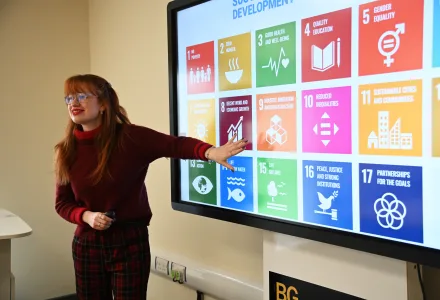
Business and Marketing
BSc (Hons)
Business and Marketing
Business and Marketing with Foundation Year
BSc (Hons)
Business and Marketing with Foundation Year
Accounting and Finance with Foundation Year
BSc (Hons)
Accounting and Finance with Foundation Year
Business Management
BSc (Hons)
Business Management
Business Management with Foundation Year
BSc (Hons)
Business Management with Foundation Year
AI Applications in Business
BSc (Hons)
AI Applications in Business
AI Applications in Business with Foundation Year

BA (Hons) Business, Leadership, and Management (Top-Up)

Business of Football
BSc (Hons)
Business of Football
Business of Football with Foundation Year
BSc (Hons)
Business of Football with Foundation Year
Digital Marketing
BSc (Hons)
Digital Marketing
Digital Marketing with Foundation Year
BSc (Hons)
Digital Marketing with Foundation Year
Psychology and Business Management
BSc (Hons)
Psychology and Business Management
Psychology and Business Management with Foundation Year
Accounting and Finance

Business Management
CertHE
Business Management
Accounting and Finance
CertHE
Accounting and Finance
AI Applications
CertHE
AI Applications
Business and Finance
CertHE
Business and Finance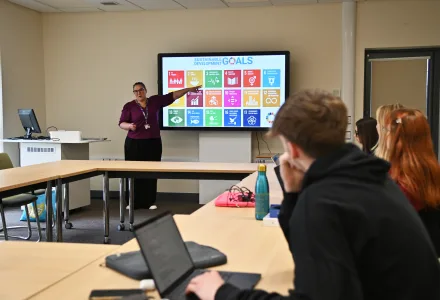
Business and Marketing
CertHE
Business and Marketing
Business of Football
CertHE
Business of Football
Digital Marketing
CertHE
Digital Marketing
Psychology and Business Management