Why study this course
Keep your career aims and options open as you study education in its broadest sense, from the development of the youngest children to how adults learn.
You’ll gain invaluable classroom practice and will have flexible opportunities to experience other educational settings through up to 9 weeks of work-based placements.
Find your voice and unlock your potential as a historian, with small class sizes and supportive, expert lecturers on an intimate campus in the heart of historic Lincoln.
We do not use unseen written examinations. We utilise a range of assessment types designed to help you develop the skills you will actually need in life after graduation.
Course summary
Studying Education Studies at Lincoln Bishop will provide you with an excellent understanding of education in its widest sense, nationally and globally, and is a great course if you are interested in a career in teaching or are thinking about working in other education-related areas.
Our history course is broad, interesting and ambitious in its coverage of historical topics and eras from the medieval period into the 21st century.
From the Black Death to pirates in the Caribbean, from French revolutionaries to civil rights campaigners, from witch trials to Cold War tensions, you will learn how people in the past lived, understand their world, their beliefs, motivations and actions, and ultimately learn how the world came to be the way it is.
The lecturers on this course will draw on their own research and teaching experience to bring history alive for you in classrooms and on field trips. The work placement opportunities will enable you to apply your knowledge in a professional setting and our assessments are tailored to help you develop the range of written, oral and digital skills that are in demand for graduate roles.
Please note, this course is currently going through revalidation.
Key facts
|
Award |
BA (Hons) |
|---|---|
|
UCAS code |
X1VF |
|
Duration |
4 years |
|
Mode of study |
Full time |
|
Start date |
September 2026 |
|
Award |
Lincoln Bishop University |
|
Institution code |
B38 |
Apply for this course
When you're ready to apply, the route you take will depend on your personal circumstances and preferred method of study. Click the relevant button below to start your application journey.
About this course
Education Studies
How do people learn? What gets in the way of learning? Where might people learn best – and how? Do we need schools? Is it possible to ‘school’ the world? Can education make a difference to human rights? Women's rights? Nationally? Globally? These are just some of the big questions that you will examine through studying Education Studies at Lincoln Bishop University. We are proud of our highly contemporary, reactive and issues-based course that has been carefully designed to give you that ‘bigger’ picture of education in a global society. An Education Studies degree from Lincoln Bishop will equip you well for the future, no matter what your career destination, but if you are planning to go on to teach you will find that our modules will open your eyes to some different ways of thinking about education and its purpose and place in society.
Studying Education Studies with us will provide you with an excellent understanding of education in its widest sense, nationally and globally, and is a great choice if you are interested in a career in teaching or are thinking about working in other education-related areas. The undergraduate degree provides you with a deep and reflective knowledge and understanding of contemporary issues in education, directly related to everyday practice. You’ll debate education policy, find out more about the drivers of educational change in England today and critically consider different approaches to schools and schooling, both within the UK and globally.
A key feature of Education Studies is a focus on you as a developing practitioner. You will be encouraged to develop a strong personal ideology of education during the course and will be supported in the development of secure employability skills through our work-based placements. A number of core modules each year incorporate placements in schools or other education-related settings and carefully structured placement tasks will ensure that you gain valuable first-hand practical experience.
Placements
The Placement Services Office endeavours to source placements as efficiently as possible. However, in some cases there may be a delay to the start of your placement while this process is completed, particularly in disciplines facing national shortages and in pinch-point locations. In such cases, the Placement Services Office and your Academic Team will remain in regular contact to support you during this time.
Please be advised that the University cannot guarantee placements in specific locations, and travel may be required.
History
Our specialisms in social, political and cultural history mark us out as different to History courses elsewhere. Here at Lincoln Bishop you are encouraged to see the past from different, often challenging perspectives in order to gain a greater understanding of what happened and why.
Students on this course explore a range of fascinating topics spanning a number of historical eras, in a wide variety of local, national, and global contexts. Modules cover subjects as diverse as medieval Europe; the Vietnam War and Cold Wars; sexuality, race, class, and gender identity in the past; early modern reformation and revolution; the British Empire; the history of magic, witchcraft and folklore; the history of the city; the Atlantic slave trade; the French and Haitian Revolutions; and the histories of crime, punishment, popular protest, and modern dictatorship.
We use documents, images, film, objects, music, video games and a whole array of different techniques and materials to help you study the past. You’ll learn about history through lectures, group discussions and debates, source workshops, individual tutorials and site visits. You’ll engage in original historical research, analyse data, images and texts, construct, present and defend arguments. You will also look at how history is encountered within the community and take a work-based placement that fits your career goals and direction.
This undergraduate degree will help to grow your skills and confidence as a historian, from introductory modules in your first year through to an independent, research-based dissertation in your final year. The degree enhances employability by cultivating highly desirable and transferable critical thinking and analytical skills, professional writing practices and the art of presenting persuasive arguments. The degree will also help you to become an active, global citizen as students are expected to investigate how societies engage with history today, reflect on the enduring importance of historical memory and reflect on global problems and solutions a from a historical perspective.
You can keep up to date with the latest news and activities of the department by following us on Bluesky.
There is a student-managed History Society that organises events, discussions, visiting speakers and trips. Students will have the opportunity to join the society via the Student Union during Welcome Week.
Scheduled Teaching Hours
The Foundation Year is the first year of a four-year undergraduate degree and provides a pathway to undergraduate study for students who do not have the typical qualifications required for direct entry to Level 4. As an integrated Foundation Year it does not carry credits, as the purpose of the year is to facilitate students’ progression to Level 4 of their chosen undergraduate degree programme [see Undergraduate].
The delivery of the scheduled hours for the programme includes taught and independent study and is designed to support the needs of learners on Foundation Year programmes as they transition to the requirements of Higher Education study. Material is delivered in both face-to-face and asynchronous formats, totalling 176 hours of taught input, and includes both core academic skills training and additional input from subject specialists. Contact hours in taught sessions are complemented by an extensive support curriculum that operates through the year, typically comprising, but not limited to, additional tutorials, catch-up sessions, study groups, and personal support.
What you will study
Please note that we are working to update some of our programme specifications. These represent small updates to optional modules at Level 5 (second year) as part of a normal regular process of updating our courses.
In this module, you will gain theoretical understanding and employthe practical application of core academic skills. You will understand the definition and importance of academic integrity and explore the key skills required for effective academic practice. You will develop skills in academic and information literacies, including the ability to locate, evaluate, and reference academic sources. The module will provide guidance and practice on academic writing conventions, critical reading strategies, reflective practice, and effective communication skills. You will consider these skills in the context of your chosen subject area and will engage in a range of learning approaches and opportunities, including tutorials and peer learning
In this module, you will identify and develop personal tools for effective learning as a student in Higher Education. The nature and purpose of Higher Education will be explored, including developing an understanding of independent and autonomous learning. You will
reflect on your own skills as a learner and learn how to establish goals for self-development. A range of functional, organisational, and practical skills to support learning will be introduced, including time management, personal organisation, and professional etiquette. You will also engage in development of your digital skills to enable effective use of digital learning tools in your studies.
In this module, you will define critical thinking and engagement and learn how to apply these in the construction of an academic discussion. You will explore practices to develop critical thinking and learn how to research, construct, and defend an academic argument. You will practise critical engagement with academic sources as part of research and begin developing skills of summary and synthesis to support your own arguments. You will apply critical thinking and engagement skills to an area of inquiry in your chosen subject area.
In this module, you will explore the nature and use of documentary and evidence-based sources within academic practice. The module is interdisciplinary, allowing you to investigate a variety of evidentiary sources such as documentary sources, case studies, archival material, and policy. You will begin to learn to analyse and evaluate such sources critically and to consider them within the broader context of academic research. The use of documentary and evidence-based research across disciplines will be explored, analysed, and evaluated critically.
In this module, you will explore the nature and use of data within academic practices. The module is interdisciplinary, allowing you to investigate a variety of data sources and types, including qualitative and quantitative. You will begin to learn to interpret, analyse, and represent data in a meaningful way. You will learn about different methods of data collection and the use of data across disciplines will be explored, analysed, and evaluated critically.
In this interdisciplinary module, you will explore key ideas, theories, and philosophies that underpin a range of academic disciplines. You will learn how these ideas developed and influenced thinking and evaluate their importance within the context of an academic discipline. The module will explore how such ideas have evolved over time and their influence both on academic practice and broader contexts. You will develop and apply skills of critical analysis to discuss and evaluate the ideas and theories, and have the opportunity to explore them in depth in relation to your chosen subject area
In this interdisciplinary module, you will explore the role and impact of academic practices within the context of local communities. You will explore the social purposes of education, specifically Higher Education, and consider how academic research intersect with community and social practices. The module will explore how different academic disciplines can provide insight and enable interventions into local communities. You will develop and apply skills of critical analysis to explore a topic of local interest in relation to your chosen subject area.
An understanding of how individuals learn and the factors that shape learning is fundamental to any study of education. This Level 4 module will introduces you to a range of key theoretical ideas and principles about learning from birth to adulthood. It explores theories that focus on adult learning, for example andragogy, as well as pedagogical ones that centre around child learners, for example behaviourism and constructivism. The module combines a study of these historical approaches with a consideration of contemporary theories such as heutagogy and factors like education policy that shape, or even determine, learning in the 21st Century. It will enable you to draw on your own experiences of learning and will encourage you to critically engage with theories to identify strengths, limitations and the applicability to educational environments. As part of this module you may work on developing key academic skills that will provide a foundation for academic work at all levels of the programme. Such work may include academic reading skills, for example identifying and reading different types of sources, and academic writing skills, such as structuring written assignments. You will undertake a placement that will enable you to apply theoretical perspectives from the module to understand and reflect on pupils’ learning within the education system. The placement also provides you with the opportunity to begin to develop key professional skills. Teaching and learning will proceed by way of interactives lectures, seminars and tutorials, supported by e-learning and VLE-based tasks. Tutor-led seminars will utilise collaborative group work in order to model and enable learning and assist you in developing the skills to study and learn independently. In this module you will develop subject expertise, professional skills and increase graduate attributes, most notably academic literacies and employability.
Building on the fundamental concepts of learning introduced previously in Level 4, this module focuses on the sociology of education and learning, and, primarily, how academic achievement and educational inequality is shaped by society and educational structures. The module provides teaching and classroom-based experiences through which the impact of a variety of sociological factors, such as socio-economic group, gender, ethnicity and human rights can be better understood. Relevant theories and approaches to explaining differences in attainment will be studied, together with an exploration of factors that might contribute to narrowing gaps in educational outcomes. As part of this module you may be expected to investigate and analyse a range of published sources of data on educational attainment and interventions and so learn to interpret and explain data presented in different ways. You will also undertake a placement that will enable you to apply knowledge gained in the module and further develop your transferable skills of communication and organisation, as well as gain further experiences of supporting learning.
This module introduces you to the study of history at undergraduate level and is a key part of your transition to university. You will gain an initial understanding of the varied nature of the discipline and the range of approaches to it, introducing key areas of theory and practice covered in subsequent modules in history, such as: the significance of schools of historical thought, key source types and popular interpretative approaches. There will be a focus on some of the key critical and practical skills involved in reading, researching and writing history. The use of an engaging case study will contextualise how historians analyse primary sources and how historians engage with the secondary accounts produced by their colleagues. Introductions to information literacy, academic integrity and a range of study skills, such as the reading of academic texts, will be explicitly embedded within the module. You will be encouraged to reflect on your own study skills, learning strategies and approaches. Taught sessions and assessments will encourage your to express your ideas in written and spoken form through discussion, debate and argument. This module is designed to support your progression through subsequent modules in the subject.
This module will introduce students to the importance of individual and collective identities in the study of history. Through examining a variety of key theoretical texts and biographically-focused case studies, largely but not exclusively centred on British history, students will learn about different approaches to the history of identity and its utility for modern historical studies. Students will gain an understanding of a range of theoretical methodologies related to the practice of social and cultural history that will provide a firm foundation for later studies. At its core, the module will introduce students to the principle sources for, and main theoretical approaches taken in, the study of key, often intersecting, identities within the disciplinary area of history, such as: sexuality, class, politics, religion, race, gender and disability.
On this module students will study late medieval England in particular the various roles, occupations and classes of people in Late Medieval England. Through a survey approach, students will examine the changing nature of various aspect of late medieval society, such as kingship, the aristocracy, feudalism, gender, education, literature and drama. The module will introduce students to recent historiographical debates surrounding the nature and transformation of kingship in this period as well as the extent and nature of conflict between social groups particularly in relation to the Baron’s Wars and the War of the Roses. As well as providing opportunity to understand the significance of powerful late medieval women, the module will also look at gender roles in wider society and how these changed. Students will also study the changing role of religion, how drama was used to promote religious ideas, the development of literature, learning and the transformation of the medieval landscape. The course will introduce students to this formative period of English history and to key historiographical debates. It will use a variety of methodical approaches to enable students to research, analyse and explain various aspects of this period.
On this module students will be introduced to the early modern British Isles, broadly covering the period from the Reformation of the English Church to the 1688 Revolution. The module will consider political, social, military, cultural and economic perspectives on a transformational period in the history of the British Isles. By taking a survey approach the module will support students as they gain a wider understanding of this period of history. Consideration will be given to, variously, social structures and lifecycles, reformation and religious change, the rise of parliament and the state, radical politics and revolutionary change, the impact of print culture, the English Civil War, and the role played by urban, rural and maritime/imperial development as drivers of change. In summary, students will come to understand why the period is referred to as 'early modern', neither wholly medieval or modern. The module will engage students in the excellent digitised resources available for this period and introduce students to the vibrant historiographical and methodological approaches to explaining changes in the early modern British Isles, as appropriate, and students will learn how to apply these to the research and analysis of this period of history.
Compulsory modules
An understanding of the principles and practice of inclusive education is crucial to those who intend to work in an educational context. This module will introduce you to the philosophical social justice debate and theories and ideologies of inclusive practice, and will examine interpretations of diversity and inclusion in different contexts. Although matters relating to inclusion are embedded in all modules, this offers you the opportunity to study the topic in depth and to critically analyse and apply a range of theories in the context of your work with young people in a range of educational contexts. It will build on the values, beliefs and philosophies explored in Level 4 modules and extend your appreciation of issues of human rights, equality and equity.
This module builds on and develops the basic methods and data interpretation skills developed during Level 4 modules. The module also prepares you for your Dissertation at Level 6 especially if you are intending to pursue a Dissertation (Capstone Project) in Education Studies or other Social Science (at Level 6). You will explore ways in which a range of quantitative and qualitative methods can be brought to the investigation of educational issues. You will apply selected quantitative and qualitative methods and will be introduced to the benefits and difficulties of education research. You will develop your understanding of the range of research methodologies and research methods (data collection tools) that can be used in education research, and further develop your skills of statistical analysis and data interpretation.
The module will explore the concept of ‘invented histories’: attempts in a variety of popular media to assemble, rearrange, supplement, manipulate, craft, and ultimately invent new narratives about what happened in the past. The module will examine a series of case studies across a range of themes: social, political and military. These can be drawn from any time period: ancient to modern and from any region, country or continent. The media likely to be examined in case studies will be drawn from amongst the following categories:
• Films and TV shows
• Literature and historical fiction
• Propaganda (posters, films, etc.)
• Games (video and board/card games)
• Painting/caricature/cartoons/photographs/sculpture
• Theatre productions (drama, musicals, opera, etc.)
• Music
• Social media/internet sites
Each case study will focus on the analysis of a popular representation (or set of representations) of a given historical period, event or person. This representation will be explored as an example of ‘invented’ history that consciously seeks to give the subject depicted a narrative meaning. Students will investigate what narrative is being invented, its accuracy, its influence, academic historical debates on the source matter, and ultimately how useful the source is for the writing of academic history and the communications of findings to the public. Students will be introduced to the concepts of representation, identity (particularly national identity) and memory in historical research. They will gain a deeper understanding of the nature of public engagement with historical topics. Greater understanding of the media representation itself and the history of the period in which the representation was produced is a key learning outcome of the module. Therefore, students will be introduced to the relevant methodological theory underpinning analysis of the given medium, e.g. film history, the study of board and computer game design, visual culture studies, etc.
This module will engage students in a wide-ranging study of the Atlantic World in the early modern period with a particular focus on the 17th and 18th centuries. Through a critical review of secondary texts and a variety of primary source material students will analyse the political, economic, technological, social and cultural history of the Atlantic World, with a particular focus on the ‘Anglophone Atlantic’, its origins, growth and contact with European empires and indigenous peoples in the Americas and Africa. Students will engage with historiographical debates concerning the character of the ‘Atlantic World’ with its competing empires and entities and consider whether this is a useful concept for understanding this period of history. Key themes to be explored include: the importance of the trade in goods and the movement of people, including the trans-Atlantic slave trade; the significance of conflict and co-operation between states, substrate groups and individuals; the importance of identities and how they changed as a result of the Atlantic experience; and the role of science, knowledge and communication in the Atlantic World.
This module will explore a range of protest movements from across the British Isles, setting them in their historical context and investigating their origins, scope, membership, activities and outcomes. By examining a chronological span from the first modern protests to contemporary movements, students will develop an understanding of change and continuity in regard to methods of protest, organisational structures and effectiveness. Students will work critically with a wide set of historical texts and primary sources, including audio and visual evidence. The module will also take account of interdisciplinary work on the theory and conceptual development of social movements, in particular from sociology and political science, reflecting the nature of existing scholarship on popular protest. The examples utilised within the module will focus on British movements, but where appropriate references to global networks, antecedants and legacies will be explored. A range of movements with different motivations will be examined, such as: Chartism, trade unionism and parliamentary reform campaigns; regional and/or national independence campaigns; Suffrage and Women’s rights; Peace movements; Civil Rights and Anti-racism; LGBTQ+ rights; and Environmentalism. Varied methods of protest will be examined, such as: petitions, demonstrations, direct action and the cultivation of cultural movements through music, art and literature.
Optional modules
This module will engage students in a long view of the history of magic, witchcraft and folklore. The module will begin by surveying the complex relationship between religion, health, miracles and magic during the later medieval period. It will then examine the subsequent development across early modern Europe of a culture of witchcraft persecution and prosecution, which will be considered through the lense of fear, often exacerbated by social status and/or gender. Students will finally be tasked to evidence, explain and challenge the meta-narrative for the apparent decline in belief in a witch cult from the 18th century onwards. Students will critically examine evidence for the persistence of pagan and magical beliefs as well as the development of folklore and fairy stories into the ‘modern’, ‘enlightened’ age. Students will be exposed to relevant primary and secondary material in order to engage fully with the case studies and historical sweep of the module and will be expected to critically explain and defend their interpretations. A parallel strand running throughout will be critical analysis of the trajectory of historiographical debate associated with the history of magic and in particular witchcraft and paganism.
This module equips you with an understanding of Corporate Social Responsibility and sustainability in regional, global and organisational contexts.
You will be empowered to take positive action as an informed global citizen in line with The 2030 Agenda for Sustainable Development, adopted by all United Nations Member States in 2015. The Agenda provides a shared blueprint for peace and prosperity for people and the planet, now and into the future. At its heart are the 17 Sustainable Development Goals, which are an urgent call for action by all countries, developed and developing, in a global partnership. They recognise that ending poverty and other deprivations must go hand in hand with strategies that improve health and education, reduce inequality, and support economic growth, while also tackling climate change and working to preserve our oceans and forests. These SDGs will therefore underpin the teaching and learning ethos of this module.
Through undertaking the module, you will begin to develop the knowledge and skills required to shape practices for managing and leading Corporate Social Responsibility and sustainability in an organisational setting.
The approaches taken to manage and lead CSR and sustainability differ according to the nature and purpose of individual organisations. For this reason, the critical exploration of case studies will help you develop a fuller understanding of CSR and sustainability in a variety of organisational contexts.
*NB Students may be able to elect modules of study from other subject areas, subject to availability, timetabling, and capacity. Where this is possible information will be made available by the Faculty.
Compulsory modules
Broaden your horizons with this dynamic module that takes you on a global journey through education! Explore diverse educational systems, cultures, and philosophies from around the world. You will critically examine international policies and practices, gaining insights into how global perspectives can inspire positive change in local contexts. Ideal for students eager to become globally minded educators and leaders.
Excellence and innovation in curricula are a central tenet of any world class education system. This highly responsive module provides you with a theoretical and critical understanding of key considerations in the development and implementation of curriculum policy, content and practice in educational settings. The module considers future developments in the current curriculum and possible alternative future directions. It provides you with an opportunity to study this at first hand in placement settings. A range of theoretical approaches to the curriculum will be critically examined. The syllabus may include topics such as differing views of the nature and organisation of knowledge, and examination of various curriculum frameworks, including aims, content and contemporary views of pedagogy. These will vary over time in order to ensure that the module is responsive to new developments and future directions in education for instance decolonising of the curriculum and environmental education. Innovative practice from inspirational educational settings may be showcased in order to provide models of excellence. Placement will allow you to gain real-world experiences of current curriculum arrangements.
During this module students undertake a wide-ranging critical study of British imperial development during the nineteenth century. The narrative underpinning the module is the increasingly global and expansionist nature of European empires at that time, with Britain in the vanguard of imperialistic, globalising forces. Students will examine the impact of British political and military power, money, technology and culture on the peoples, societies and environments it came into contact with. They will likewise analyse the agency of human responses to imperialism through a mixture of adaptation, co-operation and resistance and be introduced to scholarly research on the geographical and environmental signifance of industrialised imperialism. Additionally, the ways in which British society and culture was transformed by the imperial experience will be a crucial point of consideration with its legacies stretching into the twentieth and twenty-first centuries. Students will utilise relevant secondary texts and a variety of primary sources in order to understand the most significant political, economic, technological, social and cultural aspects of the imperial experience and engage directly with classic and recent historiographical debates about the nature of the British Empire, its origins, purpose, meaning and legacies.
This module provides students with a critical study of the history of the Cold War ‘conflict’ between the US, the Soviet Union and their allies during the second half of the 20th century. Through a wide-ranging study, based on primary and secondary sources, the module will review the political, diplomatic and social manifestations of the Cold War. A specific element of the module will focus on students developing a chronological understanding of key events and appreciation of the geographical scope of the conflict. The historiographical debates that surround the origins and the end of the Cold War will be considered. Key features such as Soviet and U.S. foreign policy and ‘proxy wars’ will be examined. Key actors, episodes, events and crises will be addressed through an international lens encouraging students to take a global historical view. The module will also focus on a range of themes. The role and development of nuclear weapons will be considered, and other Cold War technology. Popular protest movements will also feature, such as CND (Campaign for Nuclear Disarmament). The exploration of Space and its impact will be another theme. The cultural Cold War will also be discussed, including examples such as music, film and sport. The module will consider relevant historiographical and methodological approaches, and students will learn how to apply these to the research and analysis of aspects of this period of history.
On this module, students are required to undertake a research-based project, drawing on academic advice as well as their own interests and intellectual skills, to produce a research-driven, written dissertation of 8-10,000 words. Students conduct their research by addressing self-formulated questions, supported by the critical selection, evaluation and analysis of primary and secondary source material. By these means they devise and sustain a core argument, and/or solve relevant historical problems, to support the premise of their research question. The advisory role of the supervisor means that students will be empowered to develop their intellectual and transferable skills of initiative and responsibility. Students proactively manage the first stage of the development of their dissertation by forming conceptual ideas and related arguments and compile a research outline, research question and working, annotated bibliography to summarize both quantitatively and qualitatively the research they plan to undertake. The outline, question and working bibliography are formatively assessed and students are guided to amend, alter or adapt in order to ensure they have devised a viable and coherent research project. Such an approach will ensure that their completed dissertation forms a well evidenced and advanced piece of historical research that is both conceptually and structurally sound. Taught sessions help students to explore and understand the research methodologies and issues of presentation required for the production of a successful history dissertation. Through such workshops specific guidance is given with regard to appropriate research skills for the topics chosen. Students then have further individual tutorials spread across both semesters, in which allocated dissertation supervisors closely monitor and advise on the development of appropriate, distinctive, and critical arguments in respect of the chosen subject of study.
Optional modules
This module will build on (EDU50322) Vision to Reality and introduce you to a further range of contexts and settings for learning, examining these from the perspective of educators and learners, policy and practice. Throughout the module you will be encouraged to consider and appreciate the scope and limitations of education within a variety of teaching and learning environments and organisations. You will be introduced to a wider and more complex range of research and theory related to the benefits and limitations of teaching and learning in informal and alternative learning environments alongside the unique personal embodiment / impact of these on the overall experience of learners and educators. You will consider how pedagogical approaches are utilised in these contexts and how such contexts are positioned in contemporary educational policy. You will develop and apply skills of critical analysis in module sessions and independent learning. First hand experiences of different learning contexts through study visits and work with visiting experts will be threaded through the module as a basis for comparison, analysis, evaluation and reflection.
This module will provide you with skills and knowledge needed to design, conduct and report a substantial dissertation on a subject of interest to you and of relevance in the current context of education. You will gain an understanding of different methodological approaches and perspectives on educational research and be encouraged to articulate your own epistemologies and ontologies. Taught sessions will help to inform and scaffold the your planning process and provide a range of methods for sourcing, collecting, collating and analysing both primary (collected on placement) and/or secondary data in the construction of the written work. The module will ensure that your understanding of research ethics and integrity is embedded at all stages of your dissertation including gaining ethical clearance for primary research. Consideration is given to the potential positive ‘legacy’ of your research in practice. You will build on the research skills imparted earlier in your studies, at all levels, applying them in a more independent manner. The module will deepen and refine your knowledge of your specialist area and offer insights into the construction of longer pieces of analytical written work, and the way in which arguments are mediated in them. Opportunities to share and refine ideas at all stages will be supported by group work and supervisory tutorials. Links with university services offering additional expertise relevant to supporting your research skills and writing will be integrated and signposted in the module.
This module will explore the political history of the French and Haitian revolutions with a focus on the question of how far these revolutions represented the birth of ‘modernity’? In approaching the topic in this way, students will be encouraged to rethink the political ‘events’, personalities and ideas of the period and key economic, military, social and cultural changes in order to focus on the global significance of these revolutions and thus question more deeply the very concept of ‘modernity’. Students will utilise the latest scholarship on figures such as Robespierre, Toussaint Louverture and Napoleon and examine case studies from the Fall of the Bastille to the Haitian Declaration of Independence in order to engage with concepts such human rights, racial and gender identity, terrorism, warfare and political violence, as well as questions of individual liberty, slavery, representative government and the role of the nation state in modern society. Students on this module will learn and apply the latest historical methods and approaches to an area that has consistently been one of the most creative (and divisive) in terms of historical theory and in so doing will learn about the role of historiographic debate in driving progress in the historical profession. By the end of the module students will be able to understand and intervene in discussions about the meaning and legacy of two revolutions which are frequently said to stand at the gateway to the modern world.
Entry requirements
Application for this course is via UCAS, although there is no formal requirement for UCAS points to access the course (normally GCSE English or equivalent is desirable). As part of your application you will have the opportunity to speak with a member of Lincoln Bishop Admissions staff to resolve any questions or queries you may have.
Different degree subjects may have specific entry requirements to allow you to progress from the Foundation Year. Whilst not a condition of entry onto the Foundation Year, you will need to have met these by the time you complete the first year of this four year course.
You will be required to pay for an Enhanced Disclosure and Barring Service (DBS) check and placement related travel costs (according to the Student Transport, Accommodation and Subsistence Policy).
Further information
Click here for key information for all undergraduate students.
Click here for all programme specifications.
The Foundation Year syllabus does not include any specific element of upskilling in English language and you are not entitled to apply for Accredited Prior Learning, AP(C)L into a Foundation Year.
How you will be taught
There is no one-size-fits-all method of teaching at Lincoln Bishop – we shape our methods to suit each subject and each group, combining the best aspects of traditional university teaching with innovative techniques to promote student participation and interactivity.
Assessment
In Education Studies, assessment is carried out through coursework of different types, including essays, reports, oral presentations, multimedia presentations, reflective logs and portfolios. There are no examinations. You can expect to give one or two oral presentations or poster presentations as one of a small group of students throughout the course. You will gradually build up skills of multimedia presentation and third-year students currently share a short, assessed multimedia film to their peers. You will build up your writing skills steadily throughout the course and in the first year, you will complete a portfolio of shorter written pieces and two longer essays, receiving formative feedback from your tutors to help you build up your academic capabilities.
On our History course we only utilise assessments that will accurately test your key skills, knowledge and understanding. We select only those assessments that will enable you to learn, improve and progress over the course of the degree programme and which will prepare you for challenges beyond university, such as job interviews, creative presentations, professional exchanges of ideas, report writing and project management. This is why we do not utilise unseen written examinations on any of our modules. We do use a wide combination of different types of assessment, including written essays, presentations (oral, digital and practical), portfolio submissions (where smaller pieces of research work are combined), assessed debates and one-to-one discussions.
History remains rooted in written communication and consequently, around half of the assessment of the course is concerned with the writing of complex ideas and the persuasive and explanatory power of the written word. Therefore, the capstone project at the end of the degree course is the Dissertation, which is a longer assessed piece of written work on a topic chosen by the student through collaboration and discussion with their supervisor. It is an exciting and inspiring finish to the undergraduate degree programme and one that enables students to signpost future employers to their successful demonstration of a range of skills associated with the planning and execution of a complex, written research project.
We have a fantastic track record of supporting you in your studies and assessments through a mixture of lectures, seminars, tutorials, practical workshops and a range of field trips to experience how historical ideas can be communicated outside of the classroom.
Careers & Further study
Education Studies
The depth and scope of the topics we cover, together with regular work-based placements, means that Education Studies graduates enjoy very high levels of employability in a wide range of fields. Currently, around 70% of our students complete a teacher training course and go on to be highly successful teachers in early years, primary, secondary or further education, working in the UK or abroad.
However, an Education Studies degree from Lincoln Bishop offers excellent versatility. It prepares you for direct employment in education-related fields, as well as jobs within the public and private sector. Our graduates have also gone on to have successful careers in diverse areas such as museums, galleries and charities, human resources, youth work, outdoor education, higher education administration and health and social care.
The diverse nature of this course will also enable you to go onto further postgraduate study, with previous students following this route to occupy roles such as social workers, speech and language therapists, higher education researchers and lecturers, mental health counsellors and drama therapists.
History
A History degree from Lincoln Bishop provides you with excellent skills for work and life. These skills are highly valued by private business, public sector and government employers. As a historian you will be trained to independently research and critically analyse sources, communicate persuasively in a variety of contexts and demonstrate team-working and time-management skills.
Studying History at Lincoln Bishop enhances your employability by focusing on highly desirable and transferable critical thinking and analytical skills, professional writing practices and the art of constructing persuasive arguments in a variety of physical and digital formats.
Likely future careers for History graduates include:
- Further academic study and historical consultancy
- Teaching (via a PGCE course)
- Museums, tourism and heritage education
- Journalism & Publishing
- Computer game research & design
- Librarianship & Archives
- Information/Records Management
- Archaeological surveying
- Politics, public policy, ‘Think tanks’
- Legal professions (via Postgraduate Diploma in Law)
- Graduate Schemes (e.g. finance, legal, commercial, logistics, retail, healthcare)
- Civil Service
- Police / Military / Security
- Advertising and marketing
- Private sector administration & management
Successful graduates of this course regularly go on to continue to study for a PGCE or Masters level degrees at Lincoln Bishop and elsewhere.
All History students are guaranteed an interview for a PGCE Primary or Secondary course at Lincoln Bishop and a free place on our 'Preparing for Teaching' courses.
Your tutors will utilise long-established, experienced contacts to take you beyond the classroom on educational visits and work placements in Lincoln and further afield and you will be supported in finding the right placements and gaining the right experience to enable you to apply for a range of future roles.
What Our Students Say
Discover what life is like at Lincoln Bishop University from our students.
Fees & Funding
A lot of student finance information is available from numerous sources, but it is sometimes confusing and contradictory. That’s why at Lincoln Bishop we try to give you all the information and support we can to help to throughout the process. Our Student Advice team are experts in helping you sort out the funding arrangements for your studies, offering a range of services to guide you through all aspects of student finance step by step.
Undergraduate course applicants should apply via UCAS using the relevant UCAS code. For 2026 entry, the application fee is £28.95, and you can make a maximum of 5 choices.
For 2027/28 entry the UCAS fee is £34.50.
For all applicants, there are full instructions at UCAS to make it as easy as possible for you to fill in your online application, plus help text where appropriate. Full details of all tuition fees can be found here.
49 Related courses
Education Studies and TESOL with Foundation Year
PGCE Secondary
PGCE
PGCE Secondary
Professional Graduate Diploma in Education (Teaching Post-16 and Further Education)

Professional Graduate Diploma in Education -Teaching Post-16 and Further Education (SEND)

EdD (Doctorate of Education)
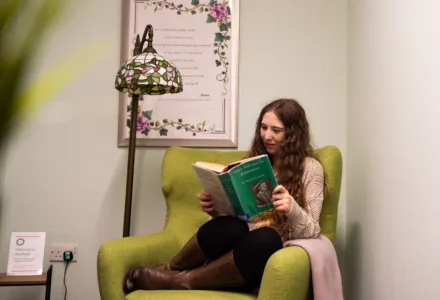
English and History with Foundation Year
BA (Hons)
English and History with Foundation Year
Education Studies and English with Foundation Year
Education Studies and English
BA (Hons)
Education Studies and English
English and History
BA (Hons)
English and History
Education with TESOL

Primary Education with QTS
BA (Hons)
Primary Education with QTS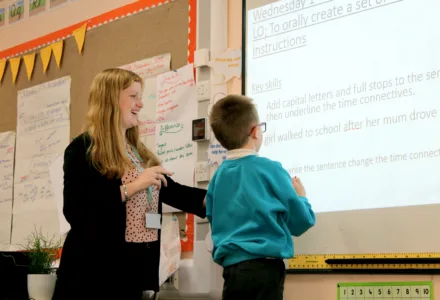
Primary Teaching Studies with QTS
BA (Hons)
Primary Teaching Studies with QTS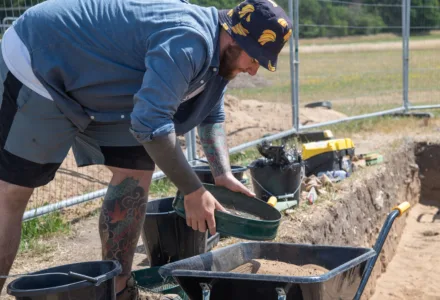
Archaeology and History
BA (Hons)
Archaeology and History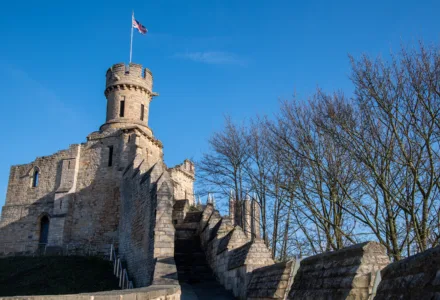
History
BA (Hons)
History
Archaeology and History with Foundation Year
History with Foundation Year
BA (Hons)
History with Foundation Year
Military History
BA (Hons)
Military History
Education Studies and Sociology
BA (Hons)
Education Studies and Sociology
Education Studies and Sociology with Foundation Year

Education Studies and Theology, Philosophy & Ethics with Foundation Year
Education Studies and Theology, Philosophy & Ethics
FdA Early Childhood Education in Practice (Grantham)
FdA Early Childhood Education in Practice (LETTA)
FdA Education in Practice (Grantham)

FdA Education in Practice (LETTA)

Education Studies
BA (Hons)
Education Studies
Education Studies and History
BA (Hons)
Education Studies and History
Education Studies and Special Educational Needs, Disability & Inclusion (SENDI)

Education Studies and Sport
BA (Hons)
Education Studies and Sport
Education Studies and TESOL
BA (Hons)
Education Studies and TESOL
History and Theology, Philosophy & Ethics

Psychology and Education Studies
BA (Hons)
Psychology and Education Studies
Education Studies and Special Educational Needs, Disability & Inclusion (SENDI) with Foundation Year
Education Studies and Sport with Foundation Year
Education Studies with Foundation Year
BA (Hons)
Education Studies with Foundation Year
History and Theology, Philosophy & Ethics with Foundation Year
Psychology and Education Studies with Foundation Year

Education
MA
Education
Education (English as an Additional Language)

Early Years Education

Educational Leadership and Management

Special Educational Needs and Disabilities (SEND)

Early Childhood Education in Practice (Grantham)
Early Childhood Education in Practice (LETTA)

Education in Practice (Grantham)
BA (Hons)
Education in Practice (Grantham)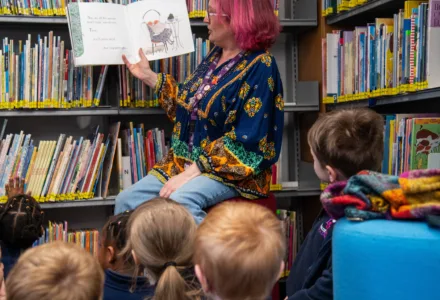
Education in Practice (LETTA)
BA (Hons)
Education in Practice (LETTA)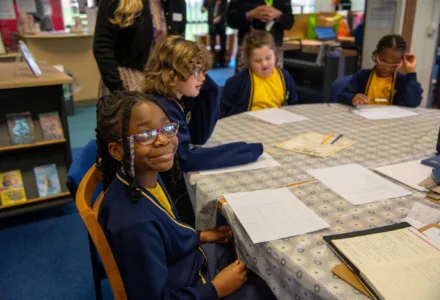
Early Childhood Education in Practice (Graduate Practitioner) (Grantham)

Early Childhood Education in Practice (Graduate Practitioner) (LETTA)
Primary Education with QTS with Foundation Year