Why study this course
Keep your career aims and options open as you study education in its broadest sense, from the development of the youngest children to how adults learn.
You’ll gain invaluable classroom practice and will have flexible opportunities to experience other educational settings through up to 9 weeks of work-based placements.
Progressing into Teaching? FREE pre-teaching course and guaranteed interview for PGCE.
Want even more flexibility? Choose from multiple degree combinations with Education Studies, keeping your career pathway open, whilst also being excellent preparation for PGCE courses.
Course summary
Studying Education Studies at Lincoln Bishop will provide you with an excellent understanding of education in its widest sense, nationally and globally, and is a great course if you are interested in a career in teaching or are thinking about working in other education-related areas.
If you don’t have, or don’t think you will attain the normal tariff points for studying at Lincoln Bishop, click here to view the Foundation Year version of this course.
Key facts
|
Award |
BA (Hons) |
|---|---|
|
UCAS code |
X301 |
|
Typical offer |
|
|
Duration |
3 years |
|
Mode of study |
Full time |
|
Start date |
September 2027 |
|
Award |
Lincoln Bishop University |
|
Institution code |
B38 |
Apply for this course
When you're ready to apply, the route you take will depend on your personal circumstances and preferred method of study. Click the relevant button below to start your application journey.
About this course
How do people learn? What gets in the way of learning? Where might people learn best – and how? Do we need schools? Is it possible to ‘school’ the world? Can education make a difference to human rights? Women's rights? Nationally? Globally? These are just some of the big questions that you will examine through studying Education Studies at Lincoln Bishop University. We are proud of our highly contemporary, reactive and issues-based course that has been carefully designed to give you that ‘bigger’ picture of education in a global society. An Education Studies degree from Lincoln Bishop will equip you well for the future, no matter what your career destination, but if you are planning to go on to teach you will find that our modules will open your eyes to some different ways of thinking about education and its purpose and place in society.
Studying Education Studies with us will provide you with an excellent understanding of education in its widest sense, nationally and globally, and is a great choice if you are interested in a career in teaching or are thinking about working in other education-related areas. The undergraduate degree provides you with a deep and reflective knowledge and understanding of contemporary issues in education, directly related to everyday practice. You’ll debate education policy, find out more about the drivers of educational change in England today and critically consider different approaches to schools and schooling, both within the UK and globally.
A key feature of Education Studies is a focus on you as a developing practitioner. You will be encouraged to develop a strong personal ideology of education during the course and will be supported in the development of secure employability skills through our work-based placements. A number of core modules each year incorporate placements in schools or other education-related settings and carefully structured placement tasks will ensure that you gain valuable first-hand practical experience.
Placements
The Placement Services Office endeavours to source placements as efficiently as possible. However, in some cases there may be a delay to the start of your placement while this process is completed, particularly in disciplines facing national shortages and in pinch-point locations. In such cases, the Placement Services Office and your Academic Team will remain in regular contact to support you during this time.
Please be advised that the University cannot guarantee placements in specific locations, and travel may be required.
Scheduled Teaching Hours
Undergraduate programmes consist of 360 HE credits, with each credit equating to 10 hours of learning.
Depending upon the mode of delivery (i.e. face-to-face/in-person, online or a blend of these) and whether your course is full-time or part-time, the delivery of the scheduled hours for the programme will involve taught input, independent study, and where applicable, work-based or placement hours.
What you will study
Please note that we are working to update some of our programme specifications. These represent small updates to optional modules at Level 5 (second year) as part of a normal regular process of updating our courses.
The interlinked yet distinct areas of the brain and the mind continue to be the subject of considerable study, aided by developments in research methods and technological tools. Increasingly knowledge about the brain and the mind is being embedded in education policy and practice. This Level 4 module explores the intersections of neuroscience, pedagogy, policy and psychology though various topics that relate to the brain, the mind and education. It introduces you to areas of the brain that have particular relevance for learning, for example executive functions and the role of working memory, key themes such as the roles of nature and nature in brain development and theories of intelligence such as IQ and Multiple Intelligences. Additionally, the module goes beyond the brain to explore broader theories of cognition connected to the mind, body and environment, for example embodied cognition. Throughout the module topics about the brain and the mind will be related to education so you will critically consider implications for teaching and learning and the applicability of theory and research to educational settings. As part of this module you will build your knowledge of education research that will act as a foundation for developing key research skills across the following years of the programme. You will engage with research on the brain and cognition to understand different research methodologies and tools. You will be supported to begin to think critically about research findings by examining the quantity and quality of the evidence that is presented. Additionally, you may identify where issues with the research findings or inaccurate interpretations of these findings have led to myths about the brain gaining currency in educational practice.
Building on the fundamental concepts of learning introduced previously in Level 4, this module focuses on the sociology of education and learning, and, primarily, how academic achievement and educational inequality is shaped by society and educational structures. The module provides teaching and classroom-based experiences through which the impact of a variety of sociological factors, such as socio-economic group, gender, ethnicity and human rights can be better understood. Relevant theories and approaches to explaining differences in attainment will be studied, together with an exploration of factors that might contribute to narrowing gaps in educational outcomes. As part of this module you may be expected to investigate and analyse a range of published sources of data on educational attainment and interventions and so learn to interpret and explain data presented in different ways. You will also undertake a placement that will enable you to apply knowledge gained in the module and further develop your transferable skills of communication and organisation, as well as gain further experiences of supporting learning.
Step into the fascinating world of child development. This module delves into the milestones, challenges, and wellbeing of children, equipping you to support their growth holistically. Ideal for those who want to make a real difference in young lives.
An understanding of how individuals learn and the factors that shape learning is fundamental to any study of education. This Level 4 module will introduces you to a range of key theoretical ideas and principles about learning from birth to adulthood. It explores theories that focus on adult learning, for example andragogy, as well as pedagogical ones that centre around child learners, for example behaviourism and constructivism. The module combines a study of these historical approaches with a consideration of contemporary theories such as heutagogy and factors like education policy that shape, or even determine, learning in the 21st Century. It will enable you to draw on your own experiences of learning and will encourage you to critically engage with theories to identify strengths, limitations and the applicability to educational environments. As part of this module you may work on developing key academic skills that will provide a foundation for academic work at all levels of the programme. Such work may include academic reading skills, for example identifying and reading different types of sources, and academic writing skills, such as structuring written assignments. You will undertake a placement that will enable you to apply theoretical perspectives from the module to understand and reflect on pupils’ learning within the education system. The placement also provides you with the opportunity to begin to develop key professional skills. Teaching and learning will proceed by way of interactives lectures, seminars and tutorials, supported by e-learning and VLE-based tasks. Tutor-led seminars will utilise collaborative group work in order to model and enable learning and assist you in developing the skills to study and learn independently. In this module you will develop subject expertise, professional skills and increase graduate attributes, most notably academic literacies and employability.
Compulsory modules
How did schools come to assume their present form and function? Who were the architects of ideas about education? An understanding of ways in which different ideas about education have variously shaped policy and practice, both in the UK and worldwide will enable you to develop knowledge and understanding of the ‘bigger’ picture of education; beyond that of your immediate and most recent experience. This highly responsive and contemporary module builds on concepts from Level 4 and examines a range of different ideas about the purpose and practice of education, including those of the most recent Government, relating these to some common educational ideologies. It considers a variety of ways in which the purpose and outcomes of education may be interpreted, and the diversity of settings in which it may take place.
Successful teaching involves educators being deliberate, thoughtful and purposeful in their decisions and actions. Choices and decisions about how to teach are constantly under scrutiny and are increasingly driven by national and international data. This module will build on the understanding of learners and learning developed at level 4, underpin concepts of innovative teaching and learning approaches introduced at level 5 (in semester 2); and will critically examine a range of views of effective pedagogical practice drawn from contemporary research. The syllabus will respond as necessary to contemporary developments as they arise drawing on international, national and comparative research. It may include social pedagogical approaches such as dialogic teaching, pupil talk, group work and other interactive teaching and learning approaches.
An understanding of the principles and practice of inclusive education is crucial to those who intend to work in an educational context. This module will introduce you to the philosophical social justice debate and theories and ideologies of inclusive practice, and will examine interpretations of diversity and inclusion in different contexts. Although matters relating to inclusion are embedded in all modules, this offers you the opportunity to study the topic in depth and to critically analyse and apply a range of theories in the context of your work with young people in a range of educational contexts. It will build on the values, beliefs and philosophies explored in Level 4 modules and extend your appreciation of issues of human rights, equality and equity.
This module builds on and develops the basic methods and data interpretation skills developed during Level 4 modules. The module also prepares you for your Dissertation at Level 6 especially if you are intending to pursue a Dissertation (Capstone Project) in Education Studies or other Social Science (at Level 6). You will explore ways in which a range of quantitative and qualitative methods can be brought to the investigation of educational issues. You will apply selected quantitative and qualitative methods and will be introduced to the benefits and difficulties of education research. You will develop your understanding of the range of research methodologies and research methods (data collection tools) that can be used in education research, and further develop your skills of statistical analysis and data interpretation.
Optional modules
This module introduces you to the ideas, practices and challenges involved in understanding communities and contributing to social purpose. It explores how communities form, how they experience and respond to social issues, and how you, alongside individuals, groups and organisations, can support positive social change.
You will examine a range of perspectives on community, identity, belonging and participation, and consider how social purpose is expressed through collaborative activity, civic engagement and initiatives aimed at improving collective wellbeing.
Through a combination of theoretical exploration and applied learning, you will develop the ability to analyse the characteristics, needs and dynamics of different types of communities. The module encourages your critical thinking, ethical awareness and practical skills for engaging with community issues and contributing to meaningful social purpose.
The module uses a blend of learning approaches designed to support your critical enquiry, collaborative learning and the application of ideas to real-world contexts.
Assessments are designed to evaluate your ability to apply relevant theoretical frameworks, draw on appropriate evidence and formulate practical strategies for supporting social purpose in ways that align with your particular field of study.
*NB Students may be able to elect modules of study from other subject areas, subject to availability, timetabling, and capacity. Where this is possible information will be made available by the Faculty.
This module equips you with an understanding of Corporate Social Responsibility and sustainability in regional, global and organisational contexts.
You will be empowered to take positive action as an informed global citizen in line with The 2030 Agenda for Sustainable Development, adopted by all United Nations Member States in 2015. The Agenda provides a shared blueprint for peace and prosperity for people and the planet, now and into the future. At its heart are the 17 Sustainable Development Goals, which are an urgent call for action by all countries, developed and developing, in a global partnership. They recognise that ending poverty and other deprivations must go hand in hand with strategies that improve health and education, reduce inequality, and support economic growth, while also tackling climate change and working to preserve our oceans and forests. These SDGs will therefore underpin the teaching and learning ethos of this module.
Through undertaking the module, you will begin to develop the knowledge and skills required to shape practices for managing and leading Corporate Social Responsibility and sustainability in an organisational setting.
The approaches taken to manage and lead CSR and sustainability differ according to the nature and purpose of individual organisations. For this reason, the critical exploration of case studies will help you develop a fuller understanding of CSR and sustainability in a variety of organisational contexts.
*NB Students may be able to elect modules of study from other subject areas, subject to availability, timetabling, and capacity. Where this is possible information will be made available by the Faculty.
Compulsory modules
Excellence and innovation in curricula are a central tenet of any world class education system. This highly responsive module provides you with a theoretical and critical understanding of key considerations in the development and implementation of curriculum policy, content and practice in educational settings. The module considers future developments in the current curriculum and possible alternative future directions. It provides you with an opportunity to study this at first hand in placement settings. A range of theoretical approaches to the curriculum will be critically examined. The syllabus may include topics such as differing views of the nature and organisation of knowledge, and examination of various curriculum frameworks, including aims, content and contemporary views of pedagogy. These will vary over time in order to ensure that the module is responsive to new developments and future directions in education for instance decolonising of the curriculum and environmental education. Innovative practice from inspirational educational settings may be showcased in order to provide models of excellence. Placement will allow you to gain real-world experiences of current curriculum arrangements.
Broaden your horizons with this dynamic module that takes you on a global journey through education! Explore diverse educational systems, cultures, and philosophies from around the world. You will critically examine international policies and practices, gaining insights into how global perspectives can inspire positive change in local contexts. Ideal for students eager to become globally minded educators and leaders.
This module will provide you with skills and knowledge needed to design, conduct and report a substantial dissertation on a subject of interest to you and of relevance in the current context of education. You will gain an understanding of different methodological approaches and perspectives on educational research and be encouraged to articulate your own epistemologies and ontologies. Taught sessions will help to inform and scaffold the your planning process and provide a range of methods for sourcing, collecting, collating and analysing both primary (collected on placement) and/or secondary data in the construction of the written work. The module will ensure that your understanding of research ethics and integrity is embedded at all stages of your dissertation including gaining ethical clearance for primary research. Consideration is given to the potential positive ‘legacy’ of your research in practice. You will build on the research skills imparted earlier in your studies, at all levels, applying them in a more independent manner. The module will deepen and refine your knowledge of your specialist area and offer insights into the construction of longer pieces of analytical written work, and the way in which arguments are mediated in them. Opportunities to share and refine ideas at all stages will be supported by group work and supervisory tutorials. Links with university services offering additional expertise relevant to supporting your research skills and writing will be integrated and signposted in the module.
Optional modules
Dive into the fascinating world of how language and literacy shape learning! This advanced module explores the vital connections between language development, literacy skills, and educational practice. You will investigate current research, innovative strategies, and practical approaches that empower learners of all ages to become confident communicators and critical thinkers. Perfect for those passionate about making a real difference in language education.
This module will build on (EDU50322) Vision to Reality and introduce you to a further range of contexts and settings for learning, examining these from the perspective of educators and learners, policy and practice. Throughout the module you will be encouraged to consider and appreciate the scope and limitations of education within a variety of teaching and learning environments and organisations. You will be introduced to a wider and more complex range of research and theory related to the benefits and limitations of teaching and learning in informal and alternative learning environments alongside the unique personal embodiment / impact of these on the overall experience of learners and educators. You will consider how pedagogical approaches are utilised in these contexts and how such contexts are positioned in contemporary educational policy. You will develop and apply skills of critical analysis in module sessions and independent learning. First hand experiences of different learning contexts through study visits and work with visiting experts will be threaded through the module as a basis for comparison, analysis, evaluation and reflection.
Entry requirements
| Typical offer | |
|---|---|
| A-levels | CCC-BCC |
| UCAS points | 96-104 |
| BTEC | MMM |
| T-levels | P |
You will normally need 96-104 UCAS tariff points (from a maximum of four Advanced Level qualifications). We welcome a range of qualifications that meet this requirement, such as A/AS Levels, BTEC, T Levels, Access Courses, International Baccalaureate (IB), Cambridge Pre-U, Extended Project etc.
However this list is not exhaustive – please click here for details of all qualifications in the UCAS tariff.
You will be required to pay for an Enhanced Disclosure and Barring Service (DBS) check and placement related travel costs (according to the Student Transport, Accommodation and Subsistence Policy).
Find out more about the international application process including English Language requirements.
If you don’t have, or don’t think you will attain the normal tariff points for studying at Lincoln Bishop, click here to view Foundation Year courses.
Further information
Click here for key information for all undergraduate students.
Click here for all programme specifications.
In accordance with University conditions, students are entitled to apply for Recognition of Prior Learning, RP(C)L, based on relevant credit at another HE institution or credit Awarded for Experiential Learning, (RP(E)L).
How you will be taught
There is no one-size-fits-all method of teaching at Lincoln Bishop – we shape our methods to suit each subject and each group, combining the best aspects of traditional university teaching with innovative techniques to promote student participation and interactivity.
You will be taught in a variety of ways, from lectures, tutorials and seminars, to practical workshops, coursework and work-based placements. Small group seminars and workshops will provide you with an opportunity to review issues raised in lectures, and you will be expected to carry out independent study.
Placements are a key part of degree study within many courses at Lincoln Bishop. They provide an enriching learning experience for you to apply the skills and knowledge you will gain from your course and, in doing so, give valuable real-world experience to boost your career.
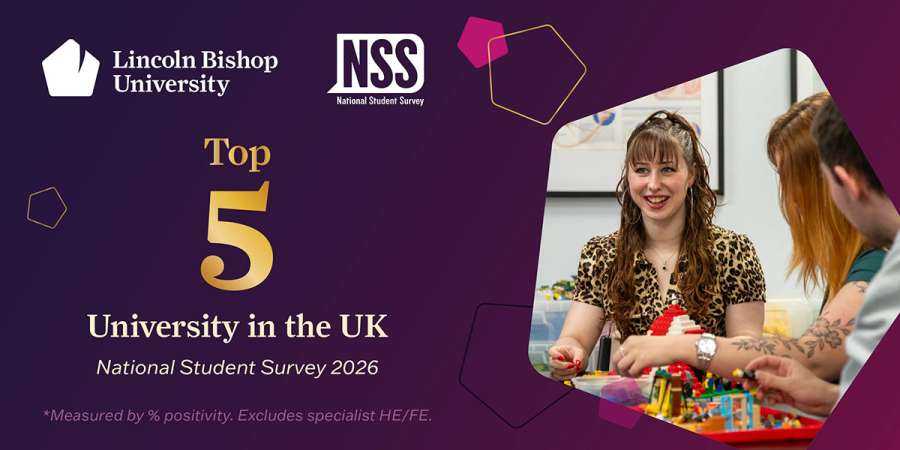
Academic staff
Assessment
In Education Studies, assessment is carried out through coursework of different types, including essays, reports, oral presentations, multimedia presentations, reflective logs and portfolios. There are no examinations. You can expect to give one or two oral presentations or poster presentations as one of a small group of students throughout the course. You will gradually build up skills of multimedia presentation and third-year students currently share a short, assessed multimedia film to their peers. You will build up your writing skills steadily throughout the course and in the first year, you will complete a portfolio of shorter written pieces and two longer essays, receiving formative feedback from your tutors to help you build up your academic capabilities.
Careers & Further study
The depth and scope of the topics we cover, together with regular work-based placements, means that Education Studies graduates enjoy very high levels of employability in a wide range of fields. Currently, around 70% of our students complete a teacher training course and go on to be highly successful teachers in early years, primary, secondary or further education, working in the UK or abroad.
However, an Education Studies degree from Lincoln Bishop offers excellent versatility. It prepares you for direct employment in education-related fields, as well as jobs within the public and private sector. Our graduates have also gone on to have successful careers in diverse areas such as museums, galleries and charities, human resources, youth work, outdoor education, higher education administration and health and social care.
The diverse nature of this course will also enable you to go onto further postgraduate study, with previous students following this route to occupy roles such as social workers, speech and language therapists, higher education researchers and lecturers, mental health counsellors and drama therapists.
What Our Students Say
Discover what life is like at Lincoln Bishop University from our students.
Support
Studying at Lincoln Bishop is a student-centred experience. Staff and students work together in a friendly and supportive atmosphere as part of an intimate campus community. You will know every member of staff personally and feel confident approaching them for help and advice, and staff members will recognise you, not just by sight, but as an individual with unique talents and interests.
We will be there to support you, personally and academically, from induction to graduation.
Fees & Funding
A lot of student finance information is available from numerous sources, but it is sometimes confusing and contradictory. That’s why at Lincoln Bishop we try to give you all the information and support we can to help to throughout the process. Our Student Advice team are experts in helping you sort out the funding arrangements for your studies, offering a range of services to guide you through all aspects of student finance step by step.
Undergraduate course applicants should apply via UCAS using the relevant UCAS code. For 2026 entry, the application fee is £28.95, and you can make a maximum of 5 choices.
For 2027/28 entry the UCAS fee is £34.50.
Undergraduate and PGCE fees for 2027 entry will be confirmed following a UK Government announcement by the Department for Education (DfE), expected in late 2026.
For all applicants, there are full instructions at UCAS to make it as easy as possible for you to fill in your online application, plus help text where appropriate. Full details of all tuition fees can be found here.
Joint Honours at Lincoln Bishop
Why not study Education Studies as a Joint Honours?
Studying a Joint Honours degree offers numerous benefits for students seeking a diverse and well-rounded academic experience.
Types of Education Studies Joint Honours:
Education Studies and Psychology
Education Studies and Sociology
Educations Studies and Special Educational Needs, Disabilities and Inclusion
41 Related courses
Education Studies and TESOL with Foundation Year
PGCE Secondary
PGCE
PGCE Secondary
Professional Graduate Diploma in Education (Teaching Post-16 and Further Education)

Professional Graduate Diploma in Education -Teaching Post-16 and Further Education (SEND)

EdD (Doctorate of Education)

Education Studies and English with Foundation Year
Education Studies and English
BA (Hons)
Education Studies and English
Education with TESOL

Primary Education with QTS
BA (Hons)
Primary Education with QTS
Primary Teaching Studies with QTS
BA (Hons)
Primary Teaching Studies with QTS
Education Studies and Sociology
BA (Hons)
Education Studies and Sociology
Education Studies and Sociology with Foundation Year

Education Studies and Theology, Philosophy & Ethics with Foundation Year
Education Studies and Theology, Philosophy & Ethics
FdA Early Childhood Education in Practice (Grantham)
FdA Early Childhood Education in Practice (LETTA)
FdA Education in Practice (Grantham)

FdA Education in Practice (LETTA)
Education Studies and History
BA (Hons)
Education Studies and History
Education Studies and Special Educational Needs, Disability & Inclusion (SENDI)

Education Studies and Sport
BA (Hons)
Education Studies and Sport
Education Studies and TESOL
BA (Hons)
Education Studies and TESOL
Psychology and Education Studies
BA (Hons)
Psychology and Education Studies
Education Studies and History with Foundation Year
Education Studies and Special Educational Needs, Disability & Inclusion (SENDI) with Foundation Year
Education Studies and Sport with Foundation Year
Education Studies with Foundation Year
BA (Hons)
Education Studies with Foundation Year
Psychology and Education Studies with Foundation Year

Education
MA
Education
Education (English as an Additional Language)

Early Years Education

Educational Leadership and Management

Special Educational Needs and Disabilities (SEND)
Teaching & Learning (Top-Up)
BA (Hons)
Teaching & Learning (Top-Up)
Early Childhood Education in Practice (Grantham)

Early Childhood Education in Practice (LETTA)

Education in Practice (Grantham)
BA (Hons)
Education in Practice (Grantham)
Education in Practice (LETTA)
BA (Hons)
Education in Practice (LETTA)
Early Childhood Education in Practice (Graduate Practitioner) (Grantham)

Early Childhood Education in Practice (Graduate Practitioner) (LETTA)
Primary Education with QTS with Foundation Year