Why study this course
Keep your career aims and options open as you study education in its broadest sense, from the development of the youngest children to how adults learn.
You’ll gain invaluable classroom practice and will have flexible opportunities to experience other educational settings through up to 9 weeks of work-based placements.
Three FREE years of membership to our Sport & Fitness Centre, gym and facilities for all Lincoln Bishop undergraduate Sport students
We have extensive links with external partners and opportunities for work experience, volunteering and coaching
Course summary
Studying Education Studies at Lincoln Bishop will provide you with an excellent understanding of education in its widest sense, nationally and globally, and is a great course if you are interested in a career in teaching or are thinking about working in other education-related areas.
During the study of Sport at Lincoln Bishop you will gain understanding in the complexities of this subject, including; the development of sport; how performance can be enhanced and how it can be managed and led. This course is designed to develop your knowledge and understanding of the sport, physical education, learning and teaching and education.
Please note, this course is currently going through revalidation.
Key facts
|
Award |
BA (Hons) |
|---|---|
|
UCAS code |
CX6F |
|
Duration |
4 years |
|
Mode of study |
Full time |
|
Start date |
September 2027 |
|
Award |
Lincoln Bishop University |
|
Institution code |
B38 |
Apply for this course
When you're ready to apply, the route you take will depend on your personal circumstances and preferred method of study. Click the relevant button below to start your application journey.
About this course
Education Studies
How do people learn? What gets in the way of learning? Where might people learn best – and how? Do we need schools? Is it possible to ‘school’ the world? Can education make a difference to human rights? Women's rights? Nationally? Globally? These are just some of the big questions that you will examine through studying Education Studies at Lincoln Bishop University. We are proud of our highly contemporary, reactive and issues-based course that has been carefully designed to give you that ‘bigger’ picture of education in a global society. An Education Studies degree from Lincoln Bishop will equip you well for the future, no matter what your career destination, but if you are planning to go on to teach you will find that our modules will open your eyes to some different ways of thinking about education and its purpose and place in society.
Studying Education Studies with us will provide you with an excellent understanding of education in its widest sense, nationally and globally, and is a great choice if you are interested in a career in teaching or are thinking about working in other education-related areas. The undergraduate degree provides you with a deep and reflective knowledge and understanding of contemporary issues in education, directly related to everyday practice. You’ll debate education policy, find out more about the drivers of educational change in England today and critically consider different approaches to schools and schooling, both within the UK and globally.
A key feature of Education Studies is a focus on you as a developing practitioner. You will be encouraged to develop a strong personal ideology of education during the course and will be supported in the development of secure employability skills through our work-based placements. A number of core modules each year incorporate placements in schools or other education-related settings and carefully structured placement tasks will ensure that you gain valuable first-hand practical experience.
Placements
The Placement Services Office endeavours to source placements as efficiently as possible. However, in some cases there may be a delay to the start of your placement while this process is completed, particularly in disciplines facing national shortages and in pinch-point locations. In such cases, the Placement Services Office and your Academic Team will remain in regular contact to support you during this time.
Please be advised that the University cannot guarantee placements in specific locations, and travel may be required.
Sport
Our dynamic Sports courses are designed around three specific areas - Physical Education, Sports Coaching and Sports Development. As your course progresses you can choose to specialise in a particular area, giving you as much freedom as possible to explore your personal interests.
Alongside these three areas, you can expect to cover contemporary themes that develop from year to year. You’ll explore the effects of exercise on the body, looking at a range of physical activities in different social groups – from high-level sports performers to young children. As you’d expect, this course also contains a great deal of hands-on experience, where you’ll learn how to use your skills to inspire others to be more active and to excel at sport and exercise.
You’ll be researching and interrogating recent issues and looking at conflicting ideas and opinions on this undergraduate degree, as well as being encouraged to hone your coaching, leadership and teaching skills through practical exercises, field trips, laboratory work and placement opportunities. In Sport, we think you should experience intellectual excitement and enjoyment, knowledge and practical skills relevant to your chosen career and as much freedom as possible to explore your personal interests.
Here at Lincoln Bishop in Lincoln employability is central to our courses, so we’ll support you to find a placement that is tailored to your career aspirations for the future. You’ll also have the chance to gain coaching qualifications and to volunteer in sport across the county – our links with local sports partnerships and governing bodies provide unique work and career opportunities that you won’t find anywhere else.
If you have a passion and commitment to sport then this is the course for you. Come and join us to research and debate recent and topical developments and conflicting values and ideas about sport and physical education.
Scheduled Teaching Hours
The Foundation Year is the first year of a four-year undergraduate degree and provides a pathway to undergraduate study for students who do not have the typical qualifications required for direct entry to Level 4. As an integrated Foundation Year it does not carry credits, as the purpose of the year is to facilitate students’ progression to Level 4 of their chosen undergraduate degree programme [see Undergraduate].
The delivery of the scheduled hours for the programme includes taught and independent study and is designed to support the needs of learners on Foundation Year programmes as they transition to the requirements of Higher Education study. Material is delivered in both face-to-face and asynchronous formats, totalling 176 hours of taught input, and includes both core academic skills training and additional input from subject specialists. Contact hours in taught sessions are complemented by an extensive support curriculum that operates through the year, typically comprising, but not limited to, additional tutorials, catch-up sessions, study groups, and personal support.
What you will study
Please note that we are working to update some of our programme specifications. These represent small updates to optional modules at Level 5 (second year) as part of a normal regular process of updating our courses.
In this module, you will gain theoretical understanding and employthe practical application of core academic skills. You will understand the definition and importance of academic integrity and explore the key skills required for effective academic practice. You will develop skills in academic and information literacies, including the ability to locate, evaluate, and reference academic sources. The module will provide guidance and practice on academic writing conventions, critical reading strategies, reflective practice, and effective communication skills. You will consider these skills in the context of your chosen subject area and will engage in a range of learning approaches and opportunities, including tutorials and peer learning
In this module, you will identify and develop personal tools for effective learning as a student in Higher Education. The nature and purpose of Higher Education will be explored, including developing an understanding of independent and autonomous learning. You will
reflect on your own skills as a learner and learn how to establish goals for self-development. A range of functional, organisational, and practical skills to support learning will be introduced, including time management, personal organisation, and professional etiquette. You will also engage in development of your digital skills to enable effective use of digital learning tools in your studies.
In this module, you will define critical thinking and engagement and learn how to apply these in the construction of an academic discussion. You will explore practices to develop critical thinking and learn how to research, construct, and defend an academic argument. You will practise critical engagement with academic sources as part of research and begin developing skills of summary and synthesis to support your own arguments. You will apply critical thinking and engagement skills to an area of inquiry in your chosen subject area.
In this module, you will explore the nature and use of documentary and evidence-based sources within academic practice. The module is interdisciplinary, allowing you to investigate a variety of evidentiary sources such as documentary sources, case studies, archival material, and policy. You will begin to learn to analyse and evaluate such sources critically and to consider them within the broader context of academic research. The use of documentary and evidence-based research across disciplines will be explored, analysed, and evaluated critically.
In this module, you will explore the nature and use of data within academic practices. The module is interdisciplinary, allowing you to investigate a variety of data sources and types, including qualitative and quantitative. You will begin to learn to interpret, analyse, and represent data in a meaningful way. You will learn about different methods of data collection and the use of data across disciplines will be explored, analysed, and evaluated critically.
In this interdisciplinary module, you will explore key ideas, theories, and philosophies that underpin a range of academic disciplines. You will learn how these ideas developed and influenced thinking and evaluate their importance within the context of an academic discipline. The module will explore how such ideas have evolved over time and their influence both on academic practice and broader contexts. You will develop and apply skills of critical analysis to discuss and evaluate the ideas and theories, and have the opportunity to explore them in depth in relation to your chosen subject area
In this interdisciplinary module, you will explore the role and impact of academic practices within the context of local communities. You will explore the social purposes of education, specifically Higher Education, and consider how academic research intersect with community and social practices. The module will explore how different academic disciplines can provide insight and enable interventions into local communities. You will develop and apply skills of critical analysis to explore a topic of local interest in relation to your chosen subject area.
An understanding of how individuals learn and the factors that shape learning is fundamental to any study of education. This Level 4 module will introduces you to a range of key theoretical ideas and principles about learning from birth to adulthood. It explores theories that focus on adult learning, for example andragogy, as well as pedagogical ones that centre around child learners, for example behaviourism and constructivism. The module combines a study of these historical approaches with a consideration of contemporary theories such as heutagogy and factors like education policy that shape, or even determine, learning in the 21st Century. It will enable you to draw on your own experiences of learning and will encourage you to critically engage with theories to identify strengths, limitations and the applicability to educational environments. As part of this module you may work on developing key academic skills that will provide a foundation for academic work at all levels of the programme. Such work may include academic reading skills, for example identifying and reading different types of sources, and academic writing skills, such as structuring written assignments. You will undertake a placement that will enable you to apply theoretical perspectives from the module to understand and reflect on pupils’ learning within the education system. The placement also provides you with the opportunity to begin to develop key professional skills. Teaching and learning will proceed by way of interactives lectures, seminars and tutorials, supported by e-learning and VLE-based tasks. Tutor-led seminars will utilise collaborative group work in order to model and enable learning and assist you in developing the skills to study and learn independently. In this module you will develop subject expertise, professional skills and increase graduate attributes, most notably academic literacies and employability.
Building on the fundamental concepts of learning introduced previously in Level 4, this module focuses on the sociology of education and learning, and, primarily, how academic achievement and educational inequality is shaped by society and educational structures. The module provides teaching and classroom-based experiences through which the impact of a variety of sociological factors, such as socio-economic group, gender, ethnicity and human rights can be better understood. Relevant theories and approaches to explaining differences in attainment will be studied, together with an exploration of factors that might contribute to narrowing gaps in educational outcomes. As part of this module you may be expected to investigate and analyse a range of published sources of data on educational attainment and interventions and so learn to interpret and explain data presented in different ways. You will also undertake a placement that will enable you to apply knowledge gained in the module and further develop your transferable skills of communication and organisation, as well as gain further experiences of supporting learning.
This module sets out to combine an academic study of the relations between sport, education and society, with a pragmatic desire to explore sport in formal and informal learning environments. It will promote inquiry into the implications of the curriculum for teaching and learning of sport and will begin to develop required skills and knowledge of appropriate teaching strategies in preparation for further development. Teaching and learning will proceed by way of interactive lectures, practical work, tutorials and seminars. These will introduce key concepts and develop your understanding of sport in education. Practical activities and tutor-led workshops will provide opportunities for you to observe and assist in teaching and learning of sport. A number of directed tasks are incorporated, including data collection, independent reading, presentation and discussion. Online support and discussion through the VLE will be available and shared reflection will be encouraged through your contribution to a blog. The syllabus will include a study of the nature of sport in education and will provide an introduction to the application of Physical Education (PE) in a variety of educational settings. You will be introduced to key issues in PE such as inclusion, assessment, cross-curricular learning, citizenship and lifelong learning. Sport will be placed in context of the National Curriculum for PE and you will examine real case studies of how sport education has been used in both primary and secondary PE. You will also have the opportunity to explore and develop knowledge and understanding of strategies aimed at making the sport experience positive and meaningful to all individuals.
This module will provide you with an overview of the influence of physical activity on health and wellbeing in young people. The module will explore the main cultural, political and ethical issues surrounding physical activity and will introduce methods of promoting physical activity to young people. Tutor-led workshops both in the Sports Hall and Human Performance Lab (HPL) will introduce and develop the varied practical and analytical skills required to complete the module successfully. A number of directed tasks are incorporated, including data collection, independent reading, use of VLE, presentation and discussion. The syllabus will explore current research on physical activity and young people in the UK and will examine current and previous levels of physical activity. You will gain theoretical and practical understanding of the physical, social and psychological benefits of physical activity for young people. In particular this module sets out to identify how young people develop their self-identities and how they accept or reject physical activity and sport in this process. Through investigating physical activity prescriptions, levels and key exercise interventions you will gain a breadth and depth of understanding of the barriers young people face towards exercise and physical activity.
Compulsory modules
An understanding of the principles and practice of inclusive education is crucial to those who intend to work in an educational context. This module will introduce you to the philosophical social justice debate and theories and ideologies of inclusive practice, and will examine interpretations of diversity and inclusion in different contexts. Although matters relating to inclusion are embedded in all modules, this offers you the opportunity to study the topic in depth and to critically analyse and apply a range of theories in the context of your work with young people in a range of educational contexts. It will build on the values, beliefs and philosophies explored in Level 4 modules and extend your appreciation of issues of human rights, equality and equity.
This module builds on and develops the basic methods and data interpretation skills developed during Level 4 modules. The module also prepares you for your Dissertation at Level 6 especially if you are intending to pursue a Dissertation (Capstone Project) in Education Studies or other Social Science (at Level 6). You will explore ways in which a range of quantitative and qualitative methods can be brought to the investigation of educational issues. You will apply selected quantitative and qualitative methods and will be introduced to the benefits and difficulties of education research. You will develop your understanding of the range of research methodologies and research methods (data collection tools) that can be used in education research, and further develop your skills of statistical analysis and data interpretation.
This module will further develop your knowledge and understanding of pedagogical approaches and skills and apply them to the teaching and learning of PE and sport. It will further explore issues related to the National Curriculum for the teaching and learning of sport. It will provide opportunities for you to acquire and apply knowledge of the principles and concepts of motor skill learning and performance. There will be opportunities to implement and evaluate a wide range of PE and sport related teaching resources and strategies. You will also have the opportunity to develop research and analytical skills in the selection of appropriate PE material and techniques for use in learning environments. The syllabus will include lesson planning, practical organisation, inclusion and differentiation in the physical environment, pedagogical approaches. These themes are explored through various physical activities and practical workshops. You will develop a detailed knowledge of the major theories and practice of teaching and learning through sport and PE. It aims to introduce a range of teaching strategies, which can be used in PE and coaching contexts, providing the opportunity for you to create an appropriate teaching environment for learners to acquire physical, emotional and social skills. You will be introduced to the principles of motor skill learning and related theories and how to apply the concepts of motor learning and performance to real-world settings of teaching and coaching. You will be required to identify relevant teaching and learning practices that will develop pupil knowledge and understanding of the activities in accordance with the National Curriculum in primary and secondary schools.
This module will investigate effective ways of promoting interest, participation and performance in sport. You will develop a critical understanding of theoretical and vocationally relevant issues for sports development in contemporary society. You will broaden your knowledge and understanding through working with a variety of guest speakers, in order to compare contrasting theories, viewpoints and complex arguments. An optional field visit will play a helpful role in understanding current practice in leadership and working with diverse populations. The syllabus will include an introduction to the historical development and promotion of sport and exercise in the UK. You will learn about the theories of sports development and will explore and evaluate policies that guide its direction. Leadership within local authorities, governing bodies and voluntary organisations will be examined alongside the practicalities of policy implementation at a national, regional and local level. You will investigate current development and promotional projects operated by organisations such as the Sport England, Active Lincolnshire, Youth Sport Trust and Lincoln City Council. This module will provide many opportunities for debate, analysis and enquiry, with you appraising the sports development continuum and evaluating the role of sports development and leadership at an individual, group and community level.
Optional modules
This module will allow you to further your knowledge of varying methods which can be used in Sport, Exercise and Physical Education to analyse a range of assessments. You will learn different techniques, depending upon the context of the chosen assessment. The module will raise awareness of the range of methods of analyses and allow you to determine the appropriate methods used. You will also gain an understanding of how to analyse any results and be able to present these in an appropriate manner. You must individually write a report, which will demonstrate your ability to carry out choose the appropriate method of analysis for a chosen example, whether this is in a sporting, exercise or physical education context.
This module equips you with an understanding of Corporate Social Responsibility and sustainability in regional, global and organisational contexts.
You will be empowered to take positive action as an informed global citizen in line with The 2030 Agenda for Sustainable Development, adopted by all United Nations Member States in 2015. The Agenda provides a shared blueprint for peace and prosperity for people and the planet, now and into the future. At its heart are the 17 Sustainable Development Goals, which are an urgent call for action by all countries, developed and developing, in a global partnership. They recognise that ending poverty and other deprivations must go hand in hand with strategies that improve health and education, reduce inequality, and support economic growth, while also tackling climate change and working to preserve our oceans and forests. These SDGs will therefore underpin the teaching and learning ethos of this module.
Through undertaking the module, you will begin to develop the knowledge and skills required to shape practices for managing and leading Corporate Social Responsibility and sustainability in an organisational setting.
The approaches taken to manage and lead CSR and sustainability differ according to the nature and purpose of individual organisations. For this reason, the critical exploration of case studies will help you develop a fuller understanding of CSR and sustainability in a variety of organisational contexts.
*NB Students may be able to elect modules of study from other subject areas, subject to availability, timetabling, and capacity. Where this is possible information will be made available by the Faculty.
Compulsory modules
Broaden your horizons with this dynamic module that takes you on a global journey through education! Explore diverse educational systems, cultures, and philosophies from around the world. You will critically examine international policies and practices, gaining insights into how global perspectives can inspire positive change in local contexts. Ideal for students eager to become globally minded educators and leaders.
Excellence and innovation in curricula are a central tenet of any world class education system. This highly responsive module provides you with a theoretical and critical understanding of key considerations in the development and implementation of curriculum policy, content and practice in educational settings. The module considers future developments in the current curriculum and possible alternative future directions. It provides you with an opportunity to study this at first hand in placement settings. A range of theoretical approaches to the curriculum will be critically examined. The syllabus may include topics such as differing views of the nature and organisation of knowledge, and examination of various curriculum frameworks, including aims, content and contemporary views of pedagogy. These will vary over time in order to ensure that the module is responsive to new developments and future directions in education for instance decolonising of the curriculum and environmental education. Innovative practice from inspirational educational settings may be showcased in order to provide models of excellence. Placement will allow you to gain real-world experiences of current curriculum arrangements.
This module will enable you to develop further knowledge of how to conduct effective measurement techniques. The module will build on concepts and issues introduced elsewhere in the course and will involve you in the measurement and evaluation of a number of parameters of kinanthropometry in a laboratory setting. You will be provided with opportunities to work in groups to develop further competence in a range of anthropometric techniques. You will also be asked to carry out an independent practical assessment, which will require demonstration of competence in a range of kinanthropometric assessment techniques. The syllabus will begin by exploring both the qualitative and quantitative research paradigm and will enable you to develop further knowledge of how to conduct proper measurement techniques. The module will involve you in the measurement of a number of parameters of kinanthropometry in a laboratory setting. By analysing different types of human size, shape, proportion and composition you will be able to apply physiological and psychological principles to practical situations ranging from exercising for health to physical training for enhanced athletic performance. You will have opportunities to work in groups and will explore a range of methods to examine the reliability and validity of a specific measurement protocol or technique. The overall aim of the module is to equip you with practical skills that enable independent enquiry and analysis.
This module will draw contemporary knowledge of sport, coaching and physical education together and relate issues to current practice. It is designed to enable you to develop critically informed opinions on contemporary issues. The syllabus will include a study of the contemporary social, cultural, political and ethical issues in sport and physical education. You will select research issues which may include for example debates surrounding notions of ‘policy’, ‘inclusion’, ‘deviance’ ‘equity’ and ‘identity’ in relation to sport, coaching and physical education. The focus of the module will vary according to changing issues in the sporting world. Building on critical studies in other modules, you will be given the opportunity to explore, research, discuss and critically evaluate a particular contemporary issue from within your chosen theme.
Optional modules
This module will build on (EDU50322) Vision to Reality and introduce you to a further range of contexts and settings for learning, examining these from the perspective of educators and learners, policy and practice. Throughout the module you will be encouraged to consider and appreciate the scope and limitations of education within a variety of teaching and learning environments and organisations. You will be introduced to a wider and more complex range of research and theory related to the benefits and limitations of teaching and learning in informal and alternative learning environments alongside the unique personal embodiment / impact of these on the overall experience of learners and educators. You will consider how pedagogical approaches are utilised in these contexts and how such contexts are positioned in contemporary educational policy. You will develop and apply skills of critical analysis in module sessions and independent learning. First hand experiences of different learning contexts through study visits and work with visiting experts will be threaded through the module as a basis for comparison, analysis, evaluation and reflection.
This module will provide you with skills and knowledge needed to design, conduct and report a substantial dissertation on a subject of interest to you and of relevance in the current context of education. You will gain an understanding of different methodological approaches and perspectives on educational research and be encouraged to articulate your own epistemologies and ontologies. Taught sessions will help to inform and scaffold the your planning process and provide a range of methods for sourcing, collecting, collating and analysing both primary (collected on placement) and/or secondary data in the construction of the written work. The module will ensure that your understanding of research ethics and integrity is embedded at all stages of your dissertation including gaining ethical clearance for primary research. Consideration is given to the potential positive ‘legacy’ of your research in practice. You will build on the research skills imparted earlier in your studies, at all levels, applying them in a more independent manner. The module will deepen and refine your knowledge of your specialist area and offer insights into the construction of longer pieces of analytical written work, and the way in which arguments are mediated in them. Opportunities to share and refine ideas at all stages will be supported by group work and supervisory tutorials. Links with university services offering additional expertise relevant to supporting your research skills and writing will be integrated and signposted in the module.
The module aims to develop your understanding of the emotional nature of sports work and the underlying normative practices and actions that are developed in sports workers relationships and practices. The taught session content will draw upon key sociological and educational theory and concepts and empirical studies to make sense of emotional display, emotion management and emotional wellbeing, impression management and micro-politics in sport and physical education related roles. The module content will inform and align with module tasks and assessment. You will be actively engaged in learning through a social inquiry approach via the identification, exploration and reflection upon emotional practices, experiences and actions across a range of sports and physical education roles. Teaching will adopt a combination of lectures, seminars, tutorials and practical sessions. Assessment will adopt a case study approach.
This module will give you the experience of designing, carrying out a research project, and writing a dissertation, in an area of sport, coaching or physical education. You will gain transferable and practical skills relevant to conducting data collection and analysis of a research project. You will select you research project topics with staff during the second semester of your second year. Each student is allocated a supervisory tutor within the School. Supervisory sessions will cover the identification of a research question; necessary elements of research design; the approach needed to prepare for and complete the research project; a range of appropriate research methods; appropriate statistical analyses; the structure of the research report; the interpretation of the research results; possible or probable conclusions; and the writing of the report. You keep a diary of the research process which logs meetings with supervisor and agreed outcomes. The syllabus will focus on equipping you to undertake an ethically approved research project. During the module you will follow your methodology, carrying out data collection before performing the analysis and discussion of results, resulting in a sustained piece of work. The analysis of results must be detailed and coherent and the discussion should compare findings to other recent and current research. It is undertaken with minimum guidance from the supervisor and will require the exercise of initiative and personal responsibility. It will provide an understanding of the significance and limitations of theory and research as well as enabling you to have the ability to articulate your own preferred learning styles and strategies and actively manage your development to organise an effective work pattern including working to deadlines. It offers you the chance to embark upon your own specialist academic interests and in some cases to make an original contribution to current academic debate.
Entry requirements
Application for this course is via UCAS, although there is no formal requirement for UCAS points to access the course (normally GCSE English or equivalent is desirable). As part of your application you will have the opportunity to speak with a member of Lincoln Bishop Admissions staff to resolve any questions or queries you may have.
Different degree subjects may have specific entry requirements to allow you to progress from the Foundation Year. Whilst not a condition of entry onto the Foundation Year, you will need to have met these by the time you complete the first year of this four year course.
You will be required to pay for an Enhanced Disclosure and Barring Service (DBS) check and placement related travel costs (according to the Student Transport, Accommodation and Subsistence Policy).
Further information
Click here for key information for all undergraduate students.
Click here for all programme specifications.
The Foundation Year syllabus does not include any specific element of upskilling in English language and you are not entitled to apply for Accredited Prior Learning, AP(C)L into a Foundation Year.
How you will be taught
There is no one-size-fits-all method of teaching at Lincoln Bishop – we shape our methods to suit each subject and each group, combining the best aspects of traditional university teaching with innovative techniques to promote student participation and interactivity.
Assessment
In Education Studies, assessment is carried out through coursework of different types, including essays, reports, oral presentations, multimedia presentations, reflective logs and portfolios. There are no examinations. You can expect to give one or two oral presentations or poster presentations as one of a small group of students throughout the course. You will gradually build up skills of multimedia presentation and third-year students currently share a short, assessed multimedia film to their peers. You will build up your writing skills steadily throughout the course and in the first year, you will complete a portfolio of shorter written pieces and two longer essays, receiving formative feedback from your tutors to help you build up your academic capabilities.
In Sport, we use a variety of imaginative approaches to assessment that enable you to utilise your strengths. Over the course of your studies, you could expect your assessment to include presentations, multimedia reports, displays, portfolios, individual research projects, essays, exams and work in the Human Performance Laboratory. We recognise that individuals come from a wide range of backgrounds and experiences, and accordingly use a wide range of assessment strategies. You can expect to be guided and supported carefully in your first year, gradually becoming more independent as the course progresses.
Careers & Further study
Education Studies
The depth and scope of the topics we cover, together with regular work-based placements, means that Education Studies graduates enjoy very high levels of employability in a wide range of fields. Currently, around 70% of our students complete a teacher training course and go on to be highly successful teachers in early years, primary, secondary or further education, working in the UK or abroad.
However, an Education Studies degree from Lincoln Bishop offers excellent versatility. It prepares you for direct employment in education-related fields, as well as jobs within the public and private sector. Our graduates have also gone on to have successful careers in diverse areas such as museums, galleries and charities, human resources, youth work, outdoor education, higher education administration and health and social care.
The diverse nature of this course will also enable you to go onto further postgraduate study, with previous students following this route to occupy roles such as social workers, speech and language therapists, higher education researchers and lecturers, mental health counsellors and drama therapists.
Sport
In Sport, we prepare you for a broad range of sport-related jobs in such areas as sports development, adventure education, physical activity and health, sports coaching, fitness and recreation industry, school sports coordination, armed forces, youth work and postgraduate research.
By the end of the course, you will have developed a range of practical and transferable skills that are underpinned by excellent subject knowledge, meaning you will be well-prepared for your chosen future career. In the past our graduates have begun careers as sports coaches, personal trainers, as physical education teachers (primary and secondary), in the field of youth work or within sports development.
Strong progression to our PGCE Physical Education (PE) - Train as a PE Teacher .
What Our Students Say
Discover what life is like at Lincoln Bishop University from our students.
Fees & Funding
A lot of student finance information is available from numerous sources, but it is sometimes confusing and contradictory. That’s why at Lincoln Bishop we try to give you all the information and support we can to help to throughout the process. Our Student Advice team are experts in helping you sort out the funding arrangements for your studies, offering a range of services to guide you through all aspects of student finance step by step.
Undergraduate course applicants should apply via UCAS using the relevant UCAS code. For 2026 entry, the application fee is £28.95, and you can make a maximum of 5 choices.
For 2027/28 entry the UCAS fee is £34.50.
For all applicants, there are full instructions at UCAS to make it as easy as possible for you to fill in your online application, plus help text where appropriate. Full details of all tuition fees can be found here.
47 Related courses
Education Studies and TESOL with Foundation Year
PGCE Secondary
PGCE
PGCE Secondary
Professional Graduate Diploma in Education (Teaching Post-16 and Further Education)

Professional Graduate Diploma in Education -Teaching Post-16 and Further Education (SEND)

EdD (Doctorate of Education)

Education Studies and English with Foundation Year
Education Studies and English
BA (Hons)
Education Studies and English
Education with TESOL

Primary Education with QTS
BA (Hons)
Primary Education with QTS
Primary Teaching Studies with QTS
BA (Hons)
Primary Teaching Studies with QTS
Education Studies and Sociology
BA (Hons)
Education Studies and Sociology
Education Studies and Sociology with Foundation Year

Education Studies and Theology, Philosophy & Ethics with Foundation Year
Education Studies and Theology, Philosophy & Ethics
FdA Early Childhood Education in Practice (Grantham)
FdA Early Childhood Education in Practice (LETTA)
FdA Education in Practice (Grantham)

FdA Education in Practice (LETTA)
Education Studies
BA (Hons)
Education Studies
Education Studies and History
BA (Hons)
Education Studies and History
Education Studies and Special Educational Needs, Disability & Inclusion (SENDI)
Education Studies and Sport
BA (Hons)
Education Studies and Sport
Education Studies and TESOL
BA (Hons)
Education Studies and TESOL
Psychology and Education Studies
BA (Hons)
Psychology and Education Studies
Psychology and Sport
BA (Hons)
Psychology and Sport
Special Educational Needs, Disability & Inclusion (SENDI) and Sport
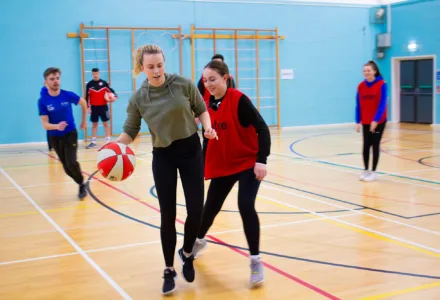
Sport, Coaching & Physical Education
BSc (Hons)
Sport, Coaching & Physical Education
Education Studies and History with Foundation Year
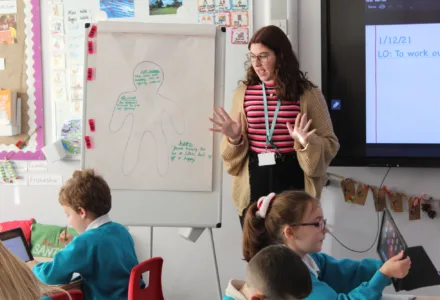
Education Studies and Special Educational Needs, Disability & Inclusion (SENDI) with Foundation Year
Education Studies with Foundation Year
BA (Hons)
Education Studies with Foundation Year
Psychology and Education Studies with Foundation Year
Psychology and Sport with Foundation Year
Special Educational Needs, Disability & Inclusion (SENDI) and Sport with Foundation Year
Sport, Coaching & Physical Education with Foundation Year

Education
MA
Education
Education (English as an Additional Language)
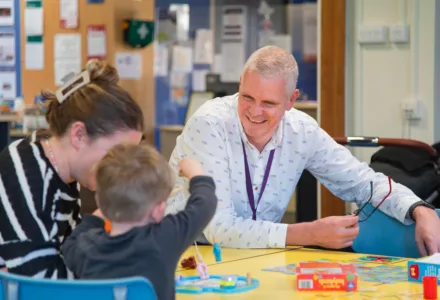
Early Years Education

Educational Leadership and Management

Special Educational Needs and Disabilities (SEND)
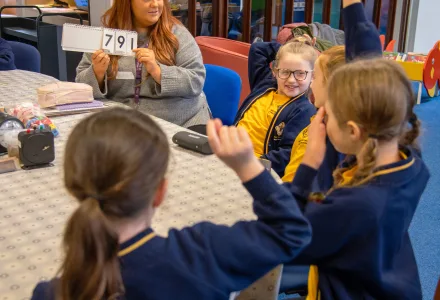
Teaching & Learning (Top-Up)
BA (Hons)
Teaching & Learning (Top-Up)
Early Childhood Education in Practice (Grantham)

Early Childhood Education in Practice (LETTA)

Education in Practice (Grantham)
BA (Hons)
Education in Practice (Grantham)
Education in Practice (LETTA)
BA (Hons)
Education in Practice (LETTA)
Early Childhood Education in Practice (Graduate Practitioner) (Grantham)

Early Childhood Education in Practice (Graduate Practitioner) (LETTA)
Primary Education with QTS with Foundation Year