Why study this course
Learn about the range of core psychological domains and methods, accredited by the British Psychological Society (BPS)
British Psychological Society (BPS) accredited
Progressing into Teaching? FREE pre-teaching course and guaranteed interview for PGCE
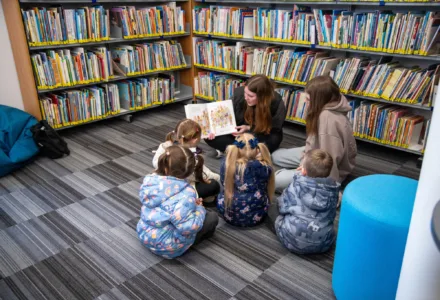
Have you always wanted to work with young children (ages 0-8) but are unsure on your career pathway? If so then this course is ideal for you.
Course summary
Through studying a Psychology degree at Lincoln Bishop you’ll gain an in-depth understanding of the scientific nature of the subject and of its wider cultural and social impact. This course will develop your understanding of psychology and its theories of the mind, emotions and behaviour and become familiar with how these theories are applied in our lives, communities and societies.
The BA (Hons) Early Childhood Studies is a three-year undergraduate programme which introduces students to aspects of education, health and social care, with a specific focus on children from 0 – 8 years of age.
Please note, this course is currently going through revalidation.
Key facts
|
Award |
BA (Hons) |
|---|---|
|
UCAS code |
C8XF |
|
Duration |
4 years |
|
Mode of study |
Full time |
|
Start date |
September 2027 |
|
Award |
Lincoln Bishop University |
|
Institution code |
B38 |
Apply for this course
When you're ready to apply, the route you take will depend on your personal circumstances and preferred method of study. Click the relevant button below to start your application journey.
About this course
Psychology
Do you ever wonder why is it we behave as we do? How do gangs, teams and friendship groups form? Do you wonder if smiling really does make you feel more positive? Do you often venture into the bigger questions about life and who we are?
Psychology has a science base, yet includes a balance of liberal arts, technological knowledge, statistics and computer-based skills. As well as classic psychological theories and research, on this undergraduate degree you’ll be debating social issues, studying specific mental processes, such as memory, language and attention, as well as broader issues and theories – both historical and contemporary. As well as applying psychological knowledge to a range of subjects, you will develop your skills in problem-solving, data analysis, predict and reasoning, with a focus on real-world application.
Here at Lincoln Bishop in Lincoln, we ensure you have close support and contact with your tutors and, with small group sizes, you’ll always get the support and feedback you need on your course. We also know how important it is to experience a real working environment so, through work placements and other projects, you’ll be equipped for whichever career path you may choose after your degree. With research-informed teaching and research-active staff, you’ll receive scientific training and gain an in-depth understanding of the nature of the subject, at the same time as applying your knowledge and theory to real-life.
British Psychological Society (BPS) accredited.
Early Childhood Studies
The course offers graduates a range of employability opportunities with module content supporting students in developing a wide range of transferable skills, as well as providing a curriculum which enables students to develop their academic skills. Students who graduate from the programme will be awarded a full and relevant degree enhancing employability by enabling them to seek roles in early childhood settings as part of the adult: child ratio.
Placements
The Placement Services Office endeavours to source placements as efficiently as possible. However, in some cases there may be a delay to the start of your placement while this process is completed, particularly in disciplines facing national shortages and in pinch-point locations. In such cases, the Placement Services Office and your Academic Team will remain in regular contact to support you during this time.
Please be advised that the University cannot guarantee placements in specific locations, and travel may be required.
Scheduled Teaching Hours
The Foundation Year is the first year of a four-year undergraduate degree and provides a pathway to undergraduate study for students who do not have the typical qualifications required for direct entry to Level 4. As an integrated Foundation Year it does not carry credits, as the purpose of the year is to facilitate students’ progression to Level 4 of their chosen undergraduate degree programme [see Undergraduate].
The delivery of the scheduled hours for the programme includes taught and independent study and is designed to support the needs of learners on Foundation Year programmes as they transition to the requirements of Higher Education study. Material is delivered in both face-to-face and asynchronous formats, totalling 176 hours of taught input, and includes both core academic skills training and additional input from subject specialists. Contact hours in taught sessions are complemented by an extensive support curriculum that operates through the year, typically comprising, but not limited to, additional tutorials, catch-up sessions, study groups, and personal support.
What you will study
Please note that we are working to update some of our programme specifications. These represent small updates to optional modules at Level 5 (second year) as part of a normal regular process of updating our courses.
In this module, you will gain theoretical understanding and employthe practical application of core academic skills. You will understand the definition and importance of academic integrity and explore the key skills required for effective academic practice. You will develop skills in academic and information literacies, including the ability to locate, evaluate, and reference academic sources. The module will provide guidance and practice on academic writing conventions, critical reading strategies, reflective practice, and effective communication skills. You will consider these skills in the context of your chosen subject area and will engage in a range of learning approaches and opportunities, including tutorials and peer learning
In this module, you will identify and develop personal tools for effective learning as a student in Higher Education. The nature and purpose of Higher Education will be explored, including developing an understanding of independent and autonomous learning. You will
reflect on your own skills as a learner and learn how to establish goals for self-development. A range of functional, organisational, and practical skills to support learning will be introduced, including time management, personal organisation, and professional etiquette. You will also engage in development of your digital skills to enable effective use of digital learning tools in your studies.
In this module, you will define critical thinking and engagement and learn how to apply these in the construction of an academic discussion. You will explore practices to develop critical thinking and learn how to research, construct, and defend an academic argument. You will practise critical engagement with academic sources as part of research and begin developing skills of summary and synthesis to support your own arguments. You will apply critical thinking and engagement skills to an area of inquiry in your chosen subject area.
In this module, you will explore the nature and use of documentary and evidence-based sources within academic practice. The module is interdisciplinary, allowing you to investigate a variety of evidentiary sources such as documentary sources, case studies, archival material, and policy. You will begin to learn to analyse and evaluate such sources critically and to consider them within the broader context of academic research. The use of documentary and evidence-based research across disciplines will be explored, analysed, and evaluated critically.
In this module, you will explore the nature and use of data within academic practices. The module is interdisciplinary, allowing you to investigate a variety of data sources and types, including qualitative and quantitative. You will begin to learn to interpret, analyse, and represent data in a meaningful way. You will learn about different methods of data collection and the use of data across disciplines will be explored, analysed, and evaluated critically.
In this interdisciplinary module, you will explore key ideas, theories, and philosophies that underpin a range of academic disciplines. You will learn how these ideas developed and influenced thinking and evaluate their importance within the context of an academic discipline. The module will explore how such ideas have evolved over time and their influence both on academic practice and broader contexts. You will develop and apply skills of critical analysis to discuss and evaluate the ideas and theories, and have the opportunity to explore them in depth in relation to your chosen subject area
In this interdisciplinary module, you will explore the role and impact of academic practices within the context of local communities. You will explore the social purposes of education, specifically Higher Education, and consider how academic research intersect with community and social practices. The module will explore how different academic disciplines can provide insight and enable interventions into local communities. You will develop and apply skills of critical analysis to explore a topic of local interest in relation to your chosen subject area.
This module will introduce you to core areas and methods integral to the discipline and study of psychology. It will provide a historical and contextual backdrop to psychology as a scientific discipline, as well as a focus on research methodologies. This module will introduce you to the wonderful world of numberland, where you will embark on a quantitative journey through research methods and statistical techniques. It will equip you with the tools necessary to investigate questions you may have about human psychology, and to do it in a robust and scientific manner. It will explore aspects of research design, underpinnings of statistical theory, as well as core statistical techniques such as t-tests and correlation. It will analyse data using statistical software and interpret related output appropriately. This module will also provide an introduction to qualitative research methods, where you will be introduced to a range of applied qualitative methods in psychology, the core philosophical underpinnings of such techniques, as well as its relation to quantitative methods.
The module will provide you with an understanding of developmental psychology across the lifespan, exploring physical development, cognitive development, social and emotional development throughout childhood and later into maturity. You will gain a deeper understanding of the theories, themes and concepts in developmental psychology and appreciate that development continues throughout the lifespan and is influenced by a range of factors including class, culture, gender, ethnicity and heredity. In addition, you will learn about the current issues and methods involved in lifespan research, together with specific empirical studies that address developmental research questions and contemporary and cross-cultural developments that have emerged in the field.
This module will immerse you in the origins of psychology, with respect to early understandings of what psychology is (Plato; Aristotle), as well as the development and establishment of Psychology as a discipline in its own right. You will be introduced to the history of science and the Scientific Revolution, as well as corresponding developments in metaphysics and epistemology as manifested in The Enlightenment, and how this contributed to the emergence and shaping of psychology as an experimental science from which behaviourism and the cognitive revolution later emerged. This context will enable you to understand debates within psychology that concern it’s standing as a science and the differences in psychological research methodologies that accompany those debates. Focus on the historicisation of psychology will prompt you to evaluate your perceptions of Psychology and how you, and society understand and identify with it in both professional and personal settings. Furthermore, “classic” studies in psychology will be explored in reference to recent research that demonstrates issues with their findings, especially in the context of the current replicability crisis in Psychology.
This module explores policy, provision, and practice both historically and currently, providing you with the opportunity to understand what shifts and shapes early years policy and the subsequent impact of policy on practice.
The module presents an historical overview of the development of early childhood provision using the lens of social and political discourse and, through an exploration of the work of key thinkers and philosophers who have influenced current policy and provision. The module includes a study of historical practice and provision for young children and covers the work of early social, educational and health reformers. You will also examine the work of more contemporary thinkers and will be introduced to some alternative education styles.
You will be encouraged to question underlying philosophies and the social and political motivations for shaping policy when creating provision for young children. You will be encouraged to reflect on your own personal philosophy and how this might have been influenced, and how this may subsequently influence your own practice.
During this module, you will have the opportunity to develop your graduate competencies with regards to your understanding of the relevant frameworks, and how these are applied to practice, as well as developing your understanding of policy.
Unlock the secrets to effective learning! This module explores how we learn, offering innovative approaches and tools to help you and your future learners become lifelong, independent thinkers. Perfect for anyone passionate about inspiring curiosity and resilience in education.
Compulsory modules
Personality and Individual Differences is a multifaceted module that covers the history, cornerstone theoretical frameworks and methodological approaches of personality research. The structure of human personality is examined using a trait-based approach, which is applied in a variety of sub-topics leading to a comprehensive understanding of how personality and individual differences influence thought and behaviour in different settings. The contributions of biological and environmental factors in the development of personality and individual differences, as well as associated controversies are also explored. You will consolidate your learning by utilising psychometric methods to design and run a quantitative study in an area of personality research of your choosing. Accordingly, this module helps to prepare you for your third-year dissertation module in providing experience of the research process, from design, gaining ethical approval, data collection and analysis to reporting and discussing findings.
This module will develop your knowledge and understanding of social psychology, one of the core areas of psychology introduced in Researching Psychology I. Social Psychology will engage you with the breadth and diversity of social psychology as a discipline from social constructionism and group processes through to social cognition, collective behaviour, and social interactions. The purpose is to help you gain a detailed understanding of how people think, feel and act in relation to others and the world around them. Key topics will engage you with the indexical nature of the discipline locating historical and contemporary research and theory within its broader socio-economic and cultural context.
This module will build and extend on core methods and statistical techniques acquired at level 4 in Researching Psychology I. You will develop knowledge and skills integral to advanced psychological research designs, including the use of quantitative and qualitative analysis techniques. Specifically, this module covers three research methods strands including experimental, psychometric, and qualitative methods. Statistical underpinnings and application of techniques relevant to experimental (e.g., One-way ANOVA, Factorial ANOVA) and psychometric-based research (e.g., Regression, Multiple Regression) are covered and directly extend methods learnt in Researching Psychology I. Additionally, you will develop applied methods skills by utilising specialist software such as SPSS for the analysis of quantitative data. A variety of qualitative approaches, methods and analyses will also be considered such as interviewing skills, diaries and photo elicitation, discourse analysis, polytextual thematic analysis and descriptive phenomenology.
In this module you will explore the concept of ‘childhood’ from philosophical, sociological and psychological perspectives. Common assumptions about children and childhood will be identified and you will consider how these perceptions are socially constructed according to historical time, place and culture, drawing upon the work of a range of philosophers and educational pioneers. Western perspectives of the child and childhood will be critiqued and contrasted with non-Western views and practices.
The module will explore some of the contemporary debates around children and childhood today and consider implications for practice in the early years.
Become a champion for children’s safety and welfare. This essential module covers safeguarding principles, policies, and practices, ensuring you’re prepared to protect and advocate for vulnerable individuals in educational and care settings.
Dive into the world of educational research! This module introduces you to key research principles and skills, giving you the tools to investigate, analyse, and contribute to best practice in education and care.
Optional modules
This module equips you with an understanding of Corporate Social Responsibility and sustainability in regional, global and organisational contexts.
You will be empowered to take positive action as an informed global citizen in line with The 2030 Agenda for Sustainable Development, adopted by all United Nations Member States in 2015. The Agenda provides a shared blueprint for peace and prosperity for people and the planet, now and into the future. At its heart are the 17 Sustainable Development Goals, which are an urgent call for action by all countries, developed and developing, in a global partnership. They recognise that ending poverty and other deprivations must go hand in hand with strategies that improve health and education, reduce inequality, and support economic growth, while also tackling climate change and working to preserve our oceans and forests. These SDGs will therefore underpin the teaching and learning ethos of this module.
Through undertaking the module, you will begin to develop the knowledge and skills required to shape practices for managing and leading Corporate Social Responsibility and sustainability in an organisational setting.
The approaches taken to manage and lead CSR and sustainability differ according to the nature and purpose of individual organisations. For this reason, the critical exploration of case studies will help you develop a fuller understanding of CSR and sustainability in a variety of organisational contexts.
*NB Students may be able to elect modules of study from other subject areas, subject to availability, timetabling, and capacity. Where this is possible information will be made available by the Faculty.
Compulsory modules
The Dissertation requires you to work independently in producing a substantial piece of research that demonstrates mastery of academic knowledge and research skills commensurate with Level 6. You will draw on your existing repertoire of experience garnered over the course of the degree in the development of a report akin to a journal style article, representative of the discipline. You will initiate your research protocol as defined in the first semester module, Research Project Design, and subsequently manage participant recruitment, data collection, and data analysis in accordance with the BPS Code of Ethics and Conduct. The Dissertation should aspire to produce published articles in the discipline (corresponding to the subject topic). The design of the study should successfully address the research question such that data collection and data analysis provide meaningful insight into the identified gap in the literature. You are expected to thoroughly scrutinise the findings in relation to relevant theoretical and methodological issues and in doing so, produce a meaningful contribution to the literature.
This module focuses upon the BPS Core domain Biopsychology, covering aspects of the biological basis of behaviours, emotions and mental health. The module aims to provide an overview of how the sub-disciplines within biopsychology (e.g., neuropsychology, cognitive neuroscience) approach psychological research questions. The module will support development of an in-depth understanding of neural conductance and major brain structures/systems to particular neurotransmitter systems as explanations of how the brain affects behaviour. The module aims to develop your understanding of the anatomical and physiological processes that underpin psychological experience whilst exploring the methodologies used to examine contemporary issues in biopsychology. To achieve these aims, the module will enable you to critically examine how contemporary biopsychological models are developed and evaluate these as explanations for behaviour using key examples (e.g., emotions, memory and learning, drugs and addiction and mental health disorders). This module promotes the application of multiple perspectives (including knowledge gained of other domains in previous years) to critique biopsychological theory and to critically appraise information, using evidenced based reasoning.
This module develops knowledge and understanding of the BPS core domain of Cognitive Psychology which you will have been introduced to at level 4 in Researching Psychology I. Throughout this module, there will be discussion and critical evaluation of a range of different cognitive psychological constructs (e.g., processing resources, attention, memory, language) as a toolkit for theorising mental functioning. You will critically engage with core constructs in cognitive psychology, associated methodologies and key perspectives (for example cognitive neuropsychology, neuroscience, fundamentals of the experimental method). Throughout the module, the use of computerised experimental paradigms will be explored, which underpin theories. For example, you will have the opportunity to engage with classical experimental paradigms or paradigms with a cognitive basis such learning, memory and problem-solving computerised tasks, within workshop sessions. The module aims to showcase the breadth of approaches to understand cognitive processes whilst critically engaging you with relevant associated methodologies. You will have opportunities to engage in a variety of cognitive experiments to facilitate your understanding of key topics and experimental approaches.
The module provides an opportunity for you to build upon and apply the key intellectual, transferable and practical skills gained at Levels 4 and 5 of the programme in order to design an appropriate research project for your Psychology dissertation. Throughout the module a series of lectures, seminars and workshops will further develop your research design skills in experimental, quasi-experimental, surveys and/or qualitative research methods. In addition, you will develop a critical understanding of ethical challenges associated with carrying out psychological research leading to the development of a research project that adheres to the British Psychological Society’s Code of Ethics and Conduct (2018) and Lincoln Bishop's Research Ethics Committee standards.
In this module you will reflect on the impact of change on the developing child, with a focus on the range of transitions which children experience from birth to 8 years.
The module will draw from research which argues that if a child is taught to cope with the expected changes that are anticipated through childhood, then they will develop better coping mechanisms when faced with unexpected changes. You will be encouraged to reflect on the changes experienced by children in a rapidly changing society and will examine some of the strategies which might be used to support children through these expected and unexpected changes. A key focus of this module will be that of the promotion of resilience, resourcefulness and reciprocity, and the role of the adult in fostering these in children in order to prepare them for a future of change and supporting more positive outcomes into adulthood.
Become an inspiring leader in education. This module explores leadership styles, strategies, and skills to help you drive positive change and support continuous learning.
Optional modules
Broaden your horizons with a global outlook on education. This module examines worldwide trends and future challenges, preparing you to innovate and lead in an ever-changing educational landscape.
Entry requirements
Application for this course is via UCAS, although there is no formal requirement for UCAS points to access the course (normally GCSE English or equivalent is desirable). As part of your application you will have the opportunity to speak with a member of Lincoln Bishop Admissions staff to resolve any questions or queries you may have
You will also need GCSEs in English Language and Mathematics at grade 4 (previously C) or above (or equivalent).
For International Entry GCSE requirements please contact our Enquiries Team on enquiries@lincolnbishop.ac.uk
If you are asked to undertake a Disclosure and Barring Service (DBS) check as part of the conditions of your offer, this must be completed prior to the start of your course at a cost of £57.20.
Further information
Click here for key information for all undergraduate students.
Click here for all programme specifications.
The Foundation Year syllabus does not include any specific element of upskilling in English language and you are not entitled to apply for Accredited Prior Learning, AP(C)L into a Foundation Year.
Unfortunately, we are unable to accept applications from international students for Foundation year programmes linked to Psychology and Early Childhood Studies courses.
How you will be taught
There is no one-size-fits-all method of teaching at Lincoln Bishop – we shape our methods to suit each subject and each group, combining the best aspects of traditional university teaching with innovative techniques to promote student participation and interactivity.
Assessment
Assessments in Psychology take place at the end of each module in order for you to demonstrate your understanding of the objectives covered. A wide range of assessment methods is used to support your learning, including portfolios, presentations, displays and examinations and laboratory projects. The Psychology course includes assessments that are designed to develop and refine specific skills that you may well need to draw on as a psychologist, whether that is as specific as demonstrating your practical counselling skills in the Introduction to Psychological Therapies module, or openly argumentative as in the group debate in the Personality and Individual Differences module! Assessments are also designed to enhance your critical thinking and analysis skills – something that psychologists are well known for.
We recognise that individuals come from a wide range of backgrounds and experiences, so we use a variety of assessment strategies in our courses. Assessments in Early Childhood Studies take place at the end of each module in order for you to demonstrate your understanding of the objectives covered. A wide range of assessment methods is used to support your learning, including the production of portfolios, presentations and displays. You’ll also be assessed through written essays, discussions, debates and multimedia projects. Assessments are not only designed to assess your knowledge and understanding but also help you to develop transferable skills which will support you as you enter the early year's workforce.
Careers & Further study
Psychology
In Psychology we allow you to develop the knowledge and skills which will make you attractive to an employer. Psychology graduates go on to work in a range of sectors including teaching, education or training, local government, health and social work and in areas of industry including human resources management. By the end of this course, you will be ready to apply your knowledge of psychology to the world in which you live, with the necessary workplace skills for a variety of future careers. Future careers for Psychology graduates may include work within Clinical settings, Counselling, Mental Health services, Education and Research.
Early Childhood Studies
Early Childhood is a growing sector and the skills learnt on this course will enable you to enter the children’s workforce in a range of different roles. Some of our students seek a route into teaching through a PGCE qualifications here at Lincoln Bishop, whilst others enter other teacher training routes. Many of our graduates have gone on to further study in areas of specialism including psychology, speech and language or midwifery, whilst others have entered the workforce as early years practitioners and room leaders in early years settings, before going on to management roles. The diverse nature of this course will also enable you to go on to further study such as postgraduate study on a master degree, seeking wider opportunities in many different fields, including health and social care, children’s social work, play therapy and speech and language therapy. Possible future careers for Early Childhood Studies graduates may include as a Teacher or classroom assistant, Speech and language therapy, Early years management, Social work or Play therapy.
"Having mentored many students on placements, it's always gratifying to work alongside those who already have an insight into how children learn and develop. These are the students who can make links between what they have learned in theory with what they then see in practice. These are the students who are able to support children to make progress in areas such as language, communication and social development. The opportunities they have to observe and work with children, coupled with their knowledge of the theory is helping to build an insightful and professional early years workforce". (Kate Hodge, Early Years Practitioner)
What Our Students Say
Discover what life is like at Lincoln Bishop University from our students.
Fees & Funding
A lot of student finance information is available from numerous sources, but it is sometimes confusing and contradictory. That’s why at Lincoln Bishop we try to give you all the information and support we can to help to throughout the process. Our Student Advice team are experts in helping you sort out the funding arrangements for your studies, offering a range of services to guide you through all aspects of student finance step by step.
Undergraduate course applicants should apply via UCAS using the relevant UCAS code. For 2026 entry, the application fee is £28.95, and you can make a maximum of 5 choices.
For 2027/28 entry the UCAS fee is £34.50.
For all applicants, there are full instructions at UCAS to make it as easy as possible for you to fill in your online application, plus help text where appropriate. Full details of all tuition fees can be found here.
33 Related courses

Health & Wellbeing in Early Childhood
BA (Hons)
Health & Wellbeing in Early Childhood
Early Childhood Studies
BA (Hons)
Early Childhood Studies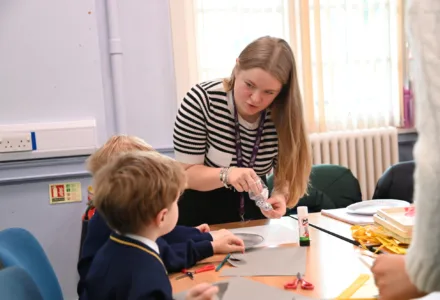
FdA Early Childhood Education

Early Childhood Education (Top-Up)
BA (Hons)
Early Childhood Education (Top-Up)
Special Educational Needs, Disability & Inclusion (SENDI) and Early Childhood Studies
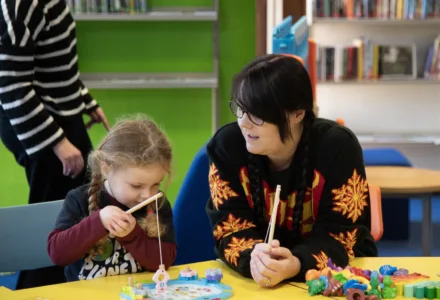
FdA Early Childhood Education in Practice (Grantham)
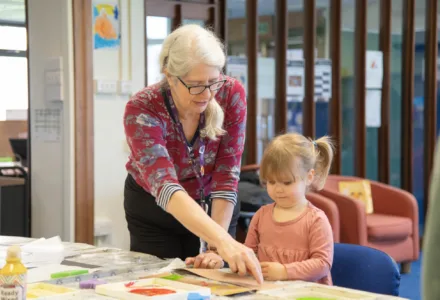
FdA Early Childhood Education in Practice (LETTA)

Psychology
BA (Hons)
Psychology
Psychology and Business
BA (Hons)
Psychology and Business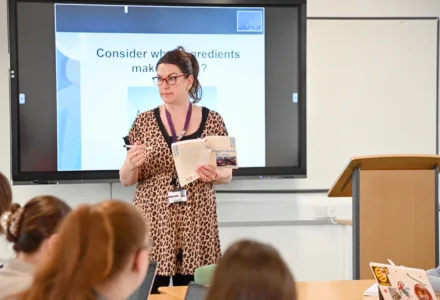
Psychology and Counselling
BA (Hons)
Psychology and Counselling
Psychology and Early Childhood Studies
BA (Hons)
Psychology and Early Childhood Studies
Psychology and Education Studies
BA (Hons)
Psychology and Education Studies
Psychology and Sociology
BA (Hons)
Psychology and Sociology
Psychology and Special Educational Needs, Disability & Inclusion (SENDI)

Psychology and Sport
BA (Hons)
Psychology and Sport
Early Childhood Studies with Foundation Year
Health & Wellbeing in Early Childhood with Foundation Year

Psychology with Foundation Year
BA (Hons)
Psychology with Foundation Year
Psychology and Business with Foundation Year
Foundation Year
Psychology and Business with Foundation Year
Psychology and Counselling with Foundation Year
Psychology and Education Studies with Foundation Year
Psychology and Sociology with Foundation Year
Psychology and Special Educational Needs, Disability & Inclusion with Foundation Year
Psychology and Sport with Foundation Year
Special Educational Needs, Disability & Inclusion (SENDI) and Early Childhood Studies with Foundation Year

Early Childhood Education in Practice (Grantham)
Early Childhood Education in Practice (LETTA)

Early Childhood Education in Practice (Graduate Practitioner) (Grantham)

Early Childhood Education in Practice (Graduate Practitioner) (LETTA)

Psychology & Criminology
BA (Hons)
Psychology & Criminology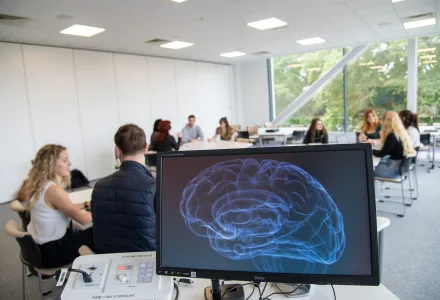
Psychology & Criminology with Foundation Year
Psychology and Business Management
BSc (Hons)
Psychology and Business Management
Psychology and Business Management