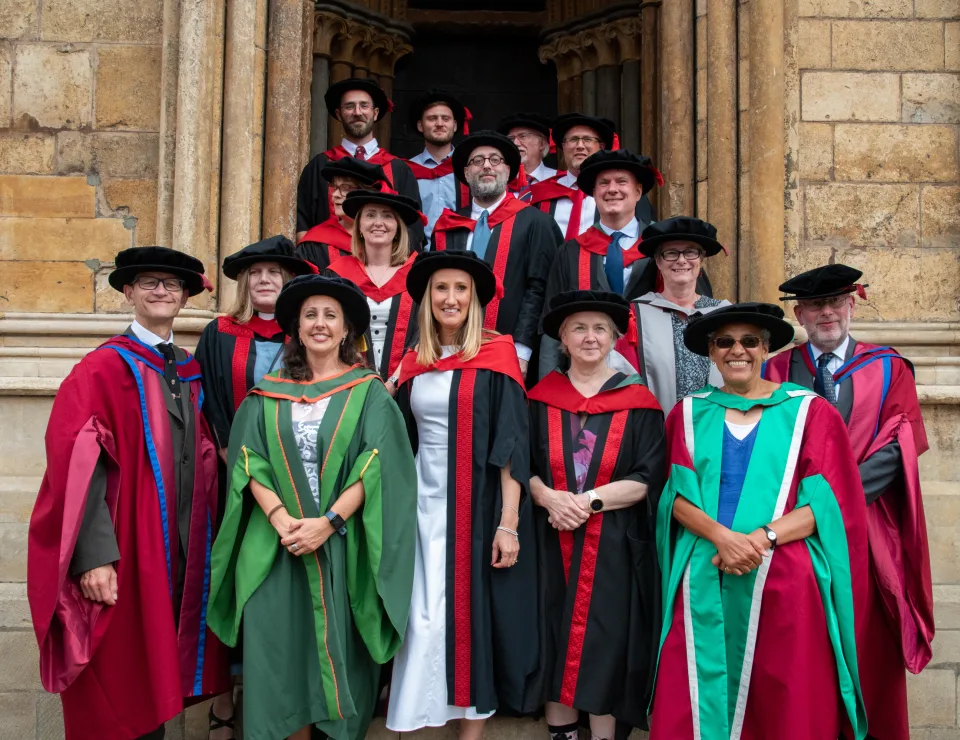
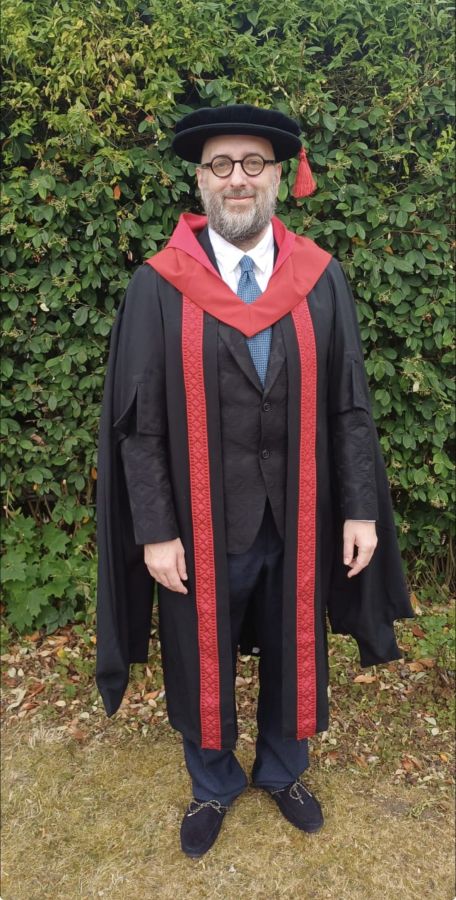
Lincoln Bishop Class of 2026 graduate, Dr Dan Lovesey, has not only completed his PhD, but also became a published author.
After previously studying an undergraduate degree at Lincoln Bishop around 25 years ago, Dan returned to the University in April 2019 to undertake a PhD.
Dan said: “The flexibility of a part-time programme combined with the expertise and experience of staff, helped me to decide to pursue a doctoral programme here.”
With the following title, Dan’s PhD was a study focussed on understanding the experiences of autistic graduates going into the creative industries:
The precariat is a good name for a band.
Autism, employment and the creative industries
As part of studying a PhD, students like Dan are paired with supervisors. These are university academics whose role is to guide research, review writing, and help students transition into being an independent researcher.
Dan continued: “I was fortunate to have two excellent supervisors in Phil Wood and Clare Lawrence – they were patient, supportive and really allowed me to develop, giving me the confidence to see myself as an academic.
“They guided and made me question and reflect on my research position, but also on my own lived experience.”
As a research-based qualification, the structure of the PhD varies in style and format when compared to other degree programmes. Dan shared his experience with support on the programme: “The whole process has been so supportive, and my supervisors and examiners were excellent. From initial enquiry right through to graduation, I have enjoyed every minute, and even as a part time mostly online student I felt part of the Lincoln Bishop community.”
“Lincoln Bishop is such a supportive place to study and because of this it is a perfect place to study for a PhD, or any other qualification. The staff I worked with gave me the confidence and support to develop and grow, and this is something that is special about Lincoln Bishop.”
Following the completion of his PhD and looking towards the future, Dan shared how he is confident in how the course has helped him develop.
Dan said: “The course has allowed me to see myself as an academic, developing both my research skills, but also my understanding of neurodivergence and my own neurodivergence.
“I feel much more confident in taking complex ideas and making them accessible.”
Following his research and presenting at the British Sociological Associations annual conference, Dan was given the well-deserved opportunity to write a book, that is separate from but linked to his research.
Published in an electronic format by Emerald Publishing with a physical release planned for August 2026, Dan’s book explores the broader relationship between neurodivergence and the creative industries, and how neurodivergent people are represented and experience them.
To read Dr Dan Lovesey’s book ‘Creative Minds, Divergent Paths’, visit - https://bookstore.emerald.com/creative-minds-divergent-paths-hb-9781837084036.html
Discover Doctoral Study at Lincoln Bishop here.
Related Posts
International academics join MA SEND students for conversation and collaboration
Celebrating our first cohort of part-time PgDE students
An Eventful English Summer: Awards, Book Launches and Conferences
Finding belonging at any age: a mature student’s experience

Primary Education student turned childhood dream into reality
The role of volunteering as an aspiring secondary school teacher