Why study this course
This is a forward thinking and issue-led degree which offers you the opportunity to address and debate difficult and sometimes controversial moral, ethical and philosophical issues of our time.
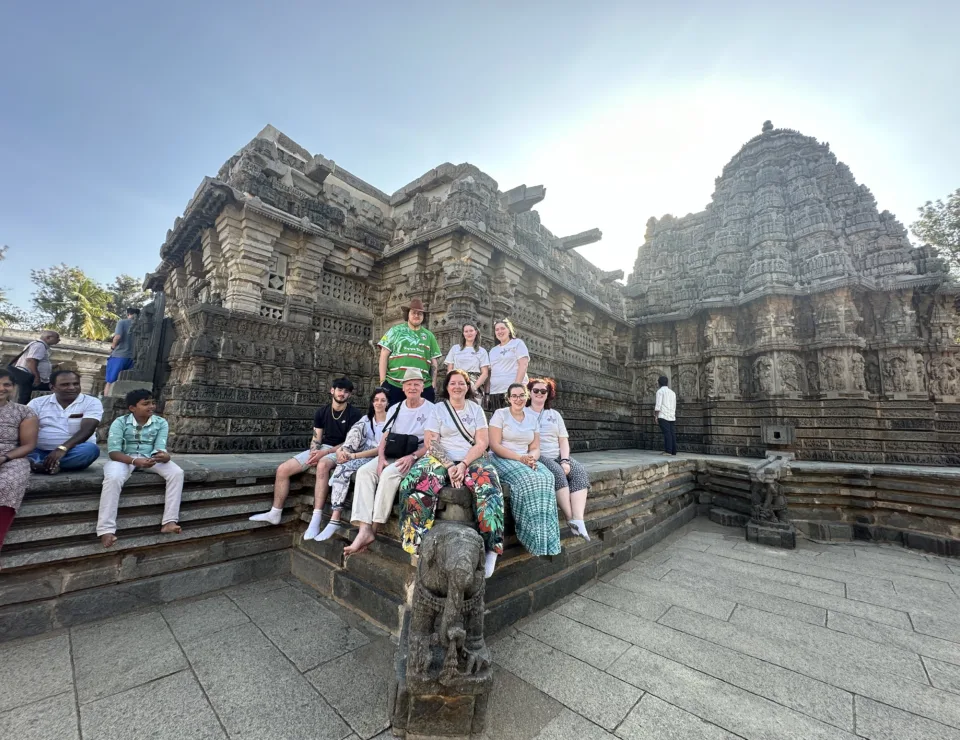
You'll have excellent international travel opportunities, such as India and Rome, helping you to boost your employability prospects
Get hands-on and explore a wide range of religions, visits religious sites, meet new people and experience a variety of religious cultures through practical methods.
Choose your approach to study - undertake a fact-based and objective approach or an approach that allows you to explore a personal faith.
Course summary
Whether you describe yourself as agnostic, atheist or a firm believer, if you have a passionate interest in the ethical, political, philosophical and religious issues of our time, this course is perfect for you. Here at Lincoln Bishop we can look back on many years of experience in teaching Religious Studies, Philosophy and Theology. We designed this undergraduate degree to bring the oldest of academic subjects into the present day – combining the richness of ancient tradition with the relevance and freshness of a 21st century subject.
Please note, this course is currently going through revalidation.
Key facts
|
Award |
BA (Hons) |
|---|---|
|
UCAS code |
VL6F |
|
Duration |
4 years |
|
Mode of study |
Full time |
|
Start date |
September 2027 |
|
Award |
Lincoln Bishop University |
|
Institution code |
B38 |
Apply for this course
When you're ready to apply, the route you take will depend on your personal circumstances and preferred method of study. Click the relevant button below to start your application journey.
About this course
This course offers a different type of Theology and Ethics – we like to think of it as Theology ‘with its sleeves rolled up’. Our hands-on undergraduate degree will take you beyond the classroom and will open doors that have the potential to change your life and empower you to make a difference to the world you inhabit.
Get ready to look at recent trends in theology alongside the implications of scientific discovery, exploring religious debate together with arguments for atheism and for the existence of God. You won’t stop studying world religions, however. You’ll also explore other key events and issues related to terrorism, race, gender and sexuality. Here at Lincoln Bishop in Lincoln, we have many years’ experience in teaching Religious Studies, Philosophy and Theology. We designed this degree to bring the oldest of academic subjects firmly into the present day – combining the richness of ancient tradition with the relevance and freshness of a 21st-century subject.
Throughout the course you’ll develop your curiosity and fascination about different religious cultures, learning from hands-on experience and developing research skills and critical evaluation skills.
Scheduled Teaching Hours
The Foundation Year is the first year of a four-year undergraduate degree and provides a pathway to undergraduate study for students who do not have the typical qualifications required for direct entry to Level 4. As an integrated Foundation Year it does not carry credits, as the purpose of the year is to facilitate students’ progression to Level 4 of their chosen undergraduate degree programme [see Undergraduate].
The delivery of the scheduled hours for the programme includes taught and independent study and is designed to support the needs of learners on Foundation Year programmes as they transition to the requirements of Higher Education study. Material is delivered in both face-to-face and asynchronous formats, totalling 176 hours of taught input, and includes both core academic skills training and additional input from subject specialists. Contact hours in taught sessions are complemented by an extensive support curriculum that operates through the year, typically comprising, but not limited to, additional tutorials, catch-up sessions, study groups, and personal support.
What you will study
Please note that we are working to update some of our programme specifications. These represent small updates to optional modules at Level 5 (second year) as part of a normal regular process of updating our courses.
In this module, you will gain theoretical understanding and employthe practical application of core academic skills. You will understand the definition and importance of academic integrity and explore the key skills required for effective academic practice. You will develop skills in academic and information literacies, including the ability to locate, evaluate, and reference academic sources. The module will provide guidance and practice on academic writing conventions, critical reading strategies, reflective practice, and effective communication skills. You will consider these skills in the context of your chosen subject area and will engage in a range of learning approaches and opportunities, including tutorials and peer learning
In this module, you will identify and develop personal tools for effective learning as a student in Higher Education. The nature and purpose of Higher Education will be explored, including developing an understanding of independent and autonomous learning. You will
reflect on your own skills as a learner and learn how to establish goals for self-development. A range of functional, organisational, and practical skills to support learning will be introduced, including time management, personal organisation, and professional etiquette. You will also engage in development of your digital skills to enable effective use of digital learning tools in your studies.
In this module, you will define critical thinking and engagement and learn how to apply these in the construction of an academic discussion. You will explore practices to develop critical thinking and learn how to research, construct, and defend an academic argument. You will practise critical engagement with academic sources as part of research and begin developing skills of summary and synthesis to support your own arguments. You will apply critical thinking and engagement skills to an area of inquiry in your chosen subject area.
In this module, you will explore the nature and use of documentary and evidence-based sources within academic practice. The module is interdisciplinary, allowing you to investigate a variety of evidentiary sources such as documentary sources, case studies, archival material, and policy. You will begin to learn to analyse and evaluate such sources critically and to consider them within the broader context of academic research. The use of documentary and evidence-based research across disciplines will be explored, analysed, and evaluated critically.
In this module, you will explore the nature and use of data within academic practices. The module is interdisciplinary, allowing you to investigate a variety of data sources and types, including qualitative and quantitative. You will begin to learn to interpret, analyse, and represent data in a meaningful way. You will learn about different methods of data collection and the use of data across disciplines will be explored, analysed, and evaluated critically.
In this interdisciplinary module, you will explore key ideas, theories, and philosophies that underpin a range of academic disciplines. You will learn how these ideas developed and influenced thinking and evaluate their importance within the context of an academic discipline. The module will explore how such ideas have evolved over time and their influence both on academic practice and broader contexts. You will develop and apply skills of critical analysis to discuss and evaluate the ideas and theories, and have the opportunity to explore them in depth in relation to your chosen subject area
In this interdisciplinary module, you will explore the role and impact of academic practices within the context of local communities. You will explore the social purposes of education, specifically Higher Education, and consider how academic research intersect with community and social practices. The module will explore how different academic disciplines can provide insight and enable interventions into local communities. You will develop and apply skills of critical analysis to explore a topic of local interest in relation to your chosen subject area.
The module explores the range of perspectives within an ethical discourse in post modernity. It critically evaluates the Bible as an ethical resource and the Church as an ethical community as well as a broad range of philosophical commentators both Ancient and Modern, such as Plato, Aristotle, Kant, Mill and MacIntyre. It specifically explores issues in economics and social justice, work and money, sexual ethics, medical ethics, warfare, and the environment.
This module introduces the historical manifestations, key writings and Scripture, as well as the principal beliefs and practices of the three main religions of the west: Christianity, Judaism, and Islam, although reference is also made to other faith traditions.
This module provides an introduction to the historical manifestations, key writings and Scripture, as well as the principal beliefs and practices of the three main religions of the East: Buddhism, Hinduism and Sikhism, although reference is also made to other faith traditions.
This module covers a broad sweep of Christian history starting with the development of an early Church through major theological developments such as the Councils of Nicea and Chalcedon. It covers important foundation stages, personalities and concepts attached to the historical and theological development of Christianity from the Early Church to the middles-ages. It will look at the contributions to theology of some of outstanding thinkers such as St Paul, Augustine of Hippo and Thomas Aquinas.
This module covers a broad sweep of Christian history starting with the development of the Reformation through major theological development to the modern era. It covers important foundation stages, personalities, and concepts attached to the historical and theological development of Christianity from the Reformations to the modern age. It will look at the contributions to theology of some of the outstanding thinkers such as Luther, Calvin and Loyal as well as modern theologians such as Barth and Rahner. It will examine historical developments such as the Reformation and Counter-Reformation, modernity, secularisation, and fundamentalism.
This module covers the broad sweep of the Western Philosophical tradition from Socrates to the Middle Ages through the mediums of ethics, epistemology, religious thought, and scientific and technological discovery. It provides a review of the ancient European tradition through the medium of philosophy as it examines the contributions of key thinkers to important areas of thought such as ethics, the existence of God, reason, government, and education.
This module covers the broad sweep of the Western Philosophical tradition from the early modern period to the present, through the mediums of Ethics, epistemology, religious thought, and scientific and technological discovery. It provides a review of the modern European tradition through the medium of philosophy as it examines the contributions of key thinkers to important areas of thought such as Ethics, the existence of God, reason, government, and education.
Compulsory modules
Liberation Theology was born out of the decision by the Catholic Church leaders to make an option for the poor in late 1960s Latin America. Combining theology with a Marxist ideology this new movement sought to ground concepts of salvation in contemporary struggles for liberation. This module will provide you with a knowledge, understanding and awareness of the context in which liberation theology exists. It will give you opportunities to gain academic and personal knowledge of liberation theology through reading, learning and through visits and meetings. Religion has not always had a positive encounter with either sexuality or racial minorities and these encounters continue to be an area that is attached with great importance. By examining political theologies from core thinkers such as Gutierrez, Loades and Cone, this module will offer you an opportunity to encounter issues of poverty, sexuality powerlessness and liberative theologies. It will explore the implications these global issues have for religions to provide insights into crucial areas of theology, ethics and society.
This module covers both critical approaches to understanding holocaust education and the ways in which it is delivered in contemporary society. It explores major concepts including: the relationship between perpetrators, rescuers, bystanders and victims; anti-Semitism at key points in British and European history; filmographic perspectives on Judaism, anti-Semitism and the Holocaust; the socio-political context surrounding various holocausts; wider aspects of the conflagration; and critical and pedagogic approaches to exploring holocausts in contemporary learning settings, including through the school curriculum and Holocaust Memorial Day. It considers why and how holocausts can be used as a vehicle for teaching issues relating to social justice and whether this is appropriate.
This module builds on the introductory themes studied at Level 4. The module content offers you the opportunity to explore selected accounts of psychic and paranormal activity in the UK and elsewhere, considering popular, scientific, and theological explanations for these phenomena. Historical mainstream and alternative religious teachings about angels, spirits, miracles, mystical experiences etc are explored, and a study is made of established mystery cults and sects, and the conspiracy theories which have often surrounded them.
This module builds on the introductory themes studied in Religion at the Fringes 1: New Religions and Cults. The module content offers you the opportunity to explore selected accounts of psychic and paranormal activity in the UK and elsewhere, considering popular, scientific and theological explanations for these phenomena. Historical mainstream and alternative religious teachings about angels, spirits, miracles, mystical experiences etc are explored, and a study is made of established mystery cults and sects, and the conspiracy theories which have often surrounded them.
This module covers a broad sweep of the of three major world religion’s attitudes towards and treatment of women particularly that of Christianity, Judasim and Islam. It looks at the contributions to theology and spirituality of some of outstanding women; scriptural women such as Esther, Deborah, Mary mother of Jesus and Mary Magdalene, historical women such as Hildegard of Bingen, Julian of Norwich, Teresa of Avila and the more modern contributions made by feminist theologians such as Mary Daly and Rosemary Radford Ruether. This module provides you with an arena in which to apply previously acquired knowledge and skills in order to engage with the study of women thinkers and writers of theology and spirituality.
The module takes as its theme "Crisis and Change" and responds to it in such a manner as to historically narrativise the development and dissemination of knowledge and responses to the theme. It is broken into four segments, with a coherent link provided to what came before and what will come next. The four are: Crisis of Modernity; The Challenge of Nihilism; Lemons to Lemonade; and Post-Modernity taking students from the end of the 19th century through to today. It engages with topics of what is real and how can we know? Making moral choices, race, humour, gender and non-gender, marginalization, migration and belonging (or not). The four sections are infused by the question of where religion sits within these topics - consciously and unconsciously -for the creators and the readers / consumers, and what do we mean by 'religion'? You will be exploring thinkers such as Nietzsche, Kierkegaard, Adorno, Beauvoir, and Hooks. You will also be reading works by sociologists of religion, specifically Tricia Rose, Rachel Wagner and Francis Stewart, and popular writers such as Reni Eddo-Lodge. In addition you will be working on the following films: "Black Swan", "Calvary", "Trainspotting", "In Time", and "Pulp Fiction". You will be examining television shows, specifically "Gone Too Far" and "Best of Times, Worst of Times" and will engage with two documentaries, Dave Chappelle's "Black Party" and "The Taqwacores". You will also be taught how to analyse and critically respond to music, not necessarily in the genre you would choose to listen to. This will focus on "Big A, Little A" by Crass, "Sinnerman" by Nina Simone, "All Along the WatchTower" by Bob Marley, "Lust for Life" by Iggy Pop, and a selection of Krishacore and Taqwacore bands. Finally, you will engage with video games, specifically "Far Cry 5" and "Bioshock" as a new medium with a very powerful message.
Optional modules
This module will explore the historical relationship between the World’s main religions and the environment. It will place the issues that surround our environment in an historical context in order to ask whether these religious organisations contributed to the problems facing our planet since the advent of industrialisation and whether they can now contribute to a solution. It will explore sacred text from the Jewish Torah, the Bible, the Koran as well as the Eastern texts from Hinduism and Judaism in order to determine their significance in terms of Green issues. It will also explore the modern contributions from historians, such as Lynn White, through to theologians such as Sean McDonagh, as it assesses the contribution of the eco-theology movement to the wider disciplines of Theology and Ethics.
This module equips you with an understanding of Corporate Social Responsibility and sustainability in regional, global and organisational contexts.
You will be empowered to take positive action as an informed global citizen in line with The 2030 Agenda for Sustainable Development, adopted by all United Nations Member States in 2015. The Agenda provides a shared blueprint for peace and prosperity for people and the planet, now and into the future. At its heart are the 17 Sustainable Development Goals, which are an urgent call for action by all countries, developed and developing, in a global partnership. They recognise that ending poverty and other deprivations must go hand in hand with strategies that improve health and education, reduce inequality, and support economic growth, while also tackling climate change and working to preserve our oceans and forests. These SDGs will therefore underpin the teaching and learning ethos of this module.
Through undertaking the module, you will begin to develop the knowledge and skills required to shape practices for managing and leading Corporate Social Responsibility and sustainability in an organisational setting.
The approaches taken to manage and lead CSR and sustainability differ according to the nature and purpose of individual organisations. For this reason, the critical exploration of case studies will help you develop a fuller understanding of CSR and sustainability in a variety of organisational contexts.
*NB Students may be able to elect modules of study from other subject areas, subject to availability, timetabling, and capacity. Where this is possible information will be made available by the Faculty.
This module introduces you to the ideas, practices and challenges involved in understanding communities and contributing to social purpose. It explores how communities form, how they experience and respond to social issues, and how you, alongside individuals, groups and organisations, can support positive social change.
You will examine a range of perspectives on community, identity, belonging and participation, and consider how social purpose is expressed through collaborative activity, civic engagement and initiatives aimed at improving collective wellbeing.
Through a combination of theoretical exploration and applied learning, you will develop the ability to analyse the characteristics, needs and dynamics of different types of communities. The module encourages your critical thinking, ethical awareness and practical skills for engaging with community issues and contributing to meaningful social purpose.
The module uses a blend of learning approaches designed to support your critical enquiry, collaborative learning and the application of ideas to real-world contexts.
Assessments are designed to evaluate your ability to apply relevant theoretical frameworks, draw on appropriate evidence and formulate practical strategies for supporting social purpose in ways that align with your particular field of study.
*NB Students may be able to elect modules of study from other subject areas, subject to availability, timetabling, and capacity. Where this is possible information will be made available by the Faculty.
After preliminary consideration of what is meant by 'modernity', 'religion' and 'atheism', this module examines the thought of some central thinkers, theistic, agnostic and atheistic, and the implications of their thought for religious questions. Some of the most central themes in Enlightenment and post Enlightenment Western religious and atheistic philosophical debates will be examined and evaluated in order to engage students with both the history and the latest developments in core religious, philosophical and ethical issues.
The module explores the history and beliefs of major Indo-Chinese religions, and some of the ways in which their beliefs and assumptions are expressed in everyday life and practice. In exploring a range of expressions within the different religions, the module will seek to offer a balance between classical and subsequent articulations, and studies of the religions within their traditional environments, and expressions of the same religion within contemporary Britain. A list of journals and websites appropriate to this subject will be made available in the module handbook. In addition to readings from scholarly literature, as far as possible, you will be offered first-hand experience of the various faiths through visits to places of worship, meetings with faith-adherents, guest speakers and the use of various sources produced from within those faith traditions.
This module looks at the historical relationship between Religion and acts of political violence. It will examine Christian, Islamic, Judaic, Buddhist and Hindu responses to politics, violence, and the world. It will explore the issues raised by modern conflict, war and terrorism in order to discuss their implications for theology. In particular it will offer insights into how and why religions might regard acts of violence as an appropriate expression. It will provide opportunities to encounter issues of war, terrorism, and liberative theological thinking. It will offer an in-depth exploration of the implications these global issues have for Religions, and will critically engage you in the responses of World Religions to these challenges. This module will look at the role of Islam, Hinduism and other religions in confronting issues of terrorism, war and globalisation. Various responses of religious individuals will be discussed, such as Martin Luther King, Ghandi and Malcolm X, to political and social problems. Finally it will discuss the future for World religions in the 21st Century.
You will undertake a project, drawing on tutors’ advice as well as your own interests and instincts. You will conduct your researches through self-formulated questions, supported by the gathering of relevant information and opinion along organised lines of enquiry. The relatively modest guiding role of the supervisor means that students will be empowered to develop their skills of initiative and responsibility. You will more fully understand the opportunities in, and vicissitudes of, advanced independent study, further defining and drawing upon your styles of learning. You will proactively manage the development of your conceptual ideas and related arguments, using the challenge of the abstract and working bibliography to summarize both quantitatively and qualitatively the research you have undertaken; and that of the dissertation itself to construct an advanced piece of literary scholarship that is both conceptually and structurally strong.
Entry requirements
Application for this course is via UCAS, although there is no formal requirement for UCAS points to access the course (normally GCSE English or equivalent is desirable). As part of your application you will have the opportunity to speak with a member of Lincoln Bishop Admissions staff to resolve any questions or queries you may have.
Different degree subjects may have specific entry requirements to allow you to progress from the Foundation Year. Whilst not a condition of entry onto the Foundation Year, you will need to have met these by the time you complete the first year of this four year course.
Further information
Click here for key information for all undergraduate students.
Click here for all programme specifications.
The Foundation Year syllabus does not include any specific element of upskilling in English language and you are not entitled to apply for Accredited Prior Learning, AP(C)L into a Foundation Year.
How you will be taught
There is no one-size-fits-all method of teaching at Lincoln Bishop – we shape our methods to suit each subject and each group, combining the best aspects of traditional university teaching with innovative techniques to promote student participation and interactivity.
Assessment
On our Theology courses, we believe that we have an imaginative approach to assessment that allows us to utilise your strengths. We assess our students using a wide range of methods which include written assignments, paired and single presentations, research-based dissertations, files of work and exams. A good deal of continual assessment and easy access to our course tutors means that we are in a strong position to get the best possible results from our students.
Careers & Further study
Many Theology students will pursue careers directly related to the disciplines of Theology, Ethics and Religious Studies, in education and schools. However, graduates of this course are highly skilled individuals fully prepared to pursue a wide variety of careers in other fields, such as community work, counselling, policing, librarianship, social work, work in the third sector, politics, museum work, education officers attached to religious buildings or organisations and media work. Specialised modules and the ability to choose individual routes through our programme will prepare you for whatever career might best suit your interests. As well as an in-depth understanding of ethical and theological issues, you will gain a wide range of transferable skills which will prepare you for further study or employment. Possible future careers for Theology, Philosophy & Ethics graduates may include work as an RE teacher/primary specialist, theology lecturer, social or youth work, politics and policy planning or museum work.
Find out more about where a degree in Theology could take you by clicking here
What Our Students Say
Discover what life is like at Lincoln Bishop University from our students.
Fees & Funding
A lot of student finance information is available from numerous sources, but it is sometimes confusing and contradictory. That’s why at Lincoln Bishop we try to give you all the information and support we can to help to throughout the process. Our Student Advice team are experts in helping you sort out the funding arrangements for your studies, offering a range of services to guide you through all aspects of student finance step by step.
Undergraduate course applicants should apply via UCAS using the relevant UCAS code. For 2026 entry, the application fee is £28.95, and you can make a maximum of 5 choices.
For 2027/28 entry the UCAS fee is £34.50.
For all applicants, there are full instructions at UCAS to make it as easy as possible for you to fill in your online application, plus help text where appropriate. Full details of all tuition fees can be found here.
6 Related courses

Theology & Religious Studies

Education Studies and Theology, Philosophy & Ethics with Foundation Year
Education Studies and Theology, Philosophy & Ethics
History and Theology, Philosophy & Ethics
Theology, Philosophy & Ethics
BA (Hons)
Theology, Philosophy & Ethics
History and Theology, Philosophy & Ethics with Foundation Year