Search results
-
431.
Classes Return as Sports & Fitness Centre Continues Re-Opening
With the Government confirming the continued easing of national restrictions the Sports & Fitness Centre team at Lincoln Bishop University (Lincoln Bishop) are delighted to be able to continue their reopening process by restarting classes and welcoming back their community members. Community members can return to Lincoln Bishop Sport & Fitness Centre for the gym sessions and classes from 24th May adhering to same covid protocol as presently in place for all Lincoln Bishop staff / students. You can find more details on those protocols here. Additionally, opening hours will be returning to standard: Monday – Friday: 7.30am – 8.30pm Weekends: 9am – 2pm Gym sessions Gym sessions need to be pre-booked via email / phone; (01522) 583680 / sports@lincolnbishop.ac.uk. Please do not come to the gym without booking as the team will not be able to admit you. Classes For the foreseeable future classes will be operating on the following timetable: Monday 4.30 – 5.15pm Abs & Interval Training 5.30 – 6.30pm Pilates Wednesday 5.30 – 6.15pm Legs, Bums & Tums 6.30 – 7.15pm Pilates Thursday 1.00 – 2.00pm Pilates 6.30 – 7.15pm Cardiotone Friday 5.15 – 6.15pm Circuits The team hope to be able to return to their full programme soon. Places will be limited and offered on a first come, first served basis, so please pre-book your place via email / phone; (01522) 583680 / sports@lincolnbishop.ac.uk Community Member Payments Payments for monthly memberships will restart from 1 June 2021. As a gesture of goodwill the team will be providing all members (monthly / quarterly and annual memberships) with 7 days free access. External Hire The team are also delighted to confirm that external hirers can now return to their facilities (subject national requirements). Please contact them for more information on how to set up bookings and necessary documentation The team look forward to seeing you back on site and catching up after such a long period. Remember, if you have any questions, they are happy to help, either over the phone, by email or in person. -
432.
‘Dedicated’ Students Look to Create a Legacy with First Student-Led Research Conference at BGU
‘Dedicated’ Students Look to Create a Legacy with First Student-Led Research Conference at Lincoln Bishop In April 2021, a group of seven dedicated final year BA Primary Education students took the lead in successfully delivering an online research conference to 100 of their peers and lecturers on conducting educational research. The group of students, supported by project-lead Dr Ashley Compton and Student Engagement Facilitator, Helen Waters-Marsh, planned, organised, and delivered a range of live online workshops as well as producing pre-recorded conference materials, all during the lockdown of 2021. Dr Ashley Compton discussed the origins and future of the conference: “Helen and I started talking about this in the spring of 2019. We had preparations for the first conference well under way when lockdown hit. This was before the world got used to existing through Teams and Zoom so at that point, we were forced to cancelled it. We were determined to try again this year so planned it as an online conference from the beginning.” “A group of students volunteered and proved to be dedicated and reliable. We worked together to produce a programme and shared out the jobs. The students were great about producing content and encouraged contributions from their fellow students.” “The conference was well attended by year two students and was incredibly useful for their current research module, but more importantly preparing them for their dissertation next year.” “The whole thing went so well that we intend to do this again next year.” Bethanie Crawley, one of the students who organised the conference, shared her experience and how she hopes it will impact her future: “I got involved with the student led conference as a way of paying back the help I have received over my three years training” “I gained a sense of comradery working with people I possibly haven't had much contact with previously. I was more motivated to get on with my assignments while we discussed the issues that arise in research as I now had solutions within my head” “I would highly recommend getting involved in the conference. You get to develop so many skills in presenting, teamwork, and time management. It also looks amazing on a job application for when you are applying as it shows you can work in a team.” “I am going to use this experience to have the confidence to get involved with other projects throughout my first couple of years teaching. I have presented online and been involved with delivering online material which will help in the case of possible teaching online based on the issues of the current climate, this is a good skill to have currently” Another student conference organiser, Molly-Ann Burnett, has since had a successful job interview where she was able to draw on her experiences organising the Student-led Research Conference: “In recent job applications, I have mentioned my role in the conference when discussing elements of professionalism and leadership. I drew on the experience in a successful job interview, speaking about how it developed my confidence and demonstrated my ability to work as part of a team” “I have gained some much-needed confidence in using technology for presentations, something which is sure to become more relevant in future years. I have also gained confidence in interacting with others, be that the team, contributors and those who attended the final conference” Alisha Gibbs, final year BA Primary Education student, said she got involved as she knew how challenging a dissertation can be: “It was so rewarding to be sharing advice and it was also a confidence boost to sit back and realise how much you have accomplished. I also found that I felt much more confident with leading and speaking in front of large groups which is an important skill to have” Student Conference Organiser Louise Beasley shared Alisha’s sentiments about organising the conference: “I grew in confidence when presenting live to the second years, it also helped me to reflect on my research and how far I had come since my second year. I also really like helping others, so I got a sense of pride and accomplishment through this” -
433.
Celebrating Black History Month
Throughout Black History Month, October 2026, Lincoln Bishop will host a variety of events that celebrate the local, national, and global contributions of Black People to various areas. Storytelling, film night, lectures, and a fashion show are among these events.2026 theme is Honouring Our Communities.As per the best tradition of public engagement, these sessions are intended to educate, entertain, and challenge existing ideas and knowledge.Dig Deep, Look Closer Think Bigger.Timetable to be announced soon. -
434.
“You care, so let others care for you” – My Experiences as a Student Carer
Stefania Brien, BA (Hons) Health and Social Care student at Lincoln Bishop University, shares her experiences of balancing her studies with her responsibilities as a carer and offers advice on how others in her position can access support. -
435.
Autism Resources and Community Hub (ARCH)
Welcome to ARCH. These pages can be used as resources for the autistic community at Lincoln Bishop Scroll through the options below to find updates, resources and information that celebrates Lincoln Bishop’s autistic community. -
436.
Autism Cafe Update February 2021
This month’s event was a small discussion group, with input from a BGU student engagement champion who is involved in a piece of work to review the university’s provisions for autistic people. Discussions mostly centred around the on-campus support and facilities available to students with autism at BGU, which include designated quiet spaces, sensory equipment, and a lanyard system to show face mask exemption, as well as bespoke support plans for autistic students that are put in place in conjunction with course tutors. Considerations were given to how these facilities could also be utilised by autistic staff members. Other discussions included considering what masking behaviours and coping mechanisms people find helpful, and how engaging in these can impact on wellbeing, both positively and negatively. We also continued on two of our discussions from last month, one around special interests; considering how these can present and how people draw a distinction between hobbies and special interests; and another around adult diagnosis, particularly in older adults and how society’s understanding of, and attitudes towards, autism have changed over the last 30-40 years. The next Autism Café event will be held in March and will feature a research symposium, hosted in conjunction with The Participatory Autism Collective (PARC) featuring the presentation of research discussions by post-graduate and doctoral students from Bishop Grosseteste University. Topics which will be covered are: How can autistic people be supported to enter the creative “gig” economy? Advantages and disadvantages of pursuing a “diagnosis” of autism. The lived experiences and journeys of autistic teachers. Is the reading of literature different in autistic and neurotypical pupils? -
437.
Autism Ideas Cafe Update - December 2020
LORIC Autism Ideas Cafe goes online -
438.
Ideas Café – Autism
On 5th April, we held an ideas cafe surrounding the topic of autism. Attendees came from a diverse range of health, social care and academic backgrounds. A range of ideas were highlighted for discussion, in relation to autism that the attendees felt would be valuable to discuss. Ideas that were put forward included: Managing parents’ expectations around obtaining a diagnosis for their childHow to keep autistic children in mainstream schoolSpecial needs training for all trainee teachersTransition for a child into adult servicesTraining for educational staff – increasing training and confidence levels of staff to better manage children with autismHow do we access school staff in order to train them?Can technology be used to link up all of these different areas?Mapping the services available for different age groups. The group consensus was that a mapping exercise would be useful to visualise what services are currently available and who they are aimed at. This led to an interactive session of plotting out services and gaps in service for different age ranges: Early YearsPrimary School AgeSecondary School AgePost 16/Teenagers/Young adultsAdultsThe Elderly Where gaps were identified, the group considered what was being done, or what could be done to address the shortcomings. Once plotted, services were categorised according to whether they could be accessed through universal services or self-referral, or whether they required a referral to be made via a professional. A follow-up event to further map out out the autism landscape of Lincolnshire, and to discuss and collaborate on other themes relevant to autism has been planned at LORIC on Friday 7th June 10am-12pm. This event is open to anyone with a personal or professional interest in autism and places can be booked via the LORIC Eventbrite page. -
439.
Participatory Autism Research projects at Lincoln Bishop (ARCH)
“The Precariat” is a good name for a band: Autism, employment and the creative industries. This PhD study examines the experiences of autistic individuals as they transition from university into employment within the creative industries. […] For further information on this research, please contact clare.lawrence@lincolnbishop.ac.uk Parents’ stories involving autism diagnosis for their child. This PhD study explores the advantages and disadvantages of pursuing an autism “diagnosis”, as understood from the parental perspective. […] For further information on this research, please contact clare.lawrence@lincolnbishop.ac.uk Autistic Teachers. This MA study explores the lived experiences of autistic professionals as they enter, manage, stay in, or exit the profession. […]For further information on thisresearch, please contact clare.lawrence@lincolnbishop.ac.uk Autism and Barriers to Employment. This 3rd year Psychology undergraduate assignment investigates the barriers to employment faced by autistic individuals, specifically through the lens of the discrimination case of Mr T. Sherbourne vs Npower (2019). It identifies ways in which what was done by Npower was harmful and discusses possible ways for companies to improve their practice around autistic employees. For further information on this research, please contact clare.lawrence@lincolnbishop.ac.uk Sharing Autism. This ongoing research project uses literature and artefacts to explore autistic identity. Participants are autistic people and their family members who meet in small groups to share their understanding of autism using literature and objects as ‘scaffolds’ for this discussion. These thoughts and ideas are recorded verbally, in written form and visually through sketches and images. Findings from this project will be shared through journal publication and through art exhibition. If you are interested in this research – including exploring the possibility of taking part – please contact Kate at clare.lawrence@lincolnbishop.ac.uk. Portrayals of Black autism in picture books. This research investigates whether and how Black autistic children are represented in picture books. To what extent (if any) can Black autistic children see autism portrayed as being ‘someone like me’? For further information about this research please contact either Sheine (sheine.peart@lincolnbishop.ac.uk)or Kate (clare.lawrence@lincolnbishop.ac.uk). The experience of autistic trainee teachers. Building on the work of the Autistic School Staff Project, this research investigates the experiences, support needs, strengths and lived experience of autistic people training to teach. For further information (of if you would like to discuss taking part), please contact Kate at clare.lawrence@lincolnbishop.ac.uk. -
440.
WRERU - World Religions and Education Research Unit
Our research projects are at the heart of WRERU’s work, driving fresh thinking, meaningful collaboration, and real-world impact. Bringing together scholars, educators and partners, these projects explore some of the most pressing and thought-provoking questions in world religions and education today. Spanning diverse traditions, contexts and approaches, they not only generate new knowledge but also shape practice and deepen public understanding. From collaborative research to innovative pilot initiatives, each project reflects our commitment to work that is both intellectually rigorous and socially relevant.
Explore Lincoln Bishop
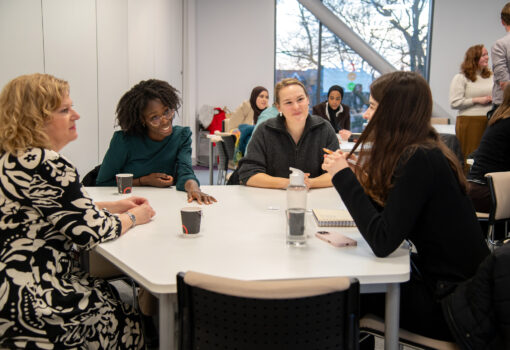
Browse our wide range of degree courses and find the perfect one for you.

Open days are the best way to find out what Lincoln Bishop has to offer.
Download your copy of our prospectus to find out more about life at Lincoln Bishop.