Search results
-
151.
Celebrating Black History Month
Throughout Black History Month, October 2025, Lincoln Bishop will host a variety of events that celebrate the local, national, and global contributions of Black People to various areas. Storytelling, film night, lectures, and a fashion show are among these events.This years theme is "Standing Firm in Power and Pride"As per the best tradition of public engagement, these sessions are intended to educate, entertain, and challenge existing ideas and knowledge. Dig Deep, Look Closer Think Bigger. Full Timetable of Events -
152.
Holocaust survivor and discrimination campaigner among those recognised with honorary awards at BGU in 2020 Graduation Ceremonies
Lincoln Bishop University is delighted to recognise an incredible group of individuals with honorary doctorates as part of its 2020 graduation ceremonies. Those selected represent a wide range of backgrounds including Holocaust survivor and discrimination campaigner Simon Winston, Operations Manager for the England Men's World Cup winning Cricket team in 2019 Phil Neale and the former Director of INSET at the National Centre for Language and Literacy Prue Goodwin. You can read more about each of the exceptional recipients below: -
153.
British Educational Research Association releases findings on BGU research on NQT experiences
The British Education Research Association (BERA) have released initial findings of a British Academy funded research currently being carried out by Lincoln Bishop University’s (Lincoln Bishop) Professor Phil Wood, Dr. Emma Clarke and Dr. Aimee Quickfall. The blog post, titled ‘How newly qualified teachers are coping in the time of Covid-19’, shares initial findings from interviews and surveys carried out this year, with further data collection ongoing into August. You can read it in full by clicking here. Phil, Professor of Education Change at Lincoln Bishop, explained the context of the current newly qualified teacher cohort: “Newly qualified teachers (NQTs) have arguably always had tough challenges to overcome, but the pandemic has added to these challenges, including rapid adaptations to initial teacher education content (ITE) delivery in 2019/20 and many involved in ITE and NQT support fear that the pandemic has created a ‘lost cohort’.” However, the research trio have found that whilst the year has been challenging, there are reasons to be cheerful. Emma, Senior Lecturer in Primary and Early Years ITE at Lincoln Bishop, explained what the participants are reporting so far: “We have been surprised by some of the data coming out of our project so far. The majority of NQTs – 77 per cent – agreed or strongly agreed that their ITE prepared them well for their NQT year, with just under 30 per cent reporting that they did not feel confident on entering their NQT year. Almost 80 per cent of NQTs agreed or strongly agreed that they were being supported well by colleagues to develop their teaching practice, and 81 per cent agreed or strongly agreed that despite Covid-19 they were continuing to develop their skills as a teacher.” The project involves national survey results as well as in depth interviews with NQTs, which Aimee, Head of Programmes for Primary and Early Years ITE at Lincoln Bishop, commented on: “As researchers we have been mindful that often national research on teacher experiences involves large scale survey data and a limited range of answers. This study has provided opportunities for the NQTs themselves to explain what they have been through and what resources have supported them to succeed. We can use these findings to improve preparation for early career teachers.” NQTs have been sharing their pragmatic approaches to their first year in the profession, and whilst the year has been very challenging and some NQTs are reporting fewer uplifting experiences, participants like Alisha have commented on how relationships and networks that started in their universities and training providers have supported them: “Everyone on my PGCE course… we’ve still got our little group chat and that’s been great because when something goes completely wrong and you can just throw that in, and somebody else goes, ‘Well actually that’s gone wrong for me as well. I’m confident that we’ll all pass our NQT year. It’s just working out how we can get more support or navigate through this interesting time.” You can find more information on the wide range of innovative PGCE courses offered by Lincoln Bishop on our website. Alternatively you can contact our Enquiries Team or join us on one our Open Days to find out how to begin your journey into teaching. -
154.
Dr Amy Webster
Amy joined Lincoln Bishop in the summer of 2020 as a Senior Lecturer in Education Studies after finishing her PhD at the University of Cambridge. She has a BA (Hons) in Education with Primary Qualified Teacher Status from Durham University and an MPhil in Education with distinction from Cambridge. She was also previously an Associate Lecturer at Anglia Ruskin University. Her doctoral project focused on the historical recovery and analysis of British series of children’s classics using digital humanities methods, particularly historical shifts in the titles included in series and how these classic works have been abridged and repackaged since the turn of the twentieth century. Amy is part of the Literature and Literacies (LiLi) Research and Knowledge Exchange Unit and is co-editor of The Four Corners, Lincoln Bishop’s newsletter on children’s literature. She teaches on the Education Studies undergraduate programme as well as the new MA in Children’s Literature and Literacies. She also supervises dissertations on the MA in Education. -
155.
Dr Ursula McKenna
Dr Ursula McKenna is Senior Research Fellow in Implicit Religion at Lincoln Bishop where she is located within the Department of Theology and the World Religions and Education Research Unit. Upon completion of her BA (QTS) she was awarded an Economic and Social Research Council MA studentship and obtained an MA (with distinction) for her work on religious education for children with special educational needs in the primary school. While combining a part-time research post with a job-share class teaching position she then completed her doctorate. Her research was an evaluation of the Building E- Bridges programme, a project which advocated the use of email in primary schools to promote interfaith dialogue amongst pupils across the UK. For fourteen years Ursula taught across the primary age range and as research fellow at the University of Warwick (1999-2021) she contributed to the PGCE Primary and Early Years Religious Education module and the MA in Religious Education by distance learning course. She has undertaken supervision of dissertation students on BA and MA Education Studies degrees and has co-supervised research students. For twelve years she was editorial assistant for the British Journal of Religious Education, co-ordinating the refereeing process for all submissions and special issues. -
156.
‘Florence Nightingale at Home’ nominated for The People’s Book Prize
A non-fiction book researched and co-authored by academics from the University of Nottingham and Bishop Grosseteste University exploring Florence Nightingale’s relationship with home has been nominated for The People’s Book Prize. -
157.
Senior lecturer invited to Andalusia to speak on differences between English and Spanish teacher training
Dr Mark Larrad, Senior Lecturer School of Teacher Development, recently made a lecture visit to the Faculty of Education at the University of Granada in Andalusia, the third time he has made this visit in recent years. The University of Granada is one of the oldest universities in Spain, and with over 300 teaching staff and nearly 2000 students, the Education Faculty is more than three times the size of Bishop Grosseteste University. Andalusia is one of 17 autonomous regions within Spain in all off which teacher training is controlled by the regional government rather than from the Spanish capital, Madrid. The purpose of his visit was two-fold: to give a lecture to final-year primary education teaching students about the differences (and similarities) between methods of teacher training between Andalusia and England and to meet with the Dean of Education to discuss possible future partnership. In his lecture Mark focussed on the eRPD and the way national standards (such as those for QTS) are used as a measure of progress. Whilst there are many other differences, the biggest similarity is that in Andalusia, Spain and England the most important responsibility of any teacher is to ensure each child can succeed. Another one of the big differences between English and Andalusian systems is that in Andalusia (as in Spain as a whole) all teachers in the state sector are civil servants, and as such, the majority stay in post for around 30 years (the point at which they are eligible for a generous state pension). Dr Mark Larrad, said: “In Spain nearly all teachers in state sector remain until their 50s (unlike in England which has a 20% attrition rate within the first five years after qualifying). “However, I found the most striking difference to be in the differing approach to what constitutes readiness to teach. In Andalusia, like other regions, each student’s chances of securing a job depend not on success in placement but on getting a high mark in the exam (called an oposición) all civil servants have to take before qualifying. “But a possible downside compared to the relative freedom English trainees with QTS have to choose where they work, is that Spanish trainees are effectively posted to schools where teachers are needed, and this might be a long journey from home. “Trainees might be moved several times in their career, but generally those with children are usually prioritized for schools near where they live and older teachers will not be moved around for this reason as much. “Exploring this fundamental difference led to an enthusiastic debate about which system the Spanish trainees would prefer: one where a job is guaranteed but with no freedom to choose your school, or the other way around!” In his discussion with the Dean, Javier Viloria Prieto, both expressed the hope that future years may bring opportunities for our institutions to work together. Dr Larrad believes that in the current climate where UK finds itself increasingly isolated from its former European neighbours, it has never been more important for English universities to nurture and develop links. -
158.
Why Choose Lincoln Bishop?
We've been educating students here at Lincoln Bishop University (Lincoln Bishop) in the heart of historic Lincoln for 160 years. So no matter what you're looking to study with us, you can be sure that your future is in safe hands. -
159.
FdA Early Childhood Education
Have you ever thought about working towards a degree, but decided against it as you are already in employment or volunteering and don’t want to give that up? Our FdA Early Childhood Education course is designed for those working or volunteering with children 0-8 years in the voluntary, private and independent early years sector or a foundation unit in a school. This course is also for nannies, child minders and those working in Children’s Centres with families of young children. -
160.
Education Studies and TESOL
The BA (Hons) Education Studies and TESOL is a brand-new course for 2023/24 at Lincoln Bishop, Lincoln and combines modules from our Education and English Language and Teaching programmes.Please note we are not accepting applications for September 2026.
Explore Lincoln Bishop
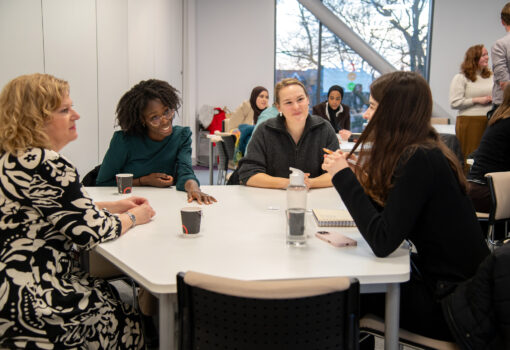
Browse our wide range of degree courses and find the perfect one for you.

Open days are the best way to find out what Lincoln Bishop has to offer.
Download your copy of our prospectus to find out more about life at Lincoln Bishop.