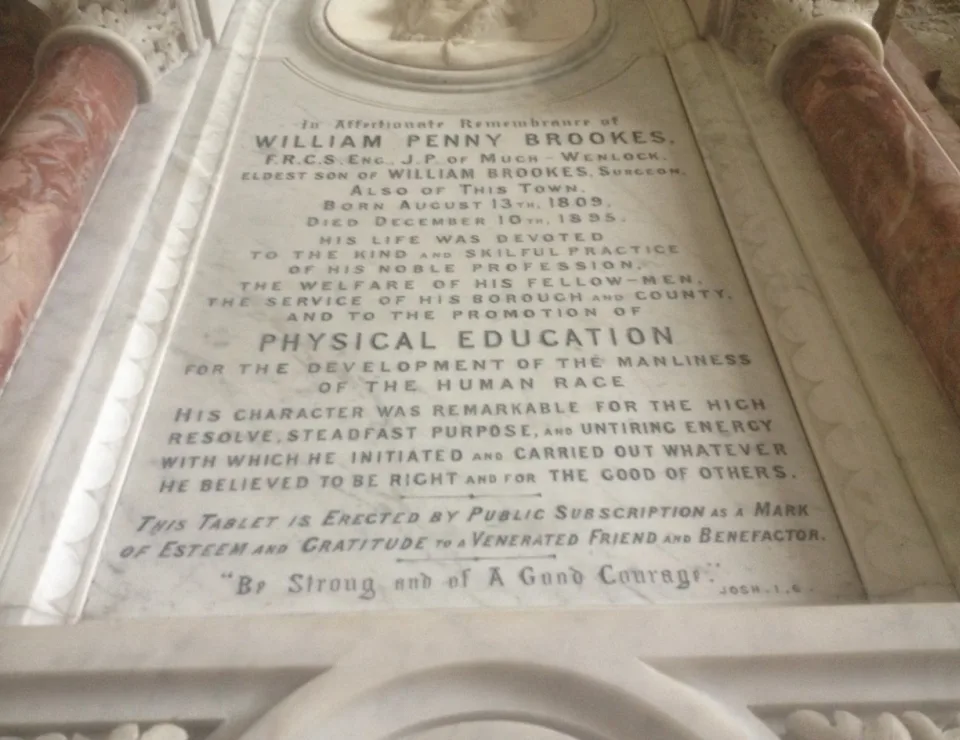
Darwin and Brookes whose contributions brought some of the most significant global advancements, that have profoundly shaped the way we live our lives today but one is far less known.
During the month of July where sporting events globally are captivating millions we possibly need to reflect on one closer to home in the County of Shropshire.
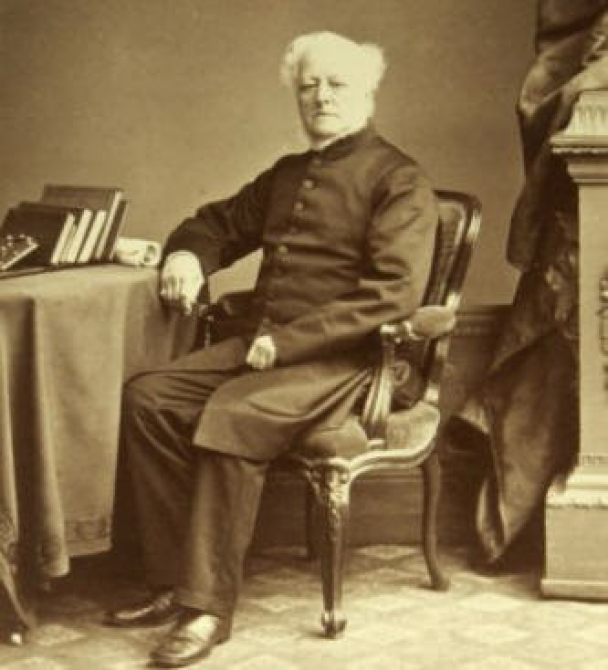
In 1809, Shropshire saw the birth of two remarkable men. One, Charles Darwin, was laid to rest in Westminster Abbey and went on to transform the world’s understanding of its origins. The other, William Penny Brookes, remained rooted in his birthplace, buried just 100 yards from where he was born, lived, worked, and died. But Brookes inspired a global movement celebrating sport, exercise, and community: the modern Olympic Games.
Brookes’ vision was shaped by the social unrest he witnessed during the 1830 Paris riots. Deeply affected by the divisions and hardships endured by the working classes, he returned to his hometown of Much Wenlock determined to foster unity. He sought to bring people together, particularly the most deprived through physical activity, the arts, and community engagement.
This philosophy echoed the origins of the word Sport: from the Latin desporto, meaning “to carry oneself away from work or cares,” and the Old French desporter, meaning “to seek amusement.” Brookes’ ideas may represent one of the earliest deliberate efforts to promote health and well-being through organised activity.
In 1850, he founded the Wenlock Olympian Class (later the Wenlock Olympian Society) with the aim of:
“The moral, physical, and intellectual improvement of the inhabitants of the town and neighbourhood of Wenlock, and especially of the working classes, by the encouragement of outdoor recreation and by the award of prizes annually at public meetings for skill in athletic exercises, and proficiency in intellectual and industrial attainments.”
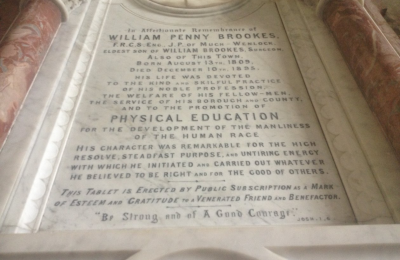
As a local doctor, Brookes had witnessed first-hand the harsh realities of working-class life. He believed that improving both body and mind through shared activity was key to social progress. This conviction led him to campaign tirelessly for physical exercise rather than military-style drill, to become a compulsory part of the school curriculum. Through petitions to Parliament and persistent advocacy, his and the Wenlock Olympian Society’s efforts contributed to the eventual introduction of compulsory physical education in schools shortly before his death.
Brookes also applied evidence-based thinking to his work. At the National School he established in Much Wenlock, he demonstrated the measurable benefits of structured physical exercise, highlighting the superiority of gymnastic-style training over traditional drills. For this reason, he is often regarded as one of the world’s first sports scientists. He emphasised that exercise must be purposeful and systematic to improve life expectancy.
A key challenge he faced was engaging working-class people in physical activity during their limited leisure time. Drawing inspiration from the ancient Olympic Games of Greece, Brookes developed a model that combined physical competition with celebration, learning, and community cohesion.
In 1850, the Wenlock Olympian Games were held for the first time. These events blended entertainment and serious competition, beginning with lively processions of music and song leading participants and spectators to the Games field. Activities ranged from light-hearted contests, such as blindfolded wheelbarrow to athletic competitions that attracted skilled competitors from across the country.
The Games quickly grew in popularity, drawing crowds of up to 10,000 spectators to enjoy events such as climbing the greasy pole and tilting at the ring on horseback. Brookes had created more than a sporting event he had established a powerful vehicle for community unity, health, and enjoyment.
This year sees the 140th Wenlock Olympian Games to be held around Brookes’ hometown of Much Wenlock in July 2026, thus maintaining 176 years of tradition of holding arts and sport events for all ages and abilities.
They remain true to Brookes’ original vision: to bring people together “to carry oneself away from work and cares” and “to seek amusement” in a spirit of equality, inclusion, and social justice.
As the founder of the modern International Olympic Committee (IOC) Baron Pierre de Coubertin wrote in 1897 stated that "The Wenlock people alone have preserved and followed the true Olympian traditions". This dedication is no different to what you would witness in 2026.
Authors:
Dr Helen Bushell-Thornalley (Senior Lecturer, whose doctoral research showcases Dr Brookes’ significant impact on the modern Olympic Games. Bushell-Thornalley, H. (2021) Old Wine New Bottle: The political narratives of governments between 2005-2015 on what the soft legacy of the London 2012 Olympic Games afforded the subject of Physical Education and School Sport. University of Leicester. https://doi.org/10.25392/leicester.data.16602149.v1 )
Chris Cannon (Head Archivist at the Wenlock Olympian Society – Inspiration for the Modern International Olympic Games).