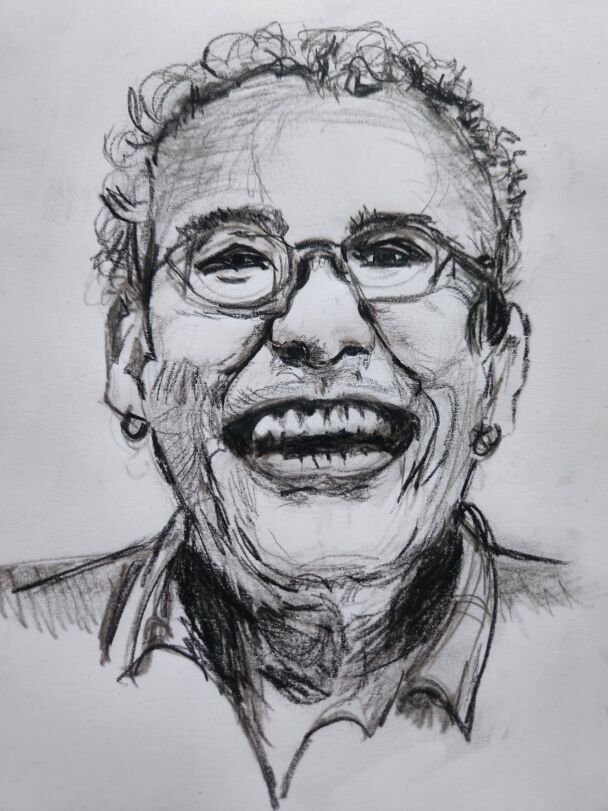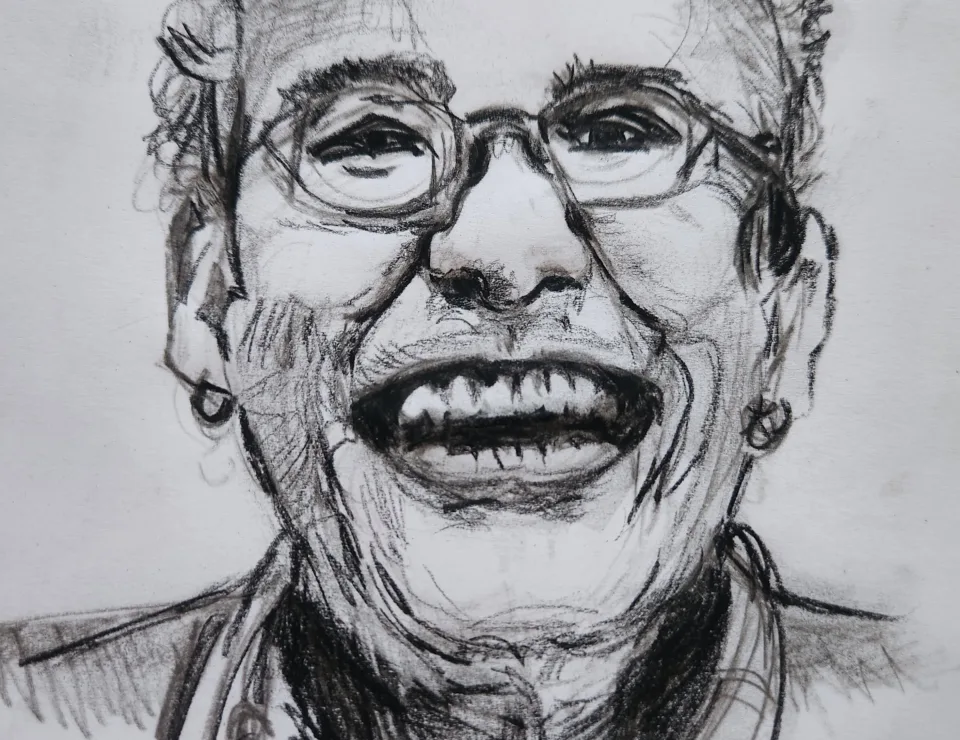
I have spent some of the Easter break catching up on my drawing. Drawing is one of those things we relish as children, but can feel is a little ‘silly’ when we’re adults.
However, I have been lucky to discover the fascinating book, ‘Drawing on the Right Side of the Brain’ in a second-hand bookshop, and it has revolutionised my thinking. First published in 1979, this comprehensive and fascinating exploration by Betty Edwards discusses neuroscientific understanding of the influences of the two halves of the human brain – the logical, language-based left-side, and the intuitive, insightful right side.
The close to 50 years that have elapsed since Dr Edward’s work have brought many changes, and much of her understanding might be challenged today. Yet her suggested exercises designed to ‘free up’ seeing and drawing have been enlightening; they have liberated me to return to the joy of drawing and sketching that had been long lost to me.
There are other ways that the book is severely dated. Of the examples given from her students’ work, only one features a Black model and the sketches of artists at work show universally white hands. The book dates from the days when sticking plasters came only in fawn, where pale tights were described as ‘flesh coloured’ and when Black ballerinas had to ink-up dancing shoes that could only be ordered in pink. The default position of ‘a person’ in 1970s America was of someone who was White.
We do now, I hope and believe, live in a world that has greater awareness of our planet’s global majority. And indeed, I am pleased to share with you my early sketch of our very own Sheine Peart, Associate Professor in Access, Equality and Inclusion and a founding member of our BRIDgE team. It is kind of Sheine to allow me to share this, as I am not sure it is terribly flattering… so thank you, Sheine, and for being such an inspiring model!