Search results
-
131.
Ruston & Hornsby Heritage Lottery Fund Project
Bishop Grosseteste University is involved in helping to save the records of Ruston & Hornsby which was a major Lincoln company, exporting products all over the world (Siemens being the successor company). Students and volunteers alike are working on the current project, scanning over 150,000 photographic negatives of engineering plans and products. The negatives are in danger of being lost as they have a limited lifespan and are now beginning to decay. This will contribute towards an online catalogue on the ‘Lincs to the Past’ website which will not only preserve the images but will make them freely accessible worldwide. The project is being funded by the Heritage Lottery Fund and is being steered by The Lincolnshire Archives. A major partner in the project is also the University of Lincoln, who now owns the archive. Above images: (left) Volunteer working with the archives; (right) 56-3134C: Men working on machine parts (c.1956) (Copyright: University of Lincoln/Lincs to the Past) Useful Links and Further Information Lincolnshire County Council - Ruston & Hornsby Article Lincs to the Past - Ruston & Hornsby Project For further information on the project please contact: Dr Andrew Jackson [andrew.jackson@lincolnbishop.ac.uk] or Jane Rogers [jane.rogers@lincolnbishop.ac.uk]. For further information on History programmes at BGU please contact: Dr Craig Spence [craig.spence@lincolnbishop.ac.uk] -
132.
Archaeology Lecturer Made Member of Chartered Institute
Bishop Grosseteste University lecturer Dr Craig Spence has been made a member of the new Chartered Institute for Archaeologists – and he’s looking forward to strengthening relationships between the institute and the university. The CIfA has been awarded chartered status and Dr Spence, Senior Lecturer in History, Archaeology and Heritage Studies at BGU, thinks the change is timely. The university has launched a new undergraduate joint degree in Archaeology and History alongside its existing Master's in Community Archaeology, and the courses will benefit from closer links with the CIfA, says Dr Spence. “One of the aims of the new degree is to provide students with employability skills to prepare them for working life in the field,” he said. “The CIfA will support this with its Student Member status opportunity. As members, students receive direct support and information from the institute and, once graduated, are eligible to apply for full membership and all the benefits that come with it.” The CIfA’s Student Membership gives budding archaeologists access to training opportunities and a variety of magazines and journals as well as use of Society of Antiquaries of London library. “We encourage all of our students to make use of this fantastic opportunity and I’m looking forward to further developing a relationship between BGU and the CIfA in the future,” Dr Spence added. The CIfA, which achieved chartered status last month, is a national professional organisation which represents the interests of archaeologists both in the UK and overseas. It sets standards, informs on professional practices and provides its 3,100 members with up-to-date information and developments in the field as well as training and networking opportunities. The new BA (Hons) Archaeology and History joint honours degree at BGU is the first of its kind in Lincolnshire and will allow students to get hands-on with the past and explore civilisations and societies from throughout history in a practical and interesting way. BGU currently offers single honours History and the new joint degree which starts in September 2015 was launched last October by Julian Richards, well known for his TV appearances on Meet the Ancestors and Blood of the Vikings. To find out more about all of the history and archaeology courses on offer at the university contact Dr Craig Spence: craig.spence@lincolnbishop.ac.uk. -
133.
Research at BGU Recognised as ‘World Class’
Bishop Grosseteste University in Lincoln is celebrating after learning that research undertaken by its staff and students has been judged to be ‘world-leading’. Results of the Research Excellence Framework (REF 2014), a system used to independently assess the quality of research undertaken in all UK higher education institutions (HEIs), have been published today (Thursday). They show that research in Education, English Literature and History and have been judged to be world-leading and given the highest possible 4* rating.The University’s Vice-Chancellor, the Reverend Canon Professor Peter Neil, said: “We are delighted with the outcome. To have our research in these key subjects judged by experts to be world-leading is a fantastic achievement.” Professor John Sharp, who led the submission to REF 2014 on behalf of the university, paid tribute to his colleagues’ hard work, over several years, to develop the research. “Bishop Grosseteste University is committed to undertaking research that can be applied in ways that benefit our students and the general public and is useful to others,” he said. “The dedication and passion for research shown by staff and students from across the university has been rewarded by this result; to be recognised as undertaking research that is judged to be world class is very pleasing indeed.” The REF 2014 outcome is a further boost to Bishop Grosseteste University’s plans to grow its research as part of its overall new five-year strategy. -
134.
Exploring the Magna Carta at BGU Lecture
Exploring the Magna Carta at BGU Lecture The President of the International Co-operative Alliance will give a talk about the Magna Carta at Bishop Grosseteste University in Lincoln to mark the 800th anniversary of the signing of the famous document. Dame Pauline Green will use her lecture on Wednesday 29th April to draw parallels between the Magna Carta and the modern co-operative movement. The Magna Carta is credited with laying down the core principles of British democracy, and its influence spread around the world as emerging nations searched for an equitable and just governance system. Democratic principles also lie at the heart of the co-operative business model developed 600 years after Magna Carta by a group of mill workers in Rochdale. The ‘Law First’ of the Rochdale Pioneers spawned a modern model of business that has reached all parts of the globe. Dame Pauline Green is the first female President in the 120-year history of the International Co-operative Alliance. She was elected in 2009 and re-elected for a second term in 2013. In her lecture she will argue that the co-operative movement is the best ever initiative for taking people out of poverty with dignity that the world has ever seen, and one of the UK’s most enduring exports. The lecture will take place at 2pm on Wednesday 29th April in the Robert Hardy Lecture Theatre at BGU. The event is free and open to everyone, and refreshments will be served. To book your place contact Jessica Lyons by calling 01522 583681 or by emailing jessica.lyons@lincolnbishop.ac.uk. -
135.
Extra Funding to Encourage Young People into University
More young people will be encouraged to study at university thanks to new government funding which has been secured by Bishop Grosseteste University in Lincoln. Today (Thursday 8th January) the university was promised £24,000 over two years to support its collaborative work with other universities and colleges to widen participation in higher education. The money will be used to extend and increase BGU’s widening participation activities across the region and enable the university to engage with pupils from more schools. BGU is involved in three networks which work to improve access to higher education to young people from all backgrounds. “This new funding of £24,470 from HEFCE (the Higher Education Funding Council for England) will provide a great boost to our widening participation activities,” said Karen Richardson, Head of Student Recruitment and Admissions at BGU. “Hopefully we will be able to reintroduce summer schools and help to raise the aspirations of students who would not otherwise think that studying at university was for them.” Lincolnshire is characterised by comparatively high attainment at GCSE but low levels of participation in higher education – only 32% of 18-year-olds go on to higher education courses at university or college compared to the national average of 38%. * BGU’s widening participation activities target people from disadvantaged socio-economic areas, people with no history of higher education in their family, black and minority ethnic groups, males (for teacher training courses) and mature students. The university currently runs two access to HE programmes: First Steps 2 Study and Next Steps 4 Study. First Steps 2 Study is aimed at Year 9,10 and 11 pupils and involves a student ambassador from BGU, campus visits and a visit to the school, while Next Steps 4 Study targets Year 12 and 13 pupils who take part in debates, workshops, seminars and presentations both at school and at the university. BGU is a member of three networks involved in widening participation: the North East Midlands Collaborative Outreach Network, the National Network for the Education of Care Leavers, and Magna Carta – Education for Liberty (which is led by the University of Lincoln). Other partners in the Magna Carta – Education for Liberty network include Lincoln College, Boston College, North Lindsey College, Grimsby Institute and Grantham College. Partners in the North East Midlands Collaborative Outreach Network include BGU, the University of Nottingham, the University of Derby, Nottingham Trent University, West Nottinghamshire College, Central College Nottingham, Loughborough College and Stephenson College in Coalville and Nottingham. The funding announced today is part of a new £22 million national scheme involving 226 higher education institutions and reaching 4,300 secondary schools and colleges. The National Networks for Collaborative Outreach (NNCO) will deliver a nationally co-ordinated approach to working with schools, universities and colleges to help people access higher education. Greg Clark, Minister for Universities and Science, commented: “A record number of students entered higher education in 2014, with entry rates for students from disadvantaged backgrounds increasing by over 10% to its highest ever level. “However there is still more work to do to ensure all students who want to study hard can benefit, irrespective of their background.” * Latest HEFCE statistics for 2011/12. -
136.
Awards for Heritage Sites Helping Visitors to Learn
They range from the grand (Chatsworth House) to the modest (Cottage Museum, Woodhall Spa), and from the famous (Titanic Belfast) to the obscure (the Museum of Hatting). But they are all award winners, and on Friday 4th December 52 heritage sites in the UK and Ireland will receive a Sandford Award in recognition of their education work. Museums, forts, galleries, houses and archives will be among those represented at the annual Sandford Awards for Heritage Education which this year take place at the London Transport Museum, which also won an award this year. The Sandford Awards are jointly managed by Bishop Grosseteste University in Lincoln and the Heritage Education Trust, and BGU’s Vice Chancellor, the Reverend Canon Professor Peter Neil, will present the awards this year. The 2015 winners, which represent a cross-section of heritage sites from across the country, include The Collection in Lincoln, Arbeia Roman Fort in South Shields, Black Country Living Museum in the West Midlands, Stockport Air Raid Shelters and the World Rugby Museum at Twickenham. Dr Tracy Borman, Sandford Co-ordinator at Bishop Grosseteste University, said: “The Sandford Awards pay tribute to education excellence and we look forward to honouring another outstanding crop of heritage sites next month. For the first time this year we will also award a special prize: the Frances Garnham Award for Innovation in Heritage Education. “We’re looking forward to another enjoyable ceremony and we’d like to congratulate all the sites who have been successful this year.” The awards ceremony begins at 11.30am on Friday 4th December and the Sandford Award Winners 2015 are: Arbeia Roman Fort, South Shields Battle of Bannockburn Bingley Five Rise Locks Black Country Living Museum, Dudley Bruce Castle Museum, Haringey Burghley House, Stamford Canterbury Roman Museum Castell Henllys Iron Age Village Chatsworth House Clitheroe Castle The Collection, Lincoln Colne Valley Museum Cottage Museum, Woodhall Spa Danelaw Centre for Living History, York Discovery Museum & Tyne and Wear Archives Experience Barnsley Falmouth Art Gallery Foxton Locks, Market Harborough Framework Knitters Museum, Nottingham Great North Museum: Hancock, Newcastle-upon-Tyne Hall Place & Gardens, Bexley Harvington Hall, Kidderminster Hatton Gallery, Newcastle-upon-Tyne Hatworks: The Museum of Hatting, Stockport The Higgins Bedford Holdenby House,Northampton Hopetoun House, Edinburgh The Judge's Lodging, Powys Keats House, London Kent Life, Maidstone Kerry County Museum Laing Art Gallery, Newcastle-upon-Tyne Locomotion, County Durham London Transport Museum Milton Keynes City Discovery Centre National Maritime Museum Cornwall National Waterways Museum, Ellesmere Port Parliament Education Service Pollok House, Glasgow Queen Street Mill, Burnley Richmond Cultural Education Partnership Science Museum, London Segedunum Roman Fort, Wallsend Sheffield Cathedral Shipley Art Gallery South Shields Museum and Art Gallery Stockport Air Raid Shelters Tatton Park, Cheshire Titanic Belfast Wolves Museum, Wolverhampton The Wordsworth Trust, Grasmere World Rugby Museum, Twickenham -
137.
First-Class Degrees for Husband and Wife
A husband and wife who returned to study in their 40s will both graduate in Lincoln next week with first-class honours. Andy and Debbie Hicks had to juggle studying at Bishop Grosseteste University with work and looking after their two children, and Debbie also overcame a serious illness which forced her to miss most of an academic year. But on Tuesday 14th July they will celebrate their perseverance by receiving their degree certificates at Lincoln Cathedral. They are not the first members of their family to receive first-class honours: Debbie’s son Adam gained a first-class degree from Coventry University last year and her mother Christine Love graduated with first-class honours from Bishop Grosseteste College (as it was then) in the 1980s. Debbie enrolled at BGU to study Education Studies and History but after a year she decided that she no longer wanted a career in teaching, so she switched to the History and Theology joint degree course. “At the same time I found out that BGU offered a single honours degree in Theology,” she said. “Andy worked for the Life Church in Lincoln and it had always been his dream to do a theology degree, so he signed up for the course and combined studying with his job.” It was in December 2013 that Debbie became seriously ill; she needed three operations and was in hospital for much of the academic year. “We also moved house twice, my mother was very ill too and my stepfather passed away, so it was a very difficult time for us. We had just about everything thrown at us so it’s a wonderful surprise now to learn that we both gained first-class degrees!” With honours degrees under their belts Debbie (46) starts a new job next week as a community co-ordinator for the Royal Voluntary Service while Andy (43) is also looking forward to a change in his career. “We both thoroughly enjoyed our courses and we’re going to miss BGU hugely,” said Debbie. “It’s a wonderful university for mature students: it’s small and friendly and we found that the younger students accepted us as part of the group. “We owe a huge debt of thanks to the tutors at BGU, especially Jack Cunningham, who have been fantastic – we will miss them all so much.” -
138.
PGCE (Secondary) Social Science
Announcing a new PGCE in Social Science (14-19 curriculum) starting in September 2016 The School of Teacher Development at Bishop Grosseteste University, Lincoln has a longstanding national reputation for providing high-calibre initial teacher training in Secondary specialist subjects. Drawing on expertise within the team of PGCE Secondary partnership programme we are planning to introduce a new PGCE in Social Science for graduates in Sociology, Psychology, Politics and Law. We work with a wide range of schools, colleges and educational organisations across county of Lincolnshire and beyond. Our PGCE Social Science is aimed at trainees wishing to mainly teach the 14-19 curriculum in one or more of the social sciences (sociology, psychology, politics and law) in secondary schools and/or post-16 colleges. Trainees will be given the opportunity to study and teach areas of the Social Sciences (Psychology, Sociology, Politics, Law, Health and Social Care, Citizenship and PSHE) at Key Stages, 4 and 5. Trainees may gain some experience of teaching the humanities (RE, Geography and History) subjects at Key Stage 3 and 4. Social Science subjects are exceptionally popular choices at GCSE, 'A' level, IB and BTEC levels. For further information please contact Dr Yvonne Hill: 01522 583 730 yvonne.hill@lincolnbishop.ac.uk -
139.
New Lease of Life for Former Connie’s Restaurant at BGU
A former canteen and dining room at Bishop Grosseteste University in Lincoln is being turned into much needed teaching accommodation as the institution gears up for an increase in students. BGU is spending £850,000 on converting the former Connie’s dining room and kitchen into an academic facility. The refurbishment project will create seven multi-functional, flexible teaching spaces on the ground floor of the building which will be ready for use in September 2015. The university’s strategic plan envisages a growth in student numbers and BGU is also broadening the range of courses it offers, introducing Business (Team Entrepreneurship), Health and Social Care, Sociology, Psychology, Counselling and History and Archaeology from September. Part of the new teaching facility will be used by staff and students on the university’s new Business (Team Entrepreneurship) degree course. “In the past Connie’s was the place where our students who lived on campus had their meals, but now we’ve moved to self-catering accommodation and opened the Refectory to cater for the changing demand,” said Fred Robson, Head of Estates at BGU. “We no longer need this catering space so we’re converting the building to give us additional teaching space as we grow our student numbers.” The work, which entails some minor demolition and re-roofing of the former kitchen, is being undertaken by the main contractor, Robert Woodhead Ltd from Mansfield. -
140.
Real Game of Thrones Left Scars on Landscape, Says Expert
England’s first civil war in the 12th century raged for 20 years and changed the physical landscape for decades. The conflict, in which royal cousins Matilda and Stephen fought for the throne of England following the death of Matilda’s father King Henry I, outdid TV’s Game of Thrones series for savagery and treachery. Those are the conclusions of two new books about the period which are the result of archaeological research by a group of academics including Dr Duncan Wright, Senior Lecturer in Archaeology and Heritage at Bishop Grosseteste University. During the war known as the Anarchy, churches were fortified, a network of castles was constructed to hold back rebels, and many areas of the country were laid to waste. Rival mints made coins in different territories and landowners buried hoards of treasure to save their wealth from looters. The Isle of Ely in Cambridgeshire was transformed into a desert, according to contemporary chroniclers, while Wallingford on the Thames became one of the most besieged places in the nation. War broke out after the death of King Henry I in 1135. His daughter Matilda claimed the throne but her cousin, Stephen of Blois, had himself crowned King of England at Westminster Abbey. Matilda launched a campaign to win back power, and soon the English countryside was militarised as the two sides and their allies fought battles that raged across England. The struggle has parallels with the fictional Game of Thrones series in which Yara Greyjoy claims the throne of the Iron Islands when her father dies. However, the throne is seized by her uncle and Yara builds alliances with other key characters in order to regain power. Another parallel can be seen during a key episode of Game of Thrones in which young King Joffrey dies after being poisoned at a feast. The incident echoes the demise of King Stephen’s only son Eustace, who is said to have died at a feast, possibly from choking or poisoning. An agreement was reached with Stephen that he could remain as King, but that Matilda’s son Henry would inherit the throne when he died. “The Anarchy was a gruelling conflict which left its mark on the modern landscape,” said Dr Duncan Wright of BGU. “The most significant thing we can still see today is siegeworks, because this conflict was characterised by devastation of the landscape and protracted sieges rather than by set-piece battles. “Besieging armies would build a smaller castle outside an enemy castle to prevent the movement of men and supplies. Law and order had broken down in England and everyone was looking out for themselves: barons would build their own castles and mint their own coins, all of which was illegal. “The chronicles at the time even talk about churches being fortified, which was seen as an abhorrent thing to do – the house of god turned into a house of blood. “An unusual aspect of the Anarchy was the fact that in two decades there were only two big pitched battles, and one of these was at Lincoln in 1141. King Stephen besieged Lincoln Castle and was in turn attacked by Matilda’s half-brother. Stephen was captured and imprisoned for a year in Bristol, and then Matilda’s brother was captured and so there was a prisoner exchange. “It was all very ruthless and familial – in many ways just like Game of Thrones.” The team of researchers, led by Professor Oliver Creighton of the University of Exeter, spent two years examining the impact of the war on the landscape of England. They studied remains at 12 sites, including castles and settlements, and re-analysed existing archaeological finds, such as coins, armour and weaponry. They were the first experts to assess the physical impact of the Anarchy on England’s landscape. Until now historians have mainly relied on chronicles and charters written at the time. The research, which took place from 2013 to 2015, was funded with a grant from the Leverhulme Trust. “What we discovered was that this was a time of violent upheaval, and the conflict has left its scars on the physical landscape even 800 years later,” said Dr Wright. “Until this time royal power had always been very centralised, but now the aristocracy was far more mobile and better able to craft their own familial images and develop their own power. “Royal power was weakened, the law had broken down, and powerful people were able to take advantage of that and carve out their own niche, setting in train the development of the English aristocracy.” To find out more about studying for the BA (Hons) degree in Archaeology and History or the MA in Community Archaeology at BGU, call 01522 527347 or email enquiries@lincolnbishop.ac.uk.
Explore Lincoln Bishop
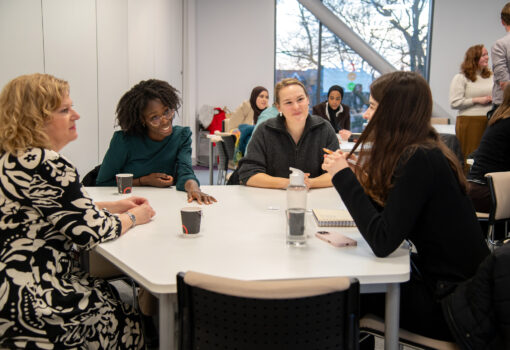
Browse our wide range of degree courses and find the perfect one for you.

Open days are the best way to find out what Lincoln Bishop has to offer.
Download your copy of our prospectus to find out more about life at Lincoln Bishop.