Search results
-
171.
Support your students’ learning and give them a taste of Higher Education with an NEA Day at BGU
A-Level History students and teachers from Kings School, Grantham, and Ridgewood School, Doncaster, became the latest learners to benefit from a Non-Exam Assessment (NEA) Day at Bishop Grosseteste University (BGU) as they spent a day with academics from the BGU History department. -
172.
Science, Faith and the Climate Crisis: BGU Staff and Students Support New Collaborative Project
Staff and a final year student have contributed to an international project exploring why science and faith must work together on climate crisis. -
173.
Exploring the role of the Arts in supporting children and families through loss
Thomasin Nicholds, Psychology Lecturer at Bishop Grosseteste University (BGU), shares an exploration carried out in an experiential workshop at the recent Death and Dying Conference -
174.
How long do influenza pandemics normally last?
Dr Andrew Jackson, Head of Research at BGU, has published a series of articles exploring how the current circumstances in which we find ourselves offer a window into the history of both Lincoln and the wider United Kingdom*. In the third of these he explores what we can learn from previous influenza pandemics. -
175.
How government health advice has, or hasn’t, changed in the last 100 years
Dr Andrew Jackson, Head of Research at BGU, has published a series of articles exploring how the current circumstances in which we find ourselves offer a window into the history of both Lincoln and the wider United Kingdom*. In the second of these he examines how government health advice has, or in this case hasn’t, changed in the last 100 years. -
176.
Why adults shouldn't rule out children's book from their reading lists
As the country, along with the rest of the world, settles into the possible new normal of social distancing and working from home many are beginning to plan out long lists of exciting potential reads to keep them occupied. These may be well loved classics or unknown literary adventures but the likelihood is that they will be books designed for adults. However, as Dr Mary-Louise Maynes, Senior Lecturer in Early Childhood Studies at Bishop Grosseteste University (BGU) and one of the academics on the new MA in Children’s Literature and Literacies, explains adults shouldn’t be ashamed to include some children’s books in their choices too. On reading children’s books (as an adult) Browsing the adult fiction shelves of Waterstones recently I noticed that the Harry Potter books have yet another new cover without any sign of the boy wizard. This is presumably so that you can read the books on the train without looking silly: without looking as if you are reading a children’s book. Adults read children’s books, but still, it seems, reading them makes many of us rather uncomfortable. As we launch our MA in Children’s Literature and Literacies here at Bishop Grosseteste University, I want to explain why I read children’s books and why I think more adults should too, and not apologise for doing so. They are good ‘reads’… Children’s authors know that children are exacting critics. Junior-aged children in particular (generally) enjoy books which are plot-driven, gripping and engaging from the start, well-paced, and which use cliff-hangers at the end of chapters to make you want to read on. If you want to lose yourself in a thrilling story or a page-turning adventure look no further than a good children’s book such as The Invention of Hugo Cabret (Selznick, 2007) or The Explorer (Rundell, 2018). In literary terms to describe a text as plot-driven often implies a lack of depth and quality, a criticism often levelled, unfairly, at children’s literature as a whole. Many children’s books present examples of beautiful and lyrical writing where there is much to explore below the surface and which invite re-reading. Take for example the slow, ‘outsider’ reflections of the Fox in Pennypacker and Klassen’s Pax (2017) or the haunting, puzzling and disturbing words and images in Shaun Tan’s The Red Tree (2010). They have pictures…. Children’s picture books, non-fiction and poetry will introduce you to the work of some of the most innovative and diverse artists and the images are every bit as important as the words. Children’s illustrators have distinct visual styles and employ a range of artistic techniques: contrast for example Beth Waters’ striking monoprints in A Child of St Kilda (2019) or Mark Hearld’s cut-out collages for Nicola Davies’ A First Book of Nature (2014). Images are not confined to bold colours and simple lines: Emily Sutton’s illustrations have a ‘retro’ feel harking back to the work of Edward Ardizzone and they are not at all twee or cosy: in contrast the images in Greder’s The Island (2008) are dark, gothic and threatening. They explain things…. Children’s books today cover almost all topics including some previously taboo ones (for example Poo, a Natural History of the Unmentionable, Davies, 2014) and present them in ways which are digestible and engaging starting-points for further investigation. The Theory of Relativity is beautifully introduced in Bearne and Radunsky’s On a Beam of light (2016) and astrophysics is presented very simply in Astrophysics for Babies (Ferris, 2018). What we learn from children’s books can often stick with us throughout life: in Everything I need to know I learned from a children’s book (2008) Anita Silvey interviews 100 ‘notable’ individuals who explain how children’s books influenced their thinking and later careers. Yet in contemporary children’s literature the ways in which information is imparted are rarely moralistic or heavy-handed, with enjoyment and engagement being primary motivators for reading so that the reader does not feel ‘talked at’ or instructed. They reawaken memories… Re-reading Alison Uttley’s wonderful A Traveller in Time (1939) recently, I was suddenly transported back to a mental image of the protagonist Penelope wearing a nightdress I wore as a child. I must have dressed her in the nightdress in my imagination and for a tiny moment I felt a connection with the person I was when I first read the book aged eight years old. Such connections are powerful if illusory: as Peter Hunt (1997) said as adults we can never really read as we did as a child. Re-reading reminds us of the difference of childhood and the ways in which our understanding of childhood changes as we grow older. Reading children’s books as adults we cannot help but be aware of the ways in which childhood is ‘socially constructed’. They offer insight about ourselves and our society since they are (usually) written by adults with adult perceptions of what childhood and children should be, and what children should be allowed to read or forbidden from reading. If, like me, you love reading children’s books, why not consider joining our MA Children’s Literature and Literacies, launching September 2020? Discover books that intrigue and move you: yes there are plenty of bunnies getting ready for bed, and wimpy kids writing diaries, but equally there are books which address the key issues of our time and which challenge and upset expectations, books which explore the range of human experience and which take us into worlds beyond our own. Dr Mary-Louise Maynes researches children’s non-fiction literature and will be teaching on the MA Children’s Literature and Literacies. She is a member of the Literature and Literacies RKEU. For more information please visit our children's literature courses pages. -
177.
Applications open for BGU & Lincoln Civic Trust Scholarship Award
Applications are invited for the Lincoln Civic Trust scholarship award 2020-21, which is funded by the Lincoln Civic Trust and Lincoln Bishop University (Lincoln Bishop). The award honours the work of Richard Lucas, the Trust’s founding president and noted local historian. Applications are open to students who are enrolled on the MA in Social & Cultural History who are either studying full-time 2020-2021 or who are undertaking their second year of part-time study. The scholarship is competitive. Applicants must submit a 1000 word research proposal on their choice of dissertation subject which MUST address an aspect of the history of the City of Lincoln, and/or Lincolnshire. The outline should include: name and contact detailsindication of stage of study(full-time or part-time)clearly state the intended area of researchthe significance of the research and archives to be consulted.The award will be administered as a discount of £2,000 against the tuition fee payable by the selected student for the MA in Social & Cultural History during the academic year 2020-21.The recipient of the award will be invited to attend the Lincoln Civic Trust’s Annual General Meeting and present their dissertation research outline. They will be expected to return after the completion and submission of their dissertation and give an illustrated presentation on their findings. They will also be invited to publish a short written summary of their dissertation research in a newsletter, magazine, and/or report. The closing date for this scholarship is Monday 28th September 2020, no later than 4pm. Any applications received after this time will not be accepted. The selection of the recipient will be based on expert review undertaken by academic staff within the History subject area. Their decision in the matter is final.Applicants are to submit their applications via email to the Programme Leader,Dr Claire Hubbard-Hall: claire.hubbard-hall@lincolnbishop.ac.uk -
178.
Award Nomination for ‘Cooking with CELT’ Video Series
The Centre for Enhancement of Learning and Teaching (CELT) at Bishop Grosseteste University (BGU) has been shortlisted for a prestigious HEIST award for its innovative YouTube-series ‘Cooking with CELT and friends’. ‘Cooking with CELT and Friends’ was launched in September 2019 to support student engagement and ran throughout the first half of the academic year. This inventive project sought to make every student at BGU feel part of their learning community and involved the production of short cooking demonstrations by professional support staff as they introduced themselves and their student support services to new students. “The videos really broadened my knowledge on the services on campus and made me more aware of the support available to me." Kieron Treacher, History and Education. A launch event was held at the Freshers’ Fayre in 2019. Free gifts of olive oil and balsamic vinegar were offered to students, as well as cupcakes and the opportunity to enter a raffle to win a food hamper. During the event, students were also able to sign up to a mailing list to receive information about each video as it was released. Continuing promotion through the semester included the use of printed posters and pull-up banners, as well as digital promotion via social media and the electronic student portal. "I watch the Cooking with CELT videos every week and they are all really good recipes for students. This is the perfect start in helping them cook for themselves as well as talking about what is on campus to help them academically, socially and mentally.” Jasmin Reid, BA (hons) Primary Education. As a Student Engagement project, Cooking with CELT was tailored to the unique and atypical nature of Higher Education at Bishop Grosseteste University (BGU). A small, specialist university which focuses on initial teacher training and education-based courses, BGU’s students often learn away from campus on work-based placements. Consequently, when the CELT team set out to create a resource to familiarise our students with BGU’s professional support services, it needed to be something innovative Cooking with CELT is certainly innovative. Its mission was three-fold: to make information about support services accessible; to provide guidance for cooking simple recipes; and to facilitate a sense of a learning community by allowing students to match real people to services. It also offered the benefit of delivering this information throughout the first semester, avoiding the information overload that can occur within the first few weeks of term. Staff at the University also enjoyed the series and learnt something new about the professional support services at BGU. “When you work in one specific area, it’s easy to lose sight of the work of other departments – Cooking with CELT helped my understanding of what we do across a range of services for students and has helped me signpost students better.” Fran Trzeciak, Learning Development Tutor. The project has been shortlisted in the Best Low Budget Initiative category by the HEIST team who are celebrating their 30th year rewarding best practice in the higher education sector. The winner of the category is due to be announced in October 2020. The Cooking with CELT videos have now been compiled into a playlist to run on the CELT area on BGU’s student portal -
179.
Free Archaeology Talks to Explore the Lives of American Airmen during the Second World War
Lincoln Bishop University (Lincoln Bishop), in collaboration with the 100th Bomb Group Memorial Museum, are hosting a series of free talks on the United States Army Air Force during the Second World War. These talks form part of a larger project led by Dr Derwin Gregory, Programme Leader for Archaeology and Heritage at Lincoln Bishop, on the history and archaeology of the USAAF. The talks are free and open to the public, but registration is essential. 28 November – ‘The Archaeology of the Friendly Invasion’ 5 December – ‘We Have Come Home’: Pilgrimage, repatriation, and collective memory at the 100th Bomb Group Memorial Museum, Thorpe Abbotts 12 December – ‘”They Treated Us Royally?”: The Experiences of Black Americans supporting the air war in Britain’ If you’re interested in studying Archaeology you can find out more about our courses on our website or through one of our virtual open events. The 100th Bomb Group Memorial Museum has been dedicated for more than 40 years to preserving the stories and memories of the American involvement in World War Two based at Thorpe Abbotts, Norfolk. Housed in the original airfield control tower and surrounding atmospheric buildings the museum displays offer a moving testament to the Americans who came to a sleepy village in Norfolk to fight alongside the allies during World War Two. 100th Bomb Group Memorial Museum is entirely run by volunteers and is usually open from the beginning of March until the end of October each year. Entry to the museum is free and the organisation relies heavily on donations from visitors and sales in the gift shop. Due to the coronavirus pandemic the museum was unable to open this year. You can keep up to date with what’s happening while the museum is closed, and the history of the 100th Bomb Group, on their social media channels: Facebook/Twitter: @100bgmus www.100bgmus.org.uk -
180.
Remembering Ray Clemence, MBE and Honorary BGU Graduate
Ray Clemence’s achievements as an outstanding person in the field of sport were recognized with an honorary degree by Lincoln Bishop University in 2011. He was one of English and European football's most decorated goalkeepers but his life started in Lincolnshire. Raymond Neal Clemence was born in Skegness and started his football journey at the age of nine. Throughout his childhood, Ray surprisingly never wanted to be a goalkeeper and went on to enjoy playing football at both centre-half and left back positions. One day at school they were short of a goalkeeper and the Sportsmaster nominated Ray to go into goal, he was 15 years of age at the time and found that he had a natural ability. However, he still did not have a burning ambition to be a goalkeeper! As a schoolboy he had a brief spell at Notts County before making his debut for Scunthorpe United in 1966 - at this time he could scarcely have imagined what lay ahead of him. Scunthorpe United weren’t in a position to pay Ray, so he also worked at Skegness beach. It was whilst working at Skegness beach that Scunthorpe United informed Ray that they needed to speak to him. It was to inform him that Liverpool FC had been in touch and were interested in signing him, if he was at all interested - they were presumably hoping that he was not! Ray was, of course, very interested, and was in Liverpool the following day. Ray was spotted and signed by the Liverpool manager Bill Shankly, joining the Reds for £18,000 in 1967, after 48 appearances for Scunthorpe United. Although Ray had to wait two and a half years before getting a regular first team place, he soon became an Anfield institution in his vivid green shirt and will go down as one of the shrewdest transfer bargains in football history. Tall and agile, with the sharpest of reflexes, he was superbly balanced, kicking with his left foot and throwing with his right hand. Ray’s unflappable and reassuring presence between the sticks inspired confidence in those around him. Bill Shankley went on to say, ‘that with him in goal, Liverpool would have won everything in the 1960s’. Well, with Ray in goal during the 70’s and early 80’s, Liverpool certainly did go on to win almost everything and during his 11 years in the first team at Liverpool he missed just six league matches, won virtually every major honour in the game and displayed a level of consistency that no Reds' keeper has since matched. Ray was also a regular for England between 1972 and 1984 and his England career encompassed several World Cup qualification campaigns as well as trips to the European Championship in 1980 and the World Cup Finals in 1982. Ray went on to make a total of 61 appearances for England and to captain the team at Wembley. Ray left Liverpool in 1981 to join Tottenham Hotspur for a fee of £300,000 and continued in excellent form, playing until he was almost 40 and making over 1000 first team appearances in total. Ray’s club career was nothing short of spectacular. With Liverpool he won three European Cups, five League Championships, the FA cup, the League Cup and two UEFA Cups, while at Tottenham he added a further FA and UEFA cup. Following such a highly successful playing career is never easy, as many famous sportsmen and women have discovered. But when Ray retired from the professional game in 1988 he immediately joined the coaching staff at Tottenham and soon progressed to the first team, before leaving to manage Barnet in 1994. Three years later, he joined Glen Hoddle’s England team as the goalkeeping coach, a key role he continued to hold under Kevin Keegan, Sven-Goran Eriksson and Fabio Capello. Ray was also the head of the FA’s Development Team, overseeing the England youth teams and working with England U21 coach Stuart Pearce in monitoring young players’ progression to the U21 side. With Ray’s wealth of knowledge and experience he was regularly invited to appear on television and radio to summarise and co-commentate on major football matches. Ray’s contribution to the game was recognized in 1987 when he was awarded an MBE for services to football. His dedication and love of football was clear throughout his illustrious career. Ray’s legacy in the world of football is as a performer at the highest level and in the development of people in football, as well as the sport of football itself.
Explore Lincoln Bishop
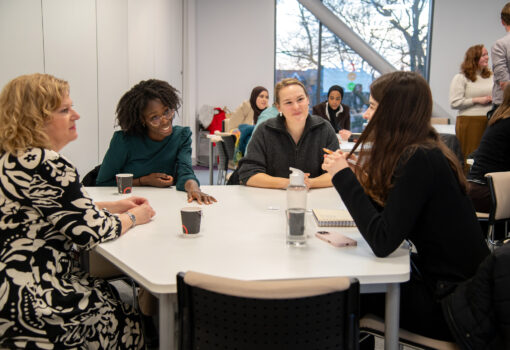
Browse our wide range of degree courses and find the perfect one for you.

Open days are the best way to find out what Lincoln Bishop has to offer.
Download your copy of our prospectus to find out more about life at Lincoln Bishop.